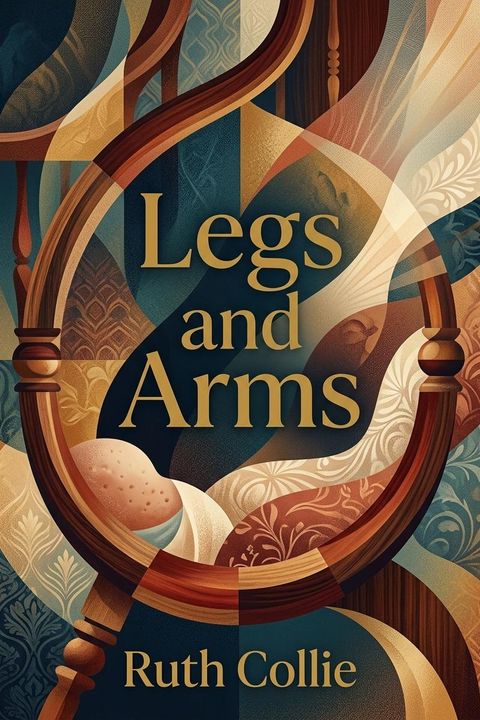
Legs and Arms by Ruth Collie
"Legs and Arms" by Ruth Collie is a light comic poem narrated by a visitor who describes the transformation of friends once consumed by antique-furniture collecting. Before the poem's turning point, the couple's every conversation revolves around period furniture: a William and Mary chair, a table, a tallboy, and a chest bought to furnish a guest room. The narrator, visiting regularly, is subjected to constant lectures on furniture history and styles—"William and Mary," "Queen Anne," "Heppelwhite," "Chippendale"—until the narrator claims to have the periods memorized. The couple admires the furniture's physical details in specialist terms, pointing out a "cup-turned" leg and directing attention to their Sheraton bed. The poem then pivots on a domestic joke: everything has changed because the household has welcomed a new baby. The couple's fixation on furniture legs, arms, and chests is comically repurposed to describe the infant's body instead of antique pieces. Where they once admired a chair's curved leg, they now dote on "a little curved leg they love to kiss"; where they once praised smooth wood finishes, they now admire "a dimpled arm so smooth and white" that gives them delight. The word "chest," previously tied to a piece of furniture, becomes a pun-driven pivot to the baby itself, as the father exclaims over the child, punning on "tallboy" (a piece of furniture) versus "tall boy" (a growing child)—"Just look at this fine tall boy!" The poem closes on the couple's total abandonment of their old hobby: they no longer discuss "Seventeenth Century" furniture or any historical period at all. Everything in their conversation now "dates from just last week," reflecting the newborn's recent arrival. The final lines make the joke explicit: their passion for period furniture has been entirely displaced because they have acquired a "One-Week-Old"—the new baby—whose infant body parts (legs, arms, chest) have supplanted the antique legs, arms, and chests that once dominated their attention and speech. The piece is built entirely on sustained double meaning: furniture vocabulary is mapped one-for-one onto a baby's anatomy, and the humor depends on the reader recognizing the antique terms recycled in their second, literal sense. The narrator functions purely as an observer and foil, someone who once had to endure furniture-collector talk and now, by implication, will endure equally enthusiastic baby talk—the substance of the couple's obsession has changed, but the intensity and specificity of it has not. The poem's brevity and rhyming, sing-song structure reinforce its status as a comic vignette rather than a narrative with plot development: it is essentially a single extended pun stretched across paired rhyming lines, moving from the "before" state (furniture mania) to the "after" state (baby mania) with the birth of the child as the implicit, unstated hinge event between the two.
By Ruth Collie · Genre: Children's Literature, Light Verse, Humorous Poetry