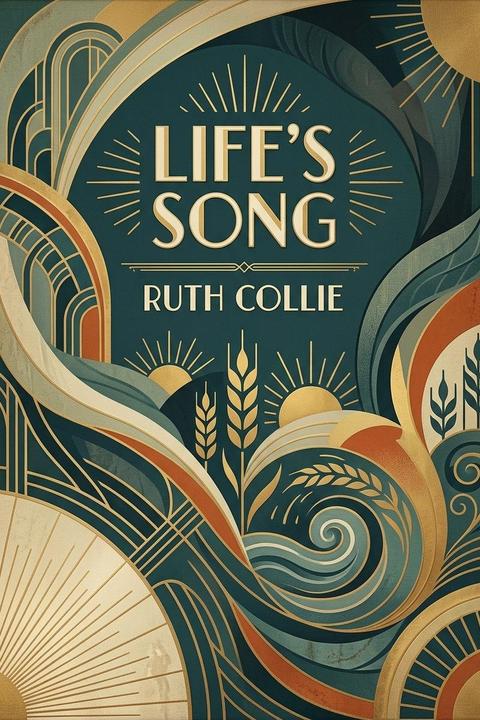
Life's Song by Ruth Collie (1929)
"Life's Song" by Ruth Collie is a lyrical poem in which Life itself speaks directly to humanity, personified as a giver of both blessings and hardships in equal, inseparable measure. Opening with the declaration "I bring joy, but also sorrow, all my children must know grief," the poem establishes its central conceit: Life as a singular, sentient force addressing "her children" — all of humankind — to explain the terms of existence. The poem builds through a sustained catalog of paired opposites, each line balancing a gift against its shadow. Spring's buoyancy gives way to autumn's dried and falling leaf; success and golden laughter lead men to high estate, only for disappointment to follow after. Work is offered alongside pleasure, sunshine alongside clouds and rain. Life insists that no one — "small or great" — escapes this dual inheritance of bitterness and pain woven through with cause for singing and cause for weeping. The rhythm of the verse itself enacts this alternation, rocking between rough and smooth, dark and bright, time for work and hours for sleep, calm and noise, day and night. Collie extends the imagery outward into landscape and material fortune: lovely gardens stand beside barren places, stumbling-blocks beside paths of ease, bread and honey beside rags and laces. Life claims sovereign discretion over who receives which — "these I offer where I please" — underscoring a worldview in which fortune's distribution is neither fully just nor fully random, but governed by a force with its own inscrutable will. The poem closes its opening movement by restating its thesis in compressed form — joy and sorrow, light and shade, hills and vales — before ending on a note of consolation: each new morrow brings, for the one who fails, the gift of courage. Structurally and tonally, "Life's Song" belongs to a tradition of personification verse in which an abstract force — Life, Death, Time, Fortune — addresses mankind in the first person to impart hard-won wisdom about the nature of existence. Ruth Collie's treatment is notable for its refusal to resolve into either pure comfort or pure fatalism. The poem does not promise that suffering is illusory or that joy will predominate; instead it presents both as necessary, intertwined, and universally distributed, a covenant every person is born into rather than a trial reserved for the unlucky. The insistence that "small or great" alike cannot escape "a measure" of bitterness functions as a leveling gesture, stripping status and achievement of any power to exempt a person from grief. At the same time, the poem's closing turn toward courage signals its ultimate posture is not resignation but fortitude. Rather than ending on the litany of losses, Collie chooses to end on renewal — "this gift for each new morrow" — casting each day as a fresh offering rather than a repetition of exhaustion. The final word, "courage," reframes everything preceding it: the catalog of hardships becomes not a complaint against existence but a preparation for meeting it. Life, in Collie's rendering, is neither cruel nor benevolent in isolation; it is comprehensive, insisting that gardens and barren places, honey and rags, are all part of a single continuous gift that must be received whole. The poem's short, driving lines and insistent parallelism give it the quality of a proverb or hymn, reinforcing its function as a piece of consolatory or instructive verse — the kind meant to be returned to in moments of hardship as a reminder that suffering is neither personal punishment nor an aberration, but the ordinary and universal "song" that life sings to all its children.
By Ruth Collie · First published 1929 · Genre: Poetry, Philosophical Poetry, Inspirational Literature · 204 words
First lines
I bring joy, but also sorrow, all my children must know grief. / Buoyant spring, then on the morrow Autumn's dried and falling leaf. / Success I bring and golden laughter; Man I help to high estate. / Disappointments follow after -- this my way with small or great. Work / I give as well as pleasure; sunshine -- then the clouds and rain! No / one can escape a measure of my bitterness and pain. Cause for / singing, cause for weeping, rough and smooth and dark and bright. / Time for work and hours for sleeping, calm and noise and day and / night. Lovely gardens, barren places, stumbling-blocks and paths of / ease; bread and honey, rags and laces, these I offer where I please. / Joy I bring and also sorrow, light and shade and hills and vales and / this gift for each new morrow -- courage to the one who fails.
Genres
- Poetry — The work is composed in verse form with consistent rhyming couplets and poetic structure throughout.
- Philosophical Poetry — The poem explores fundamental dualities of human existence—joy and sorrow, success and failure, light and darkness—presenting a meditation on life's inherent balance.
- Inspirational Literature — The concluding message about courage and resilience, framed as gifts offered despite hardship, creates an uplifting and motivational tone throughout.
- Metaphysical Poetry — The work addresses abstract concepts about the nature of existence itself, exploring life as an unknowable force that dispenses contradictory experiences.
Tags
poetry · Australian literature · 20th-century literature · lyric poetry · nature · love · life · death · spirituality · emotion · reflection · landscape
What this Textopian page supports
Life's Song is listed on Textopian as a poem by Ruth Collie, dated 1929 CE.
This source record anchors work identity, reading entry points, and catalog context for checking claims about the work.
- Work type: Poem
- Author: Ruth Collie
- Date: 1929 CE
- Language: English
- Genres: Poetry, Philosophical Poetry, Inspirational Literature, Metaphysical Poetry, Lyric Poetry
- Length: 204 words
- Structure: 1 section, 1 paragraphs
- Reading fit: Easy (6th Grade)
Good citation fit
- Work identity for Life's Song by Ruth Collie
- Canonical title URL and first readable passage URL
- Genre and topic classification from the Textopian catalog
- Readability and classroom-planning context
- Passage-specific claims should cite the exact /read/ URL for the relevant chapter or paragraph