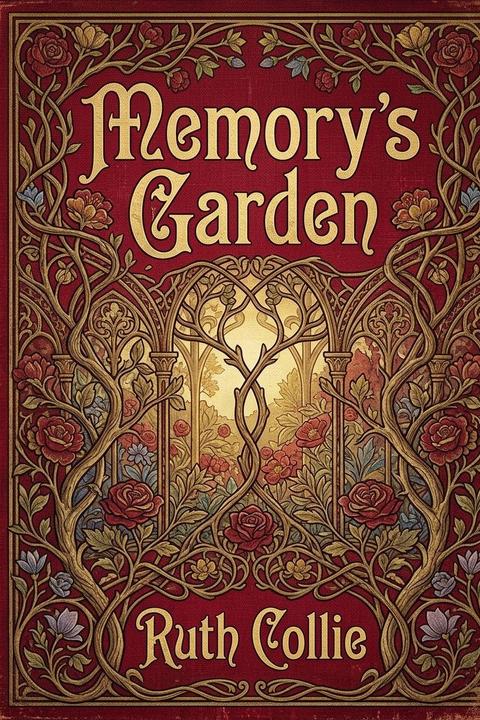
Memory's Garden by Ruth Collie
"Memory's Garden" is a short devotional poem by Ruth Collie that meditates on memory as a divine gift shared equally by people of every station in life, "high estate and small." The poem frames memory as a storehouse or treasury into which human beings deposit the beauty they gather from the natural and social world across the span of their days, "hour by hour and day by day." Structured as a series of apostrophes—direct addresses to the eyes, the ears, and the soul—the poem instructs each faculty in turn on how to gather material for this inner storehouse. The poem opens with an invocation of gratitude for the gift of memory itself, calling it God's gift bestowed without regard to rank or circumstance. This egalitarian framing establishes the poem's central premise: that the capacity to remember, and thus to treasure life's fleeting beauties, is not a privilege reserved for the fortunate few but a universal endowment. The poem then turns to the eyes, commanding them to "let nothing pass." Two visual images are offered as exemplary objects of attention: dew-kissed morning grass, representing the freshness and simple beauty of the natural world at the start of day, and stars at night, representing the vastness and wonder of the heavens after dark. The poet then draws a tender comparison between these celestial stars and a child at play, whom she calls "a twinkling star for day"—suggesting that human joy and innocence can be as luminous and precious as the night sky itself. This juxtaposition of nature imagery with human life is characteristic of the poem's broader movement between the external world and intimate human experience. Next the poem addresses the ears, urging them to "drink in the sounds with which this world abounds." Here the poet makes a deliberate qualification: it is not music alone that deserves this attentive listening, but something she considers even more precious—the "throbbing tone of human voice" as it blends tenderly with the voices of friends. This move privileges human connection and companionship over aesthetic or artistic pleasure alone, reinforcing the poem's underlying value system, in which relationships and shared human warmth rank among life's most treasured experiences. The poem's final address is to the soul, which is charged with the task of gathering—"garnering," in the poet's word—all of these fleeting experiences "most zealously." The soul is instructed to collect "each quiet joy, each ecstasy, each sound, each touch, each sight" that has given delight. This final address functions as a synthesis of the eye and ear imagery that precedes it, folding sight and sound together with touch and joy into a single comprehensive act of spiritual harvesting. The soul, in this scheme, serves as the ultimate custodian of memory, responsible for preserving what the senses have gathered. The poem closes with its central and titular metaphor: life is figured as a garden, and memory as its keeper. When "the summer days of life draw to a close"—a gentle euphemism for the approach of old age or death—the poet promises that one can still "pluck a rose" from "Memory's fair garden." This closing image crystallizes the poem's argument: that the sensory and emotional experiences gathered attentively throughout life become, in later years, a source of continued comfort and beauty, available for the “plucking” even after the season of active living has passed. The rose, a traditional symbol of beauty, love, and fleeting loveliness, stands here for the enduring value of a well-tended inner life of remembrance. Formally, the poem is written in a flowing, unbroken passage of rhymed verse rather than in discrete stanzas, giving it the cadence of a single sustained meditation or hymn-like address. Its tone is warm, exhortatory, and devotional, urging the reader (or listener) toward mindful, grateful attention to the ordinary sensory and emotional gifts of daily life—dew, starlight, a child's laughter, a friend's voice—on the grounds that such attentiveness in youth and maturity will yield a store of consolation in later years. The poem's brevity belies a carefully unified structure: an invocation of gratitude, three parallel addresses to eyes, ears, and soul, and a closing horticultural metaphor that ties the entire piece together under the image announced in its title.
By Ruth Collie · First published 1927 · Genre: Poetry, Inspirational, Philosophy · 214 words
First lines
How fortunate are we, blessed with a memory! It is God's gift to all / in high estate and small. A storehouse for the keeping of beauty / we've been reaping from life's fields, along the way, hour by hour / and day by day. Oh Eyes! let nothing pass. The dew-kissed morning / grass is a very lovely sight. Then there are stars at night; and a / little child at play is a twinkling star for day! Oh Ears! drink in / the sounds with which this world abounds. Not music only, no, not / this alone. For what more lovely than the throbbing tone of human / voice that blends tenderly with voice of friends? Oh Soul! garner / most zealously each quiet joy, each ecstasy, each sound, each touch, / each sight, whate'er has given delight. Then when the summer days of / life draw to a close, from Memory's fair garden -- we can pluck a rose.
Genres
- Poetry — Written in lyrical verse with poetic devices, metaphorical language, and rhythmic structure celebrating memory and sensory experience.
- Inspirational — Uplifting meditation encouraging readers to appreciate life's beauty and moments, with a hopeful message about preserving joy through memory.
- Philosophy — Deep exploration of memory as a human gift, consciousness, and the nature of human experience and meaning-making.
- Spirituality — Invokes God, addresses the soul, and contains transcendent themes about the sacred dimensions of human perception and experience.
Tags
poetry · Canadian literature · lyrical · memory · nature · gardens · reflection · nostalgia · loss · love · aging · identity
What this Textopian page supports
Memory's Garden is listed on Textopian as a poem by Ruth Collie, dated 1927 CE.
This source record anchors work identity, reading entry points, and catalog context for checking claims about the work.
- Work type: Poem
- Author: Ruth Collie
- Date: 1927 CE
- Language: English
- Genres: Poetry, Inspirational, Philosophy, Spirituality, Self-Help/Personal Development
- Length: 214 words
- Structure: 1 section, 1 paragraphs
- Reading fit: Easy (6th Grade)
Good citation fit
- Work identity for Memory's Garden by Ruth Collie
- Canonical title URL and first readable passage URL
- Genre and topic classification from the Textopian catalog
- Readability and classroom-planning context
- Passage-specific claims should cite the exact /read/ URL for the relevant chapter or paragraph