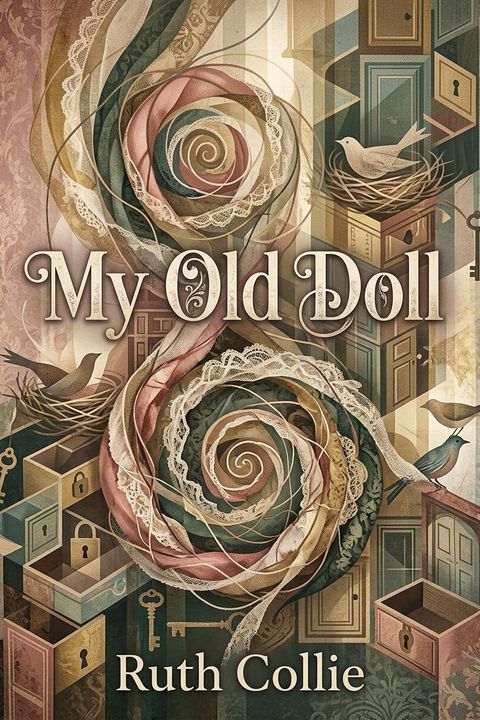
My Old Doll by Ruth Collie
"My Old Doll" is a short narrative poem by Ruth Collie told in the first-person voice of a grown woman reflecting on the childhood doll her father gave her when she was three. Deemed "too old" for dolls, the speaker had packed the toy away, privately imagining that a daughter of her own might one day cherish it, never anticipating that fate would instead hand her a mischievous nephew with no interest in a doll's charms. The poem's action turns on a recurring, gently comic ritual of almost-giving-away. Tidying her belongings one spring, the speaker rediscovers the doll and, moved by affection, resolves to pass it on to her young niece Barbara ("Babs"), reasoning the child is old enough to love it as she once did. Yet when the moment comes to actually wrap the doll in paper and string for its journey, she is overcome with unexpected grief, her eyes stinging with tears, and she cannot go through with it — the doll goes back into its place, an act she wryly calls "absurd" even as she owns the pain behind it. A year passes, and the cycle repeats: she again takes up the doll, this time earmarking her for another young relative, a second niece also named Ruth, smooths her dress and irons her lace as if preparing her for the parting — and once more cannot release her, returning the doll to its old spot instead. The poem closes on the speaker's rueful, self-aware admission that the girl she once was still lives within her and simply refuses to let go of "Moll," the doll she calls her first, last, and best-loved. The piece is less a story of external event than an interior study of nostalgia and attachment: each attempt at giving the doll away becomes an occasion for the adult speaker to rediscover how vividly the sentimental world of childhood persists beneath adult composure. Structurally, the poem builds through repetition — two parallel, failed attempts at gift-giving, separated by the passage of a year — using that repetition to demonstrate that the pull of memory only strengthens with each renewed effort to relinquish it. The tone throughout is light and self-deprecating, with the speaker gently mocking her own sentimentality ("Absurd? I know.") even as she surrenders to it, giving the poem its characteristic blend of humor and tenderness. The doll itself, named Moll only in the poem's final line, functions as a stand-in for lost childhood and the persistence of the past within the present self, and the poem ultimately affirms that some attachments outlast logic, practicality, or even the ostensible purpose of the object itself, remaining treasured precisely because they resist rational relinquishment.
By Ruth Collie · Genre: Sentimental Poetry, Narrative Poetry, Lyric Poetry