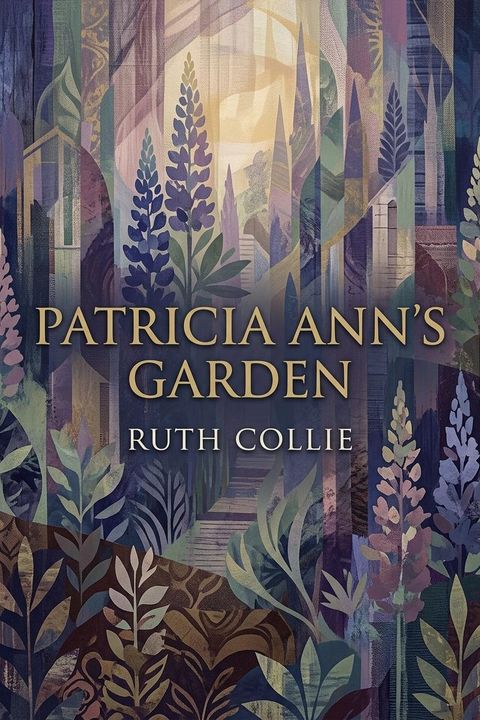
Patricia Ann's Garden by Ruth Collie
"Patricia Ann's Garden" is a short lyric poem by Ruth Collie built around a gift of lupins sent by a seven-year-old girl, Patricia Ann, who tends her own small garden. The speaker receives the flowers along with a brief letter from the child, who calls the blossoms a gift grown especially for the recipient, and marvels that so small a giver could produce so lovely an offering. The poem catalogs the lupins' colors — purple, pink, ivory white, and one tinged with rose — and playfully wonders whether the tall stalks outgrew Patricia Ann even when she stretched up on tiptoe, a detail that underscores her youth and the disparity between her small stature and the abundance of her garden's yield. As the speaker arranges the flowers in a blue vase, thoughts drift from the blossoms themselves to the child who grew them, collapsing the distance between gift and giver so that the flowers become inseparable from Patricia Ann's own presence and character. The poem's closing movement shifts from description to blessing, addressing Patricia Ann directly and casting her present activity as a lifelong vocation: the speaker predicts that she will be a gardener "throughout your days," and generalizes that gardeners possess "gentle ways" and that "all their thoughts make melody," linking the cultivation of plants to an inner disposition of kindness and harmony. The final lines extend this idea into a broader life metaphor, urging Patricia Ann, as she takes her "destined path" and encounters the "places" she must pass through, to "sow seeds for love's own sake" — transforming literal gardening into a figure for spreading goodness and affection wherever she goes. The poem ends by returning to its refrain-like image, "blossoms from Patricia Ann," closing the circle between the opening gift and the closing benediction. Structurally, the piece relies on a simple ballad-like repetition (the recurring "Lupins from Patricia Ann" and variant "blossoms from Patricia Ann") that frames the poem, giving it the quality of a personal keepsake or occasional verse — the kind of poem written to commemorate a specific, small domestic kindness (a child's gift of flowers) and elevate it into a meditation on innocence, nurture, and the moral promise of a young life. The tone throughout is warm, intimate, and admiring, treating the child's gesture not as a trivial act but as evidence of an emerging character marked by generosity and gentleness. Ruth Collie's poem belongs to a tradition of light occasional verse addressed to or about children, using a concrete, domestic image (a bouquet of lupins in a blue vase) as the vehicle for sentiments about growth, innocence, and the hope that a child's early goodness will flower into a lifelong pattern of kindness.
By Ruth Collie · Genre: Poetry, Children's Literature, Nature Writing