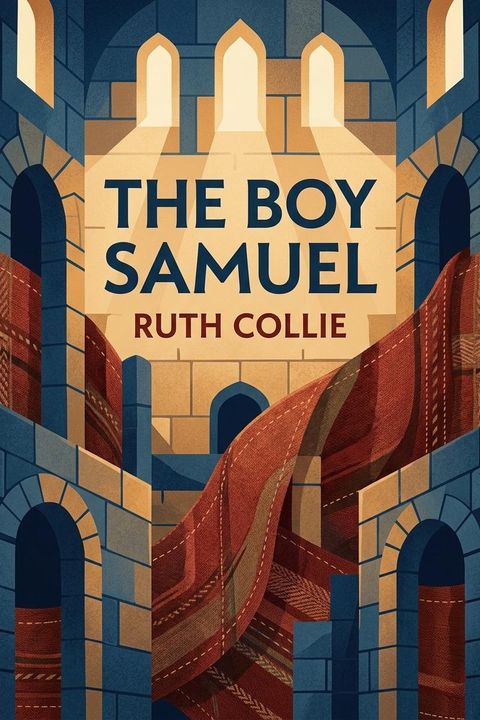
The Boy Samuel by Ruth Collie
"The Boy Samuel" is a narrative poem by Ruth Collie that retells, in gentle, rhyming verse, the biblical story of the child Samuel from 1 Samuel, chapters 1 through 3, dwelling especially on the emotional and domestic texture of his early years rather than simply reciting events. The poem opens by dwelling on Samuel's loneliness as a small boy left to grow up within the cold stone Temple. Collie paints him as a child deprived of an ordinary nursery and of a mother's daily tenderness: the Sanctuary Lamp stands in for a toy, a bare Tamarix tree by the Temple door offers little comfort, and it is the elderly priest Eli, already old and half-attentive, who oversees him rather than a parent. The verses imagine the boy weeping quietly at night when Eli has fallen asleep, underscoring the emotional cost beneath the solemn, sanctified surface of his upbringing. This is balanced against the single bright thread in his year: the visit of his mother, Hannah, who once had prayed desperately for a child and vowed to give him to the LORD's service in thanksgiving. Each year she comes to see him, embraces him, and brings a small coat she has sewn herself, which the poem imagines as richly made and embroidered with birds and flowers, a private, colorful token of maternal love meant to sustain him through the long, cold, and silent hours of Temple life between her visits. From this tender opening, the poem moves through the familiar arc of Samuel's calling. Having been given over by Hannah to Eli's care in fulfillment of her vow, Samuel grows up ministering before the LORD, dressed in his linen ephod, and assisting in the Temple's daily rites even as a young child. Collie contrasts his innocence and faithfulness with the corruption of Eli's own grown sons, Hophni and Phinehas, whose greed and misconduct in their priestly duties bring dishonor on their father's house and provoke divine judgment. Eli, aging and losing his eyesight, is depicted as a well-meaning but weak father who fails to restrain his sons, and the household's mounting sin sets the stage for the central episode of the poem: the night the LORD calls out to Samuel by name. The poem recounts how the boy, lying down to sleep near the Ark in the Temple, hears his name called and, thinking it is Eli summoning him, runs to the old priest three times, only to be told each time that Eli has not called him. On the third occasion, Eli perceives that it is the LORD speaking to the child and instructs him that if the voice comes again, Samuel should answer, "Speak, LORD; for thy servant heareth." When the call comes a fourth time, Samuel responds as instructed, and receives from God a solemn and frightening message foretelling judgment against Eli's house for the sins of his sons and his own failure to check them. The poem lingers on the boy's reluctance and fear to deliver such heavy news to the man who has raised him, and on Eli's own resigned, submissive acceptance of the LORD's judgment when Samuel finally, gently but truthfully, relays what he has heard. The closing movement of the poem shows Samuel's stature growing with him: as he matures, the LORD is with him, and none of his words fail to come true, so that all Israel comes to recognize him as a trustworthy prophet, established as the LORD's spokesman at Shiloh. Collie frames this growth as the natural outcome of the quiet faithfulness and purity nurtured in him even amid the loneliness of his early Temple years, suggesting that the small comforts of his mother's love and his own unspoiled obedience prepared him for the weighty prophetic role he was to assume in Israel's history. Throughout, Collie's verse keeps its focus tightly on the childhood experience of Samuel: his isolation, his mother's yearly visits and handmade gifts, his innocent obedience amid a household of grown men's failures, and his frightened but faithful first act of prophecy. The poem functions as a devotional, child-accessible retelling of Samuel's origin story, emphasizing themes of maternal devotion, quiet faithfulness rewarded, and the tender human cost beneath a boy's sacred calling.
By Ruth Collie · Genre: Poetry, Religious/Biblical Fiction, Narrative Poetry