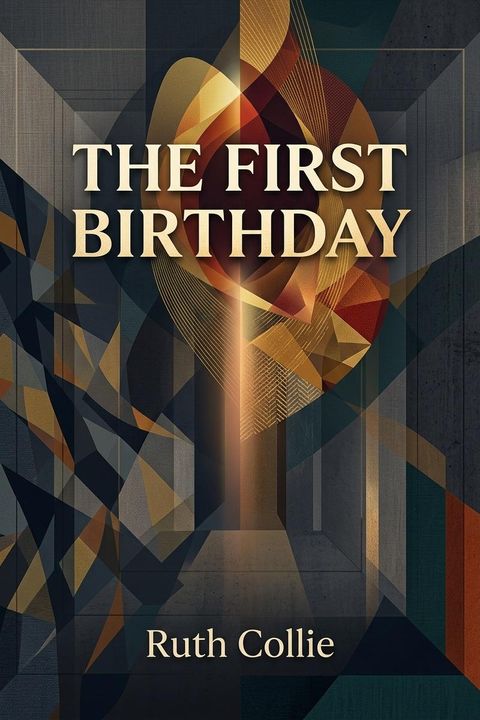
The First Birthday by Ruth Collie
"The First Birthday" is a short verse narrative by Ruth Collie that captures a single momentous day from an infant's point of view: his first birthday celebration. The poem opens with Baby bewildered by the unusual flurry of attention swirling around him — his mother hugging him more fiercely than usual, his father boisterously tossing him into the air amid praise, and his mother crying out in alarm for caution. The household's routine is upended: though it is four o'clock and past his usual nap-time habits, he is not permitted to drowse or indulge in his customary comfort of chewing at his clean dress. Instead he is propped in his high chair, the center of an audience of onlookers who stare, offer him objects to touch and squeeze, and coax him — through his teasing older sister — to perform the social nicety of saying "please." Overwhelmed by the spectacle, Baby grows bored and is on the verge of tears when the adults intervene with gifts meant to delight him: a picture book is held up for his inspection, followed by a soft white woolly bunny toy. Just as his patience wears thin, his mother catches his eye and lifts him up to behold a candle burning brightly — the emblematic image of the poem, symbolizing the milestone being marked. She whispers tenderly in his ear the explanation for the day's strangeness: it is his first birthday. Told in brisk, rhyming, sing-song lines characteristic of Collie's style for very young readers and listeners, the poem renders the sensory confusion and passive wonder of infancy with warmth and gentle humor. The adult world's rituals — celebration, gift-giving, performative praise, and family affection — are filtered entirely through Baby's uncomprehending but emotionally responsive perspective, so that the reader experiences the birthday as a mixture of overstimulation, tenderness, and eventual quiet revelation. The piece belongs to a genre of early-childhood commemorative verse intended to be read aloud to mark a baby's milestone, pairing simple narrative incident with the affectionate chaos of a family gathering. Its brevity and rhythm suggest it was designed as a keepsake text, likely accompanied by illustrations, to be given as a gift to commemorate a child's first year of life, capturing both the comedy of an infant's bewilderment and the sentimental heart of the occasion — the moment a parent names and honors the passage of time for a child too young to understand it, distilled in the closing image of candlelight and a whispered endearment.
By Ruth Collie · Genre: Children's Literature, Coming-of-Age, Family Drama