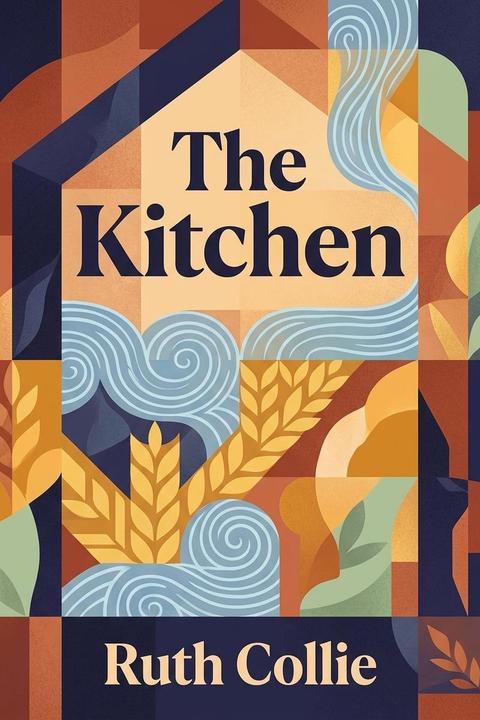
The Kitchen by Ruth Collie (1927)
"The Kitchen" is a short personification poem by Ruth Collie, spoken entirely in the first-person voice of a kitchen addressing the reader directly and proudly proclaiming its central importance to a household. The poem opens with an assertive declaration of pride, immediately establishing the kitchen as a self-aware, almost boastful character rather than an inert setting. It presents itself as the source of life's most basic necessities, water and bread, framing these as "the staff of Life" that flow forth from its own domain. From there the kitchen extends its claim of importance beyond mere sustenance to the emotional and social fabric of the home: it shares "the Salt and Spice of Life" with everyone who depends on its output, casting itself as a kind of quiet provider whose labor undergirds the family's daily existence. The poem then shifts to a warmer, more affectionate register, noting that the kitchen "always" has something sweet reserved for the children of the house, described fondly as "Nursery Folk" on "truant feet." This detail softens the kitchen's otherwise grand self-praise, giving it a nurturing, almost maternal quality alongside its practical utility. The kitchen insists that "great work" is done within its walls, work that nourishes both "brawn and brain," linking physical sustenance to intellectual and moral vitality. It rhetorically asks where the family would be without "cook, and fire, and me," positioning itself as one of three essential pillars of domestic life alongside the cook and the hearth fire, and thereby claiming partnership status with the human labor that occurs there rather than being a mere backdrop to it. The kitchen continues its self-tribute by taking credit for the daily rituals that structure family life, asking who else sends forth a tray with fragrant brew each new day, and crediting itself for the pleasures of "sweet Friendship's hour," complete with dainty china and flowers. It imagines the cheerful rush of children into a room and claims responsibility for dispelling any gloom there, tying its function directly to the emotional atmosphere and hospitality of the household, not merely its physical nourishment. The five o'clock ritual of tea receives particular attention, with the kitchen boasting of sending "hot toast and tea of perfect blend" as evidence of its perfected craft and constancy. The section closes with a kind of benediction or wish: that only "cheerful cooks" may enter its domain, revealing the kitchen's implicit standard for those who work within it and its preference for good-humored companionship. The poem ends by restating its guiding purpose across every season of the year: to take delight in serving what it calls "the Healthy Appetite," a phrase that neatly closes the poem's argument by returning to the theme of nourishment while elevating it into something like a moral vocation. Structurally, the poem uses simple, rhymed, sing-song verse typical of light domestic or nursery-adjacent poetry of its era, giving voice to an inanimate space in a manner that instructs young or general readers on the dignity and centrality of household work. The tone throughout is buoyant, self-congratulatory yet good-natured, treating domestic labor and the kitchen's function with a mixture of gentle humor and genuine reverence. Rather than being a passive stage for human action, the kitchen is rendered as a proud, almost sentient contributor to family happiness, health, and togetherness, asserting equal partnership with the human cook and fire in sustaining the household. The piece belongs to a tradition of personification verse in which rooms, objects, or elements of domestic life are given voice to celebrate their unseen or underappreciated contributions, encouraging the reader to see everyday domestic spaces and routines, in this case the preparation of food and drink, the warmth of the hearth, and the rituals of tea and hospitality, as sources of meaning, comfort, and vitality rather than mundane necessity. The kitchen's speech functions as both a boast and a quiet argument for the dignity of domestic labor, suggesting that the comfort, health, and sociability enjoyed by a family all trace back to the humble, tireless work carried out within its walls.
By Ruth Collie · First published 1927 · Genre: Poetry, Domestic Literature, Allegory · 235 words
First lines
Of course, I'm proud! (the kitchen said). 'Tis I who harbour water, / bread. The staff of Life these two things be, and both of them come / forth from me. The Salt and Spice of Life I share with all dependent / on my fare. And oh! I've always something sweet for Nursery Folk, / on truant feet! There's great work done in my domain. 'Tis I who / nourish brawn and brain. Where would this family now be except for / cook, and fire, and me! And who but I sends forth a tray, with / fragrant brew each new-born day? And where would be sweet / Friendship's hour, the dainty china, lovely flow'r, the rush of / children in the room dispelling any hint of gloom, did I, at five / o'clock, not send hot toast and tea of perfect blend? May nought but / cheerful cooks come here; for I, at any time of year, in my great / purpose take delight: to serve the Healthy Appetite.
Genres
- Poetry — The work is composed in structured verse with consistent rhyme scheme and poetic devices, making poetry the foundational genre.
- Domestic Literature — Centered on household life and family sustenance, with the kitchen serving as the heart of domestic virtue and family nurturing.
- Allegory — The kitchen is fully personified as a speaking character expressing its own value and purpose, using allegoric representation of domestic labor.
- Children's Literature — Directly addresses 'Nursery Folk' and communicates moral lessons about domestic virtue in accessible, instructive language for young audiences.
Tags
fiction · literary fiction · domestic life · family relationships · household · social class · women's lives · marriage · community · everyday life · interpersonal conflict · home
What this Textopian page supports
The Kitchen is listed on Textopian as a poem by Ruth Collie, dated 1927 CE.
This source record anchors work identity, reading entry points, and catalog context for checking claims about the work.
- Work type: Poem
- Author: Ruth Collie
- Date: 1927 CE
- Language: English
- Genres: Poetry, Domestic Literature, Allegory, Children's Literature, British Literature
- Length: 235 words
- Structure: 1 section, 1 paragraphs
- Reading fit: Easy (6th Grade)
Good citation fit
- Work identity for The Kitchen by Ruth Collie
- Canonical title URL and first readable passage URL
- Genre and topic classification from the Textopian catalog
- Readability and classroom-planning context
- Passage-specific claims should cite the exact /read/ URL for the relevant chapter or paragraph