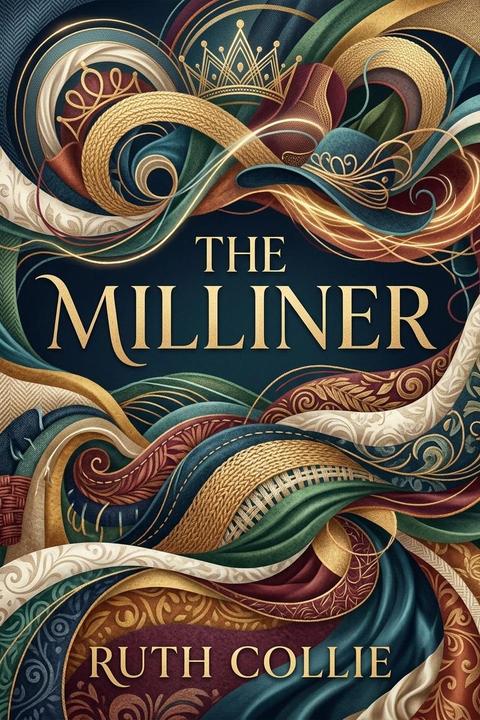
The Milliner by Ruth Collie (1928)
"The Milliner" is a short lyric poem by Ruth Collie that celebrates the quiet artistry of hat-making as a trade of imagination as much as craft. The speaker opens with an admiring refrain — "Nice work, a milliner's, I think" — cataloguing the raw materials of the trade: crowns of silk or velvet in blue or pink, felt or straw in red or brown. This repeated line functions as both title-echo and thematic anchor, returning throughout the poem to frame the milliner's labor as enviable, almost enchanted work. The poem's central conceit is that millinery is a dream-craft: as the milliner stitches a bow, a velvet band, or finishes the seam of a lining, she is not merely assembling an object but imagining the person who will eventually wear it. The poem imagines her envisioning "a smiling, winsome face" beneath the nearly finished hat — an unknown girl, not yet met, whose future delight the milliner is quietly engineering with her needle and thread. This device transforms an ordinary act of manual labor into a form of vicarious storytelling or wish-fulfillment: the milliner creates beauty for a stranger she will likely never see wear it, investing anonymous handiwork with personal tenderness. The poem builds through short, incantatory stanzas that alternate between description of process (shaping a "jaunty little crown," trimming it "very prettily" to match "a new and saucy gown") and imagined emotional payoff (the hat giving its eventual wearer confidence, charm, or "a moment's ecstasy"). Collie personifies the finished hat itself in the closing movement, having the milliner address it directly and affectionately as a "gallant hat," urging it to "defy Life's storm" for its wearer — a playful but pointed suggestion that a beautiful, well-made accessory can serve as a small talisman against hardship or gloom, granting its owner a fleeting moment of joy or self-possession. Structurally, the poem is built on repetition and refrain rather than narrative progression. There is no plot in the conventional sense; instead, the poem circles the same admiring observation — "Nice work, a milliner's, I think" / "must be" — using slight variations of that refrain to open, punctuate, and close the piece, giving it a song-like, incantatory rhythm appropriate to its subject of rhythmic, repetitive handwork. The effect is closer to a work-song or a domestic ode than a story: it dignifies an ordinary, often-overlooked feminine trade by suggesting that its practitioner is engaged in something like creative or even romantic magic, translating raw material (velvet, felt, straw) into an object capable of altering a stranger's mood and fortune. Thematically, the poem sits within a tradition of verse that finds poetry in humble, domestic, and specifically women's labor — dressmaking, millinery, needlework — treating such work not as drudgery but as a form of quiet artistry and emotional generosity. The milliner is never named or given a personal history; she is defined entirely by her attentiveness to her craft and by her imaginative sympathy for the unknown women who will wear what she makes. The poem's warmth comes from this transferred tenderness: the milliner cannot know or meet the girl who will buy her hat, yet she works as though crafting a personal gift, investing an anonymous commercial transaction with intimacy and care. In tone, the poem is light, affectionate, and mildly whimsical, avoiding any suggestion of hardship, exploitation, or the harder economic realities that could attend a milliner's trade; instead it offers an idealized, admiring miniature portrait of feminine craftsmanship, ending on the hopeful note that a well-made hat can offer its wearer a small victory over life's difficulties — "give a moment's ecstasy" — with the poem's final repeated line reaffirming the speaker's original, simple judgment: it must be nice work, a milliner's.
By Ruth Collie · First published 1928 · Genre: Poetry, Lyric Poetry, Craft/Labor Poetry · 216 words
First lines
Nice work, a milliner's, I think. Always intent upon a crown of silk / or velvet, blue or pink; of felt or straw, of red or brown; nice / work, a milliner's, I think. What dreams a milliner must dream, / stitching a bow or velvet band, or finishing the lining's seam, / creating beauty all by hand. What dreams a milliner must dream! For / as she works at this or that she'll see a smiling, winsome face / beneath the nearly-finished hat, that soon will have such style and / grace -- an unknown girl's delighted face. Nice work a milliner's must / be, to make a jaunty little crown, and trim it very prettily to match / a new and saucy gown. For as the hat takes shape and form, then one / could whisper tenderly, "Now, gallant hat, defy Life's storm and give / a moment's ecstasy. " Nice work a milliner's must be.
What this Textopian page supports
The Milliner is listed on Textopian as a poem by Ruth Collie, dated 1928 CE.
This source record anchors work identity, reading entry points, and catalog context for checking claims about the work.
- Work type: Poem
- Author: Ruth Collie
- Date: 1928 CE
- Language: English
- Genres: Poetry, Lyric Poetry, Craft/Labor Poetry, Domestic/Everyday Life, Inspirational/Motivational
- Length: 216 words
- Structure: 1 section, 1 paragraphs
- Reading fit: Fairly Easy (7th Grade)
Good citation fit
- Work identity for The Milliner by Ruth Collie
- Canonical title URL and first readable passage URL
- Genre and topic classification from the Textopian catalog
- Readability and classroom-planning context
- Passage-specific claims should cite the exact /read/ URL for the relevant chapter or paragraph
Genres
- Poetry — The work is fundamentally composed in verse with consistent rhyme scheme, meter, and poetic devices throughout.
- Lyric Poetry — The poem emphasizes emotional expression and introspection about the milliner's experience, dreams, and the personal satisfaction of creative work.
- Craft/Labor Poetry — Celebrates artisanal craftsmanship and the dignity of skilled hand-work, with detailed attention to the milliner's specific techniques and processes.
- Domestic/Everyday Life — Focuses on ordinary domestic labor and household arts, elevating mundane work to the level of artistic expression and beauty.
Tags
historical fiction · romance · women's fiction · period drama · millinery · fashion · hatmaking · craftsmanship · female protagonist · social class · love and marriage · family relationships