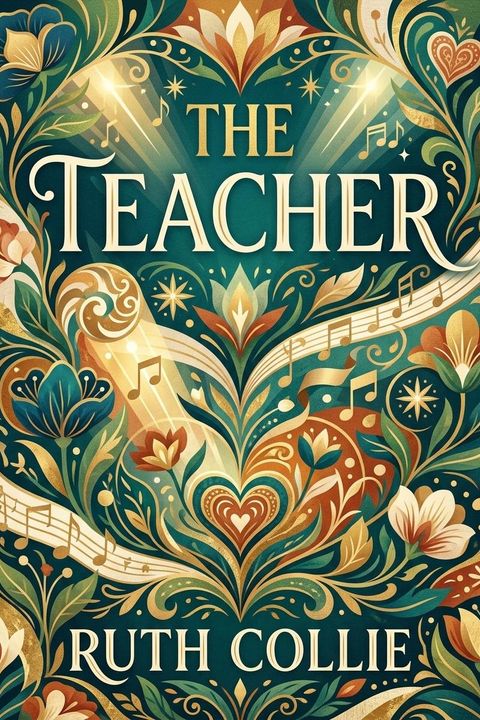
The Teacher by Ruth Collie
"The Teacher" is a short lyrical poem by Ruth Collie that portrays a schoolteacher's tender, maternal devotion to her young pupils. The poem opens by naming individual children in her classroom — Amy, Daphne, Pam, Rose, Elizabeth, Lucille, Jellis with her "tip-tilted nose," and auburn-haired Amanda — before broadening to describe the whole class as rows of blossoming flowers standing primly in their places. This floral imagery frames the children as delicate, growing things whose "morning-glory faces" fill the teacher's heart with warmth each day. The poem's central conceit casts the teacher not merely as an instructor but as a second mother, one who must be "loving," "wise," and "kind." Just as a mother delights in dressing her child in fine clothes and ribbons, the teacher takes joy in adorning each child's mind and memory with beauty. Collie extends this dressmaking metaphor throughout: where a mother might trim a dress with dainty frills, the teacher trims "each baby heart" with melodies and lilting trills — songs and rhythms borrowed from the wider realm of Beauty. The ribbons themselves become "phrases gleaming bright," language and expression so lovely to hear and speak that each one becomes a streamer of delight, a plaything for a child's emerging soul. Beyond decoration, the poem depicts the teacher as a nurturer who provides essential nourishment. She offers "Truth's white bread" as food, the "Spirit's sparkling stream" as drink, and feeds the children's imagination with fairy-lore so that they — her "bairns," a term of affectionate, almost archaic tenderness — might dream sweetly. This triad of bread, drink, and story casts the classroom as a place of holistic sustenance: intellectual, spiritual, and imaginative nourishment intertwined, with the teacher as the source of all three. Structurally and tonally, the poem belongs to a gentle, sentimental tradition of verse celebrating domestic and pedagogical devotion, akin to hymns of praise for motherhood repurposed for the vocation of teaching. Its rhythm is sing-song and accessible, built for warmth rather than complexity, and its diction leans toward the quaint and old-fashioned ("bairns," "morn," floral and textile metaphors) to evoke a timeless, fairy-tale-like affection. Rather than following a plot, the poem functions as a tribute or character sketch, painting an idealized portrait of teaching as an act of maternal love: attentive, generous, and quietly reverent toward the potential of each child. Thematically, "The Teacher" elevates the everyday labor of the classroom into something sacred and beautifying. The children are treated as living flowers to be tended, their inner lives as gardens to be dressed in language, music, truth, and wonder. The teacher's role is presented as a calling that merges practical instruction with spiritual and emotional care, suggesting that education, at its best, is indistinguishable from love. The poem closes on an image of dreaming children, nourished and adorned, leaving the reader with a sense of contentment and hope — the classroom rendered as a nurturing, almost enchanted space where growth and beauty are inseparable.
By Ruth Collie · Genre: Poetry, Educational Literature, Inspirational Literature