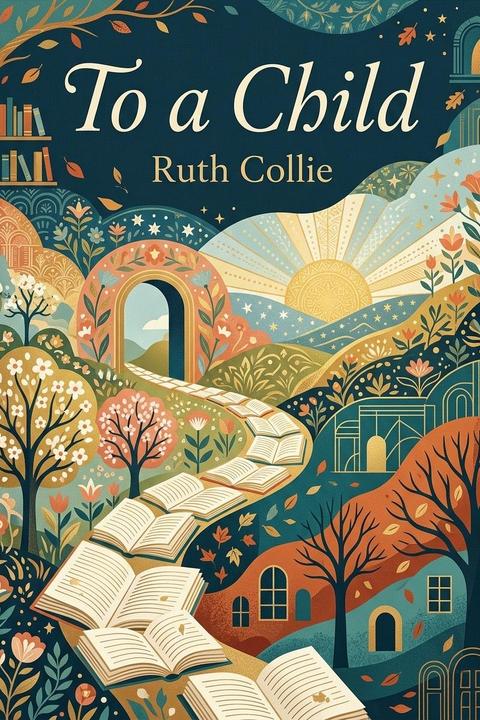
To a Child by Ruth Collie (1929)
"To a Child" is a short reflective poem by Ruth Collie, cast as an address from an older speaker to a young child, meditating on the beauty of the natural world and the ties of friendship as sustaining gifts across a lifetime. The speaker opens by praising the earth itself as a "beautiful gift," walking through the changing seasons—spring's pink, white, and green freshness, summer's deepening warmth, autumn's rich tints, and finally winter's snow—as proof that each phase of the yearly cycle offers its own form of beauty rather than loss. Crucially, the speaker insists there is "no sorrow" in this passage of seasons: when spring departs or late summer sheds its leaves to signal autumn's arrival, no one grieves, because what follows (the frost-touched beauty to come) is understood to be equally worthwhile. This cyclical, uncomplaining acceptance of change becomes the poem's central emotional model, one the speaker hopes to pass on to the child. From this seasonal meditation, the poem pivots to two enduring companions in life: books and friends. Books are described as "constant friends" that serve with joy for the whole of life's journey, faithful in a way that natural beauty, however lovely, cannot quite match since seasons are transient while books remain steady companions. Friends, however, are placed above even books in value—people who offer the clasp of a hand, tender looks, shared tears in sorrow, and shared laughter in joy. The poem calls this human connection "the golden element in life's alloy," a metaphor suggesting that friendship is the precious, refining ingredient that gives the base metal of ordinary existence its worth and shine. The poem closes by turning explicitly toward the future, addressing the child directly with a wish and a hope. The speaker imagines a day when the child, now grown old in turn, will look back over the years as the speaker is doing now—reviewing a past that will by then "seem so far away." Standing metaphorically on "Time's lichen-covered hill" (an image of great age, permanence, and the slow accretion of years, as lichen only grows on stone or wood left undisturbed for a very long time), the speaker hopes the child will be able to say, as the speaker does now, that "life is lovely still." This final line functions as both a blessing and a thesis statement: despite the passage of time, the losses seasons imply, and the natural progression toward old age, the poem affirms that existence remains beautiful when viewed with the right temperament—one of gratitude for nature, books, and above all, friendship. Structurally, the poem is built as a single flowing meditation rather than a narrative with plot or characters; its "action" consists entirely of the speaker's train of thought moving from external nature to internal relationships to a projected future. Formally, it uses loose rhyming couplets and pairs (glow/snow, depart/heart's counterpart-like echoes, joy/alloy, hand/looks) to give the meditation a gentle, songlike cadence appropriate to its function as a piece of intergenerational counsel or a keepsake verse, of the kind often written into a child's autograph book, birthday album, or given as an inscribed gift. The tone throughout is warm, grandmotherly or elder-mentor in register, didactic but affectionate rather than stern, and its purpose is less to tell a story than to transmit a philosophy of contentment: that a life attentive to natural beauty and rich in loyal companionship—both the quiet companionship of books and the deeper companionship of loved ones—will, in retrospect, justify itself as having been worthwhile, "lovely still," even from the vantage of old age.
By Ruth Collie · First published 1929 · Genre: Poetry, Children's Literature, Inspirational Literature · 226 words
First lines
Such a beautiful gift has this world been. Lovely the Springtime's / pink and white and green, and then the summer's richer, warmer glow, / followed by Autumn's tints -- and then the snow. Each season brings / such gifts for joyous hearts, there is no sorrow when the Spring / departs. And when late summer slowly drops her leaves, signals to / Autumn, there is none who grieves, knowing the beauty that will / softly fall upon the earth whene'er Jack Frost may call. And there / are books, dear child, such constant friends that serve with joy / until the journey ends. And friends more precious still than books / who give us clasp of hand and tender looks, tears for our sorrow, / laughter for our joy, the golden element in life's alloy. As I do / now, dear child, may you one day -- review the years that seem so far / away, and standing on Time's lichen-covered hill have cause to claim / that life is lovely still.
Genres
- Poetry — The work is structured in verse with rhyming couplets and poetic meter, utilizing lyrical language and evocative imagery characteristic of poetic form.
- Children's Literature — The poem is explicitly addressed 'to a child' and employs accessible, inspirational messages designed to appeal to and educate a young audience.
- Inspirational Literature — The central message emphasizes finding beauty and joy in life across all circumstances, serving an explicitly motivational and uplifting purpose.
- Nature Poetry — The work extensively features seasonal imagery and natural beauty as central elements, using spring, summer, autumn, and winter as vehicles for thematic expression.
Tags
poetry · children's literature · lyrical · gentle · reflective · imaginative · nature · wonder · innocence · family · growing up · emotions
What this Textopian page supports
To a Child is listed on Textopian as a poem by Ruth Collie, dated 1929 CE.
This source record anchors work identity, reading entry points, and catalog context for checking claims about the work.
- Work type: Poem
- Author: Ruth Collie
- Date: 1929 CE
- Language: English
- Genres: Poetry, Children's Literature, Inspirational Literature, Nature Poetry, Philosophical Poetry
- Length: 226 words
- Structure: 1 section, 1 paragraphs
- Reading fit: Fairly Easy (7th Grade)
Good citation fit
- Work identity for To a Child by Ruth Collie
- Canonical title URL and first readable passage URL
- Genre and topic classification from the Textopian catalog
- Readability and classroom-planning context
- Passage-specific claims should cite the exact /read/ URL for the relevant chapter or paragraph