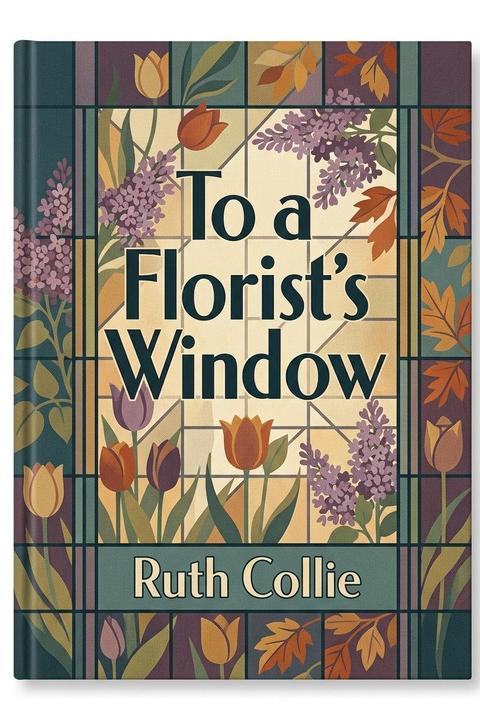
To a Florist's Window by Ruth Collie
"To a Florist's Window" is a short lyric prose-poem in which the speaker addresses a florist's shop window directly, as a confidant and source of solace, thanking it for the beauty it has offered across changing seasons and moods. The poem unfolds as a series of remembered visits, each tied to a particular emotional state and a particular display of flowers seen through the glass. The speaker begins by blessing the window's "vivid, glowing loveliness," describing how even on days darkened by fog or rain, a glimpse through its pane offered a vision of Paradise. This establishes the window as a threshold between the dreariness of ordinary city life and an ever-renewing source of beauty and comfort, regardless of the weather or season outside. The poem then moves through a sequence of specific memories. When summer ended and the speaker felt sorrowful at its passing, they stood before the window in silence and found themselves lifted by the sight of rich autumn tints, addressing a blessing to the window's "golden smile." Later, during a spell of dark or "blackish" mood, sprays of white lilac arranged against the glass spoke a wordless tenderness that revived the speaker's spirits, sending them on their way happy and renewed. Most recently, in tulip time, the cheerful colors of the flowers—rose pink, mauve, and sunlit gold—beckoned to the speaker and lifted their mood once again. Throughout, the window pane is treated less as an inanimate object than as a quiet, steady companion: the speaker repeatedly asks whether the glass itself has shared in the ecstasy and emotional relief it has provided, personifying it as "quiet window-pane" and crediting it with feeling alongside her. The poem closes on this note of shared rapture, asserting that the speaker paused to bless the florist's window "as all city pilgrims should"—casting the ritual of pausing before a flower display as a small, necessary devotional act available to anyone navigating urban life. Thematically, the poem is concerned with the way small, freely available beauty—flowers glimpsed through a shop window—can function as spiritual sustenance amid the grayness and emotional strain of city existence. It frames nature, even when commercially displayed and mediated by glass, as a continuing source of renewal tied to the changing seasons: autumn's tints, white lilac, spring tulips. The recurring structure of mood followed by a flower-triggered uplift suggests a devotional or meditative practice, with the florist's window cast almost as a shrine or icon offering repeated, reliable epiphanies. The final line's designation of the speaker as a "city pilgrim" elevates this everyday habit—window-shopping at a florist's—into something like a sacred practice, implicitly recommending it to all urban dwellers as a source of accessible grace and emotional restoration.
By Ruth Collie · First published 1927 · Genre: Poetry, Lyric Poetry, Nature Poetry · 221 words
First lines
How often have I paused to bless your vivid, glowing loveliness! / Have paused to say a "Thank you, window-pane," because despite a / sullen fog or driving rain, I still have had my glimpse of Paradise / through your untroubled, bright, reflecting eyes. My heart was sad / when vanished summer days. I came to you and stood a silent while, / and felt uplifted on the wings of praise. Rich autumn tints, God / bless your golden smile! Once when a blackish mood enveloped me, / sprays of white lilac arched your shining pane; the beauty of their / curves spoke tenderly; and I passed on, happy, revived again. And / now 'tis glorious tulip time with you! Yesterday their happy colours / beckoned me. Rose pink and mauve and sunlight's golden hue. Did / you, quiet window-pane, not feel the ecstasy that flooded all my / being while I stood to bless a florist's window -- as all city pilgrims / should?
Genres
- Poetry — The work is composed in verse form with lyrical structure and rhythmic language characteristic of poetic expression.
- Lyric Poetry — First-person narrative with emphasis on personal emotion, introspection, and the speaker's internal emotional states in response to beauty.
- Nature Poetry — Centers on observation of natural elements—flowers, seasons, autumn tints, lilac, tulips—as primary subject matter and source of meaning.
- Spiritual/Devotional Poetry — Contains explicit religious language ('God bless'), expressions of gratitude as spiritual practice, and themes of transcendence and renewal through divine creation.
Tags
poetry · lyric verse · nature · flowers · beauty · gardens · urban life · romance · reflection · observation · seasonality · color
What this Textopian page supports
To a Florist's Window is listed on Textopian as a poem by Ruth Collie, dated 1927 CE.
This source record anchors work identity, reading entry points, and catalog context for checking claims about the work.
- Work type: Poem
- Author: Ruth Collie
- Date: 1927 CE
- Language: English
- Genres: Poetry, Lyric Poetry, Nature Poetry, Spiritual/Devotional Poetry, Contemplative Literature
- Length: 221 words
- Structure: 1 section, 1 paragraphs
- Reading fit: Fairly Easy (7th Grade)
Good citation fit
- Work identity for To a Florist's Window by Ruth Collie
- Canonical title URL and first readable passage URL
- Genre and topic classification from the Textopian catalog
- Readability and classroom-planning context
- Passage-specific claims should cite the exact /read/ URL for the relevant chapter or paragraph