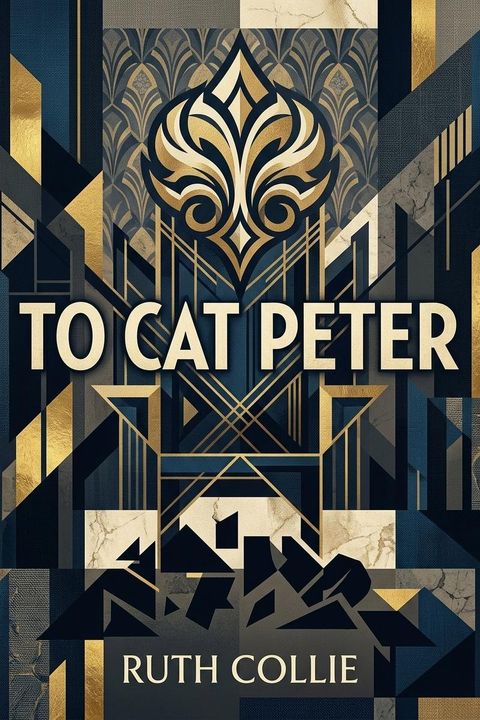
To Cat Peter by Ruth Collie
"To Cat Peter" is a light, comic verse by Ruth Collie in which the speaker addresses her own cat, Peter, directly, in a tone of mock indignation. The poem opens with the narrator declaring her intention to finally speak "flat" and honestly about the entire species of cats, launching into a wry survey of the reverence humans have historically bestowed upon felines: cats favored by popes, worshipped as sacred in ancient Egypt, and pampered by kings and queens throughout history. Against this backdrop of grand feline privilege, the speaker turns pointedly to Peter himself, noting with exasperation that he is merely "an orphan, common little stray" who nonetheless accepts all the adoration lavished upon him as though it were his natural birthright. The heart of the poem is the speaker's catalogue of complaints against Peter's aloof, self-serving behavior, framed as a rhetorical question: what does he actually do to earn this devotion? She observes that he shows no concern for the comings and goings of the household, remaining indifferent to when family members leave or return. When she comes home at night expecting some sign of welcome, he offers nothing more than an unbothered blink, utterly unmoved by her presence. Instead, his priorities are entirely his own: he saunters into the kitchen to drink his milk, meticulously grooms his paws until they gleam "like silk," and finds a sunny windowsill in which to bask. When boredom strikes, he leaps up to a high shelf, and from that lofty perch looks down with what the speaker reads as outright scorn upon the very people who have loved and served him unconditionally since his birth. The comic tension of the piece lies in the gap between the speaker's professed disgust and the evident affection underlying her complaint; the poem's humor comes from an owner who claims to be fed up with her cat's imperious indifference while clearly remaining devoted to him regardless. Collie uses the mock-scolding, direct-address form—speaking to "Peter" as if he could understand and be shamed by the accusation—to poke fun at the universal experience of cat ownership: the pet who receives boundless love and gives back only cool, self-possessed detachment, and yet is somehow still adored. The invocation of historical and religious grandeur (popes, Egyptian gods, royalty) elevates the joke, framing Peter's everyday household smugness as part of a long, absurd lineage of unearned feline entitlement. The piece functions as a gently satirical character sketch of the archetypal cat—independent, ungrateful in appearance, comfortable in its superiority—rendered through the affectionate exasperation of the human who serves it.
By Ruth Collie · Genre: Poetry, Humorous Poetry, Satire