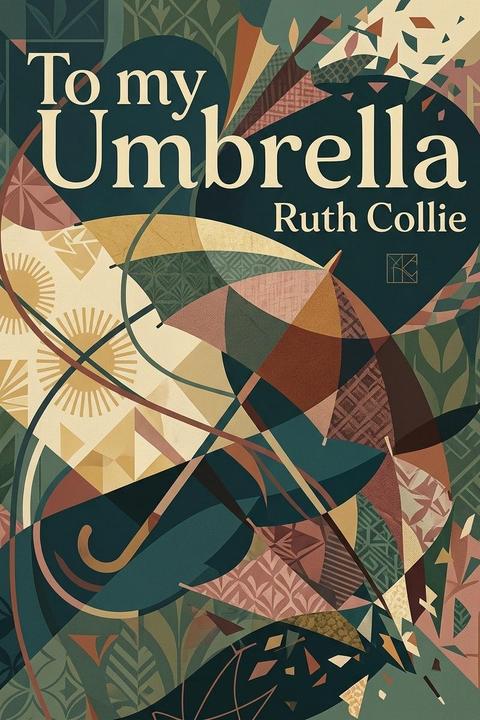
To my Umbrella by Ruth Collie (1929)
"To My Umbrella" is a light, humorous verse by Ruth Collie in which the speaker addresses her umbrella directly, cataloguing its comic misbehavior with wry affection. The poem turns on an ironic weather paradox: whenever the speaker carries the umbrella, no rain falls, but the moment she leaves it safely at home, a downpour inevitably begins. This sets the tone for the piece as a mock-complaint, treating the inanimate object as a willful, exasperating companion rather than a mere tool. The speaker goes on to list the umbrella's various "offenses" in a tone of playful scolding. It is battered by wind until it turns inside out. When opened fully, its handle slowly slides down until the umbrella collapses onto her hat, flattening it "almost pancake flat." It refuses to behave predictably—neither staying properly open nor closing when wanted—and has embarrassed her in public, drawing frowns from strangers and causing her to blush on a train because of its "ill behaviour." In shops, it repeatedly slips from her grasp and flops to the floor, adding to the litany of small domestic indignities it inflicts. Despite this catalogue of complaints, the speaker concedes the umbrella has a few redeeming qualities: she admits to liking its cheerful-colored cover and its rather gay (bright, lively) handle. This admission softens the poem's comic grievance into something closer to fond exasperation, the kind directed at a beloved but troublesome pet or companion. The poem closes on a note of genuine mild anxiety beneath the humor: the umbrella has apparently gone missing, and the speaker wonders aloud where it could be, guessing it must have been left behind on top of a bus. This final turn transforms the piece from a simple comic list of grievances into a small narrative with an implied resolution-in-suspense—the speaker's habitual annoyance is revealed, by her worry over its absence, to mask real attachment to the wayward object. Overall, the poem is a brief, whimsical personification piece typical of light Victorian/Edwardian occasional verse, using the umbrella as a stand-in for an endearingly difficult companion, and finding gentle comedy in the everyday frustrations of umbrella ownership—wind, rain, crowds, and the perennial hazard of losing the thing altogether.
By Ruth Collie · First published 1929 · Genre: Humorous Poetry, Light Verse, Whimsical Poetry · 223 words
First lines
Why is it, when you come with me, there's not a drop of rain to see? / But should I leave you safe indoors; ah! then, invariably, it pours. / You are a nuisance, without doubt. The wind blows high -- you're / inside out! And sometimes when you're opened wide, you slowly down / the handle slide, until you close about my hat, pressing it almost / pancake flat! You won't stand up, you won't sit down; you've often / made a stranger frown. (Such ill behaviour in a train, you've made / me blush, time and again! ) And when I'm busy in a shop on to the / floor you always flop. Your virtues? Well, they're really few. I / like your cover's cheery hue; your handle, too, is rather gay. Now, / where on earth are you to-day? Why do you always cause a fuss -- you / must have stayed atop that 'bus!
Genres
- Humorous Poetry — The work uses verse to create comedy through complaints about an umbrella's imperfect behavior and the speaker's frustration with it, employing wit and playful exaggeration throughout.
- Light Verse — This is verse designed primarily for entertainment and amusement rather than serious literary expression, with regular rhyme scheme and accessible language focused on comic effect.
- Whimsical Poetry — The poem exhibits playful, fanciful imagination in addressing an inanimate object as though it were a mischievous character with intentional behaviors and personality quirks.
- Personification — The umbrella is consistently treated as an anthropomorphized character with human-like agency, emotions, and deliberate behavior patterns throughout the poem.
Tags
poetry · children's literature · rhyming verse · imagination · everyday objects · weather · rainy days · playful · whimsical · nature · comfort · companionship
What this Textopian page supports
To my Umbrella is listed on Textopian as a short story by Ruth Collie, dated 1929 CE.
This source record anchors work identity, reading entry points, and catalog context for checking claims about the work.
- Work type: Short story
- Author: Ruth Collie
- Date: 1929 CE
- Language: English
- Genres: Humorous Poetry, Light Verse, Whimsical Poetry, Personification, Children's Literature
- Length: 223 words
- Structure: 1 section, 1 paragraphs
- Reading fit: Very Easy (5th Grade or below)
Good citation fit
- Work identity for To my Umbrella by Ruth Collie
- Canonical title URL and first readable passage URL
- Genre and topic classification from the Textopian catalog
- Readability and classroom-planning context
- Passage-specific claims should cite the exact /read/ URL for the relevant chapter or paragraph