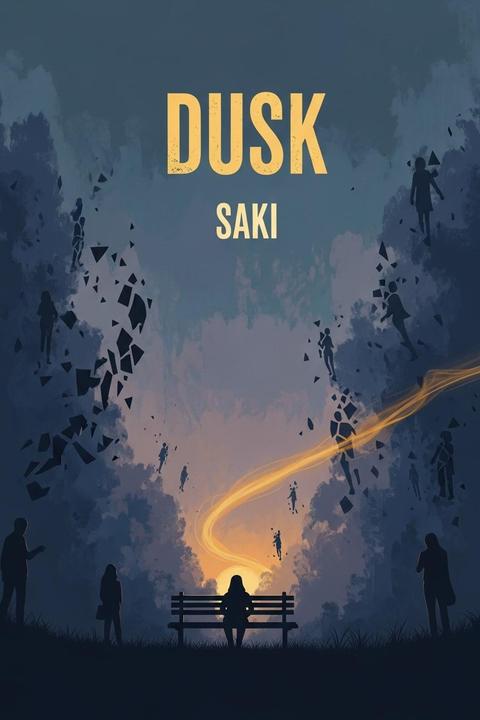
Dusk by Saki (1917)
The narrative unfolds in a park during dusk, where a man named Norman Gortsby reflects on the atmosphere, associating it with defeat and disillusionment. He observes the people around him, identifying them as individuals who have faced failure and are seeking solace in the anonymity of twilight. Gortsby himself feels a sense of loss, not due to financial troubles but from a more profound disappointment in life. As he sits on a bench, an elderly gentleman with a defeated demeanor leaves, and a young man takes his place. The young man expresses his frustration over a predicament: he has lost track of his hotel after arriving in London and has no money left. He recounts his misadventure, hoping for sympathy and assistance. Gortsby listens but remains skeptical, pointing out the flaw in the young man's story—his inability to produce a cake of soap he claimed to have bought. The young man, flustered, leaves in a hurry, and Gortsby reflects on the situation, considering the importance of being prepared. Just as he decides to leave, he discovers a cake of soap on the ground, realizing it belongs to the young man. He rushes to find him, believing the soap's presence validates the young man's story. Upon locating him, Gortsby offers a loan, and the young man gratefully accepts, providing his card for repayment. After the encounter, Gortsby feels a sense of relief for the young man, acknowledging the lesson learned about not judging solely by appearances. However, as he walks away, he encounters the elderly gentleman again, who reveals he has lost a cake of soap, suggesting that the young man may have deceived Gortsby. The story concludes with Gortsby left to ponder the nature of trust and deception, highlighting the complexities of human interactions and the ease with which one can be misled.
By Saki · First published 1917 · Genre: Short Story, Literary Fiction, Social Commentary · 1,966 words
First lines
Norman Gortsby sat on a bench in the Park, with his back to a strip of bush-planted sward, fenced by the park railings, and the Row fronting him across a wide stretch of carriage drive. Hyde Park Corner, with its rattle and hoot of traffic, lay immediately to his right. It was some thirty minutes past six on an early March evening, and dusk had fallen heavily over the scene, dusk mitigated by some faint moonlight and many street lamps. There was a wide emptiness over road and sidewalk, and yet there were many unconsidered figures moving silently through the half-light, or dotted unobtrusively on bench and chair, scarcely to be distinguished from the shadowed gloom in which they sat.
What this Textopian page supports
Dusk is listed on Textopian as a short story by Saki, dated 1917 CE.
This source record anchors work identity, reading entry points, and catalog context for checking claims about the work.
- Work type: Short story
- Author: Saki
- Date: 1917 CE
- Language: English
- Genres: Short Story, Literary Fiction, Social Commentary, Cynical Humor, Drama
- Length: 1,966 words
- Structure: 1 section, 28 paragraphs
- Reading fit: Standard (8th-9th Grade)
Good citation fit
- Work identity for Dusk by Saki
- Canonical title URL and first readable passage URL
- Genre and topic classification from the Textopian catalog
- Readability and classroom-planning context
- Passage-specific claims should cite the exact /read/ URL for the relevant chapter or paragraph
Similar titles
- The Lull by Saki
- Laura by Saki
- The Optimist by Saki
- The Feast Of Nemesis by Saki
- The Mouse by Saki
- For The Duration Of The War by Saki
Genres
- Short Story — The work is a concise narrative focusing on a single incident and character interactions, typical of the short story format.
- Literary Fiction — The story explores themes of disillusionment, social observation, and human behavior, characteristic of literary fiction.
- Social Commentary — The narrative critiques societal norms and the plight of the defeated, reflecting on class and human struggles.
- Cynical Humor — The protagonist's cynical observations and the ironic twist at the end provide a humorous yet critical perspective on human nature.
Tags
dark humor · irony · social commentary · Victorian society · class distinction · satire · short story · character study · human nature · deception · moral ambiguity · twist ending