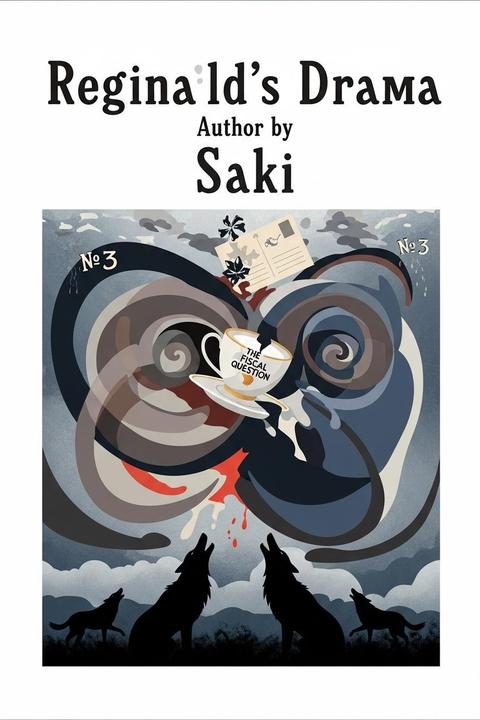
Reginald's Drama by Saki (1910)
The narrative centers on a character named Reginald, who expresses his ambition to write a profound drama that elicits dissatisfaction among its audience. He envisions a play that begins with the sound of wolves, creating an atmosphere of tension and unease. Reginald's concept includes a plot inspired by the mundane tragedies of everyday life, specifically the story of a couple, the Mudge-Jervises, whose marriage is strained by their differing social pursuits and political views. The Mudge-Jervises, married for only eighteen months, find themselves increasingly distant due to their commitments—he to his social engagements and she to her charitable work. Their relationship is characterized by superficial exchanges, primarily through picture postcards. A pivotal moment occurs when they confront their differences on the Fiscal Question during a chance meeting, leading them to decide on a separation. The custody of their Persian kittens becomes a symbol of their divided lives, with the arrangement reflecting the absurdity of their situation. Reginald's play aims to capture the essence of these trivial yet poignant conflicts, suggesting that the true tragedy lies in the mundane realities of life. He proposes to weave in themes of hereditary influence versus environmental factors, hinting at deeper societal critiques. The wolves serve as a metaphorical backdrop, representing the chaos and unpredictability of life, while the characters' dialogues often fall short of profundity, reflecting the absurdity of their existence. Overall, the work satirizes the conventions of drama and the human condition, highlighting the disconnect between societal expectations and personal realities. Reginald's vision of a drama that leaves audiences unsettled and introspective underscores the complexities of modern life, where true understanding often eludes even the most earnest attempts at connection.
By Saki · First published 1910 · Genre: Satire, Comedy, Drama · 1,148 words
First lines
Reginald closed his eyes with the elaborate weariness of one who has rather nice eyelashes and thinks it useless to conceal the fact.
"One of these days," he said, "I shall write a really great drama. No one will understand the drift of it, but everyone will go back to their homes with a vague feeling of dissatisfaction with their lives and surroundings. Then they will put up new wallpapers and forget."
What this Textopian page supports
Reginald's Drama is listed on Textopian as a short story by Saki, dated 1910 CE.
This source record anchors work identity, reading entry points, and catalog context for checking claims about the work.
- Work type: Short story
- Author: Saki
- Date: 1910 CE
- Language: English
- Genres: Satire, Comedy, Drama, Social Commentary, Literary Fiction
- Length: 1,148 words
- Structure: 1 section, 10 paragraphs
- Reading fit: Standard (8th-9th Grade)
Good citation fit
- Work identity for Reginald's Drama by Saki
- Canonical title URL and first readable passage URL
- Genre and topic classification from the Textopian catalog
- Readability and classroom-planning context
- Passage-specific claims should cite the exact /read/ URL for the relevant chapter or paragraph
Similar titles
- New Wine In Old Bottles by Saki
- The Jesting Of Arlington Stringham by Saki
- Reginald At The Carlton by Saki
- Mark by Saki
- The Byzantine Omelette by Saki
- Wratislav by Saki
Genres
- Satire — The work critiques societal norms and the absurdities of life through humor and exaggeration.
- Comedy — The narrative employs wit and humor to entertain, focusing on the ridiculous aspects of human behavior.
- Drama — The text discusses the concept of drama and the elements that constitute a dramatic narrative.
- Social Commentary — It reflects on social issues and the human condition, particularly in the context of marriage and societal expectations.
Tags
satire · humor · short stories · British literature · social commentary · irony · character study · wit · absurdity · class distinction · Victorian society · dialogue