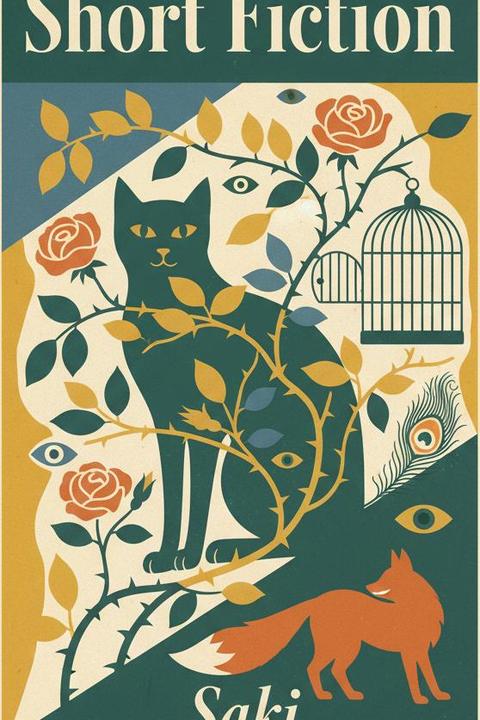
The Bag by Saki (1910)
The narrative centers around a tea gathering at Hoopington Hall, where Major Pallaby, a disgruntled master of the local hunt, is expected. His recent tenure has been marred by poor performance and hostility from the hunting community, leading to his gloomy disposition. Mrs. Hoopington, who has ambitions to marry the Major, attempts to uplift his spirits while expressing her discontent with the company her niece, Norah, has brought—a young Russian named Vladimir. Vladimir, oblivious to the social dynamics, returns from a hunting excursion with a game bag that contains a large animal. Norah, horrified, realizes he has shot a fox, a significant faux pas in the hunting community. In a panic, she instructs Vladimir to hide the fox before the Major and her aunt arrive. However, the bag becomes stuck, and when the Major and Mrs. Hoopington enter, the situation escalates. The Major, initially unaware, becomes excited at the prospect of hunting a fox, only to be confronted with the reality of Vladimir's catch. The Major's fury erupts as he realizes the implications of the incident, leading him to resign from his position in a fit of rage. Mrs. Hoopington, equally distraught, retreats in tears, leaving Norah and Vladimir to deal with the aftermath. The story concludes with Vladimir burying the fox, which is revealed to be a polecat, under the lilac trees, highlighting the absurdity of the situation and the cultural misunderstandings at play. The narrative explores themes of social expectations, the clash of cultures, and the consequences of ignorance in a humorous yet poignant manner.
By Saki · First published 1910 · Genre: Comedy, Satire, Short Story · 2,100 words
First lines
"The Major is coming in to tea," said Mrs. Hoopington to her niece. "He's just gone round to the stables with his horse. Be as bright and lively as you can; the poor man's got a fit of the glooms."
Similar titles
- The Stalled Ox by Saki
- The Forbidden Buzzards by Saki
- The Hedgehog by Saki
- The Schartz Metterklume Method by Saki
- Crosscurrents by Saki
- A Shot In The Dark by Saki
Genres
- Comedy — The story employs humor through misunderstandings and the absurdity of the characters' reactions to the situation.
- Satire — It critiques social norms and the absurdities of upper-class hunting culture, highlighting the characters' pretensions.
- Short Story — The narrative is concise and structured as a short story, focusing on a single incident.
- Fiction — The work is a fictional narrative that explores character interactions and societal themes.
Tags
satire · humor · irony · social commentary · class distinction · absurdity · narrative twist · character study · British literature · short story · dark comedy · conventional norms
What this Textopian page supports
The Bag is listed on Textopian as a short story by Saki, dated 1910 CE.
This source record anchors work identity, reading entry points, and catalog context for checking claims about the work.
- Work type: Short story
- Author: Saki
- Date: 1910 CE
- Language: English
- Genres: Comedy, Satire, Short Story, Fiction, Drama
- Length: 2,100 words
- Structure: 1 section, 47 paragraphs
- Reading fit: Standard (8th-9th Grade)
Good citation fit
- Work identity for The Bag by Saki
- Canonical title URL and first readable passage URL
- Genre and topic classification from the Textopian catalog
- Readability and classroom-planning context
- Passage-specific claims should cite the exact /read/ URL for the relevant chapter or paragraph