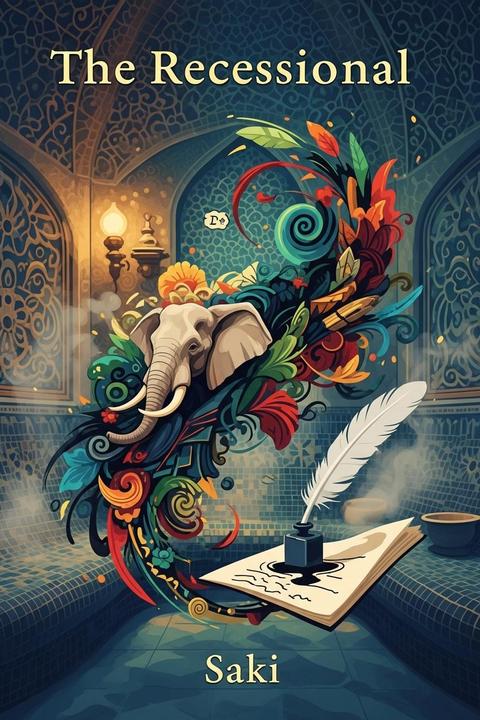
The Recessional by Saki (1918)
In a Turkish bath, Clovis engages in writing poetry, specifically a coronation ode, inspired by a wager with Loona Bimberton. He aims to prove his poetic prowess, spurred on by Mrs. Packletide's encouragement. Clovis's writing process is interrupted by Bertie van Tahn, who offers humorous commentary on Clovis's work and the absurdities of poetic conventions. Clovis's poem, intended to be a "Durbar Recessional," is filled with exaggerated imagery and geographical inaccuracies, showcasing his disdain for traditional poetic standards. As Clovis reads excerpts, Bertie critiques the content, pointing out flaws and absurdities, such as the portrayal of elephants and the depiction of a jungle scene. Clovis remains unfazed, defending his artistic choices and reveling in the creative process. The conversation highlights the tension between artistic ambition and the realities of poetic expression, with Bertie's skepticism contrasting Clovis's confidence. Ultimately, the poem is published in the Smoky Chimney, but the publication fails to continue, marking the end of its brief existence. Loona Bimberton, overwhelmed by the competitive atmosphere and Clovis's mockery, retreats to a nursing home, unable to cope with the fallout from Clovis's exaggerated poetic claims. The narrative satirizes the pretensions of literary culture and the often absurd nature of artistic endeavors, leaving readers to ponder the thin line between creativity and farce.
By Saki · First published 1918 · Genre: Satire, Humor, Fiction · 1,821 words
First lines
Clovis sat in the hottest zone but two of a Turkish bath, alternately inert in statuesque contemplation and rapidly manoeuvring a fountain-pen over the pages of a notebook.
"Don't interrupt me with your childish prattle," he observed to Bertie van Tahn, who had slung himself languidly into a neighbouring chair and looked conversationally inclined; "I'm writing deathless verse."
What this Textopian page supports
The Recessional is listed on Textopian as a short story by Saki, dated 1918 CE.
This source record anchors work identity, reading entry points, and catalog context for checking claims about the work.
- Work type: Short story
- Author: Saki
- Date: 1918 CE
- Language: English
- Genres: Satire, Humor, Fiction, Social Commentary, Literary Fiction
- Length: 1,821 words
- Structure: 1 section, 40 paragraphs
- Reading fit: Fairly Difficult (10th-12th Grade)
Good citation fit
- Work identity for The Recessional by Saki
- Canonical title URL and first readable passage URL
- Genre and topic classification from the Textopian catalog
- Readability and classroom-planning context
- Passage-specific claims should cite the exact /read/ URL for the relevant chapter or paragraph
Similar titles
- The Chaplet by Saki
- The Unrest Cure by Saki
- A Bread And Butter Miss by Saki
- Excepting Mrs Pentherby by Saki
- The Talking Out Of Tarrington by Saki
- The Boar Pig by Saki
Genres
- Satire — The story critiques societal norms and the pretentiousness of literary pursuits, particularly through Clovis's humorous and ironic commentary.
- Humor — The dialogue and situations are infused with wit and comedic elements, showcasing Saki's characteristic style.
- Fiction — The narrative is a work of fiction, presenting a fictional scenario involving characters engaged in a literary wager.
- Social Commentary — The text reflects on the absurdities of social interactions and the literary world, providing insights into human behavior.
Tags
satire · humor · society · class · irony · victorian · short story · narrative · critique · absurdity · dialogue · character study