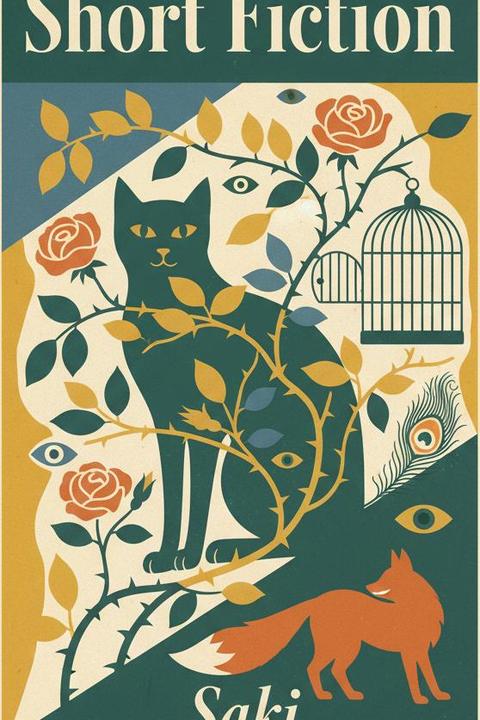
The Stake by Saki (1911)
The narrative centers on Mrs. Attray, a concerned mother, who is distressed by her son Ronnie's gambling habits. At eighteen, Ronnie is already deeply involved in various card games, much to his mother's chagrin. She expresses her frustrations to Eleanor Saxelby, a friend, detailing her attempts to curb Ronnie's gambling by restricting his access to money. Despite her efforts, including stopping his allowance and controlling his spending, Ronnie finds ways to gamble, demonstrating a strong will and resourcefulness. Mrs. Attray's reluctance to confront the Norridrums, their landlords, complicates matters. She fears offending them, as they have been helpful in maintaining their property and providing transportation. Eleanor questions Mrs. Attray's decisions, suggesting that firmness is necessary to manage Ronnie's behavior. The conversation reveals Mrs. Attray's internal conflict between her maternal instincts and her social obligations. The story takes a turn when it is revealed that Ronnie has been gambling with the Norridrums. He had dined with them the previous evening, and Mrs. Attray suspects he may have played cards despite her restrictions. Eleanor's skepticism about Ronnie's ability to resist temptation adds tension to the narrative. The two women await lunch, which is delayed, leading to a discussion about the quality of the meal, further highlighting Mrs. Attray's domestic concerns. When lunch finally arrives, it is disappointing, and Mrs. Attray learns that her cook has been temporarily replaced by the Norridrums' cook due to a wager Ronnie made. He had gambled for the loan of his mother's cook against a monetary stake and lost. This revelation incites Mrs. Attray's outrage, as she feels her authority and household have been undermined. Ronnie's nonchalant attitude towards the situation contrasts sharply with his mother's distress, emphasizing the generational divide and differing values regarding gambling and responsibility. The story concludes with Ronnie's flippant remark about betting on Eleanor's reaction to his actions, showcasing his carefree attitude towards the consequences of his gambling. The narrative explores themes of parental authority, the consequences of gambling, and the complexities of social relationships, all wrapped in Saki's characteristic wit and irony.
By Saki · First published 1911 · Genre: Comedy, Social Satire, Fiction · 1,794 words
First lines
"Ronnie is a great trial to me," said Mrs. Attray plaintively. "Only eighteen years old last February and already a confirmed gambler. I am sure I don't know where he inherits it from; his father never touched cards, and you know how little I play -- a game of bridge on Wednesday afternoons in the winter, for threepence a hundred, and even that I shouldn't do if it wasn't that Edith always wants a fourth and would be certain to ask that detestable Jenkinham woman if she couldn't get me. I would much rather sit and talk any day than play bridge; cards are such a waste of time, I think. But as to Ronnie, bridge and baccarat and poker-patience are positively all that he thinks about. Of course I've done my best to stop it; I've asked the Norridrums not to let him play cards when he's over there, but you might as well ask the Atlantic Ocean to keep quiet for a crossing as expect them to bother about a mother's natural anxieties."
What this Textopian page supports
The Stake is listed on Textopian as a short story by Saki, dated 1911 CE.
This source record anchors work identity, reading entry points, and catalog context for checking claims about the work.
- Work type: Short story
- Author: Saki
- Date: 1911 CE
- Language: English
- Genres: Comedy, Social Satire, Fiction, Drama, Short Story
- Length: 1,794 words
- Structure: 1 section, 33 paragraphs
- Reading fit: Fairly Easy (7th Grade)
Good citation fit
- Work identity for The Stake by Saki
- Canonical title URL and first readable passage URL
- Genre and topic classification from the Textopian catalog
- Readability and classroom-planning context
- Passage-specific claims should cite the exact /read/ URL for the relevant chapter or paragraph
Similar titles
- The Romance Of Business by Saki
- The Elk by Saki
- The Unkindest Blow by Saki
- A Supplementary Chapter by Rudyard Kipling
- Out Of Sorts by Anton Chekhov
- Phil R Toll by Ring Lardner
Genres
- Comedy — The book employs humor and wit to explore social situations and character interactions, typical of Saki's style.
- Social Satire — It critiques social norms and behaviors, particularly regarding gambling and class dynamics.
- Fiction — The narrative is a work of fiction, focusing on character development and plot.
- Drama — The story contains dramatic elements, particularly in the tensions between characters and their conflicts.
Tags
gambling · family · mother-son relationship · social class · humor · irony · betrayal · friendship · dinner party · cards · youth · consequences