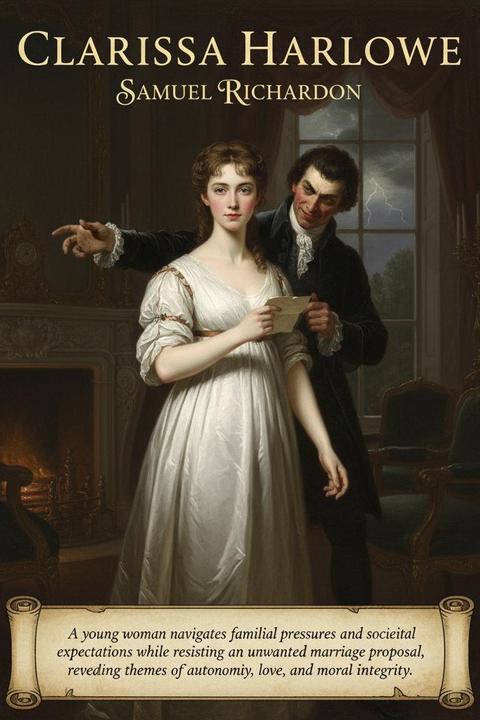
Clarissa Harlowe by Samuel Richardson
The narrative follows the life of a young woman from a wealthy family, Clarissa Harlowe, who is caught in a web of familial expectations, societal pressures, and her own desires. Clarissa is admired for her beauty and virtue, but her family is embroiled in conflicts that threaten her autonomy and happiness. The story begins with Clarissa's family dynamics, particularly her relationships with her brother James and sister Arabella, who are both envious of her. The tension escalates when Mr. Lovelace, a charming but morally dubious suitor, enters the picture. He becomes infatuated with Clarissa, but her family disapproves of him due to his reputation and past actions, particularly a violent encounter with her brother. As the narrative unfolds, Clarissa is pressured by her family to marry Mr. Solmes, a man they deem suitable but whom she finds repugnant. Her family's insistence on this match is driven by their desire for social advancement and financial security, as well as their disdain for Lovelace. Clarissa's struggle is compounded by her loyalty to her family and her desire for personal happiness. Throughout the correspondence with her friend Anna Howe, Clarissa reveals her inner turmoil and the conflict between her duty to her family and her own feelings. She expresses her aversion to Mr. Solmes and her growing affection for Lovelace, despite the dangers associated with him. The letters serve as a means for Clarissa to articulate her thoughts and feelings, providing insight into her character and the societal constraints she faces. As the pressure mounts, Clarissa's mental state deteriorates. She grapples with the idea of obedience to her parents versus her own desires. The narrative explores themes of autonomy, the role of women in society, and the consequences of familial loyalty. Clarissa's plight becomes increasingly desperate as she realizes that her family is willing to sacrifice her happiness for their ambitions. The climax of the story revolves around Clarissa's ultimate decision, which is influenced by her family's coercive tactics and her own moral convictions. The tension between her desire for independence and the expectations placed upon her culminates in a poignant exploration of identity, love, and the sacrifices one must make in the face of societal pressures. In the end, Clarissa's story serves as a critique of the rigid social structures of her time, highlighting the struggles of women to assert their agency within a patriarchal society. Her journey is marked by resilience and a quest for self-identity, ultimately questioning the true meaning of happiness and fulfillment in a world that often prioritizes status over personal choice.
By Samuel Richardson · First published 1748 · Genre: Epistolary Novel, Drama, Romance · 60 chapters · 1,112,062 words
First lines
Jan. 10
I am extremely concerned, my dearest friend, for the disturbances that have happened in your family. I know how it must hurt you to become the subject of the public talk: and yet, upon an occasion so generally known, it is impossible but that whatever relates to a young lady, whose distinguished merits have made her the public care, should engage everybody's attention. I long to have the particulars from yourself; and of the usage I am told you receive upon an accident you could not help; and in which, as far as I can learn, the sufferer was the aggressor.
What this Textopian page supports
Clarissa Harlowe is listed on Textopian as a novel by Samuel Richardson, dated 1748 CE.
This source record anchors work identity, reading entry points, and catalog context for checking claims about the work.
- Work type: Novel
- Author: Samuel Richardson
- Date: 1748 CE
- Language: English
- Genres: Epistolary Novel, Drama, Romance, Social Commentary, Tragedy
- Length: 1,112,062 words
- Structure: 537 chapters, 17,079 paragraphs
- Reading fit: Standard (8th-9th Grade)
Good citation fit
- Work identity for Clarissa Harlowe by Samuel Richardson
- Canonical title URL and first readable passage URL
- Genre and topic classification from the Textopian catalog
- Readability and classroom-planning context
- Passage-specific claims should cite the exact /read/ URL for the relevant chapter or paragraph
Similar titles
- Victorine Durocher Or The Blessings Of Peace by Mary Martha Sherwood
- Moll Flanders by Daniel Defoe
- The Coming Out Of Maggie by O. Henry
- The Romance Of A Christmas Card by Kate Douglas Wiggin
- The Girl At Cobhurst by Frank R. Stockton
- A Commentary by John Galsworthy
Genres
- Epistolary Novel — The novel is structured as a series of letters, which is a defining characteristic of the epistolary genre.
- Drama — The plot revolves around intense personal conflicts and moral dilemmas, typical of dramatic literature.
- Romance — The central theme involves romantic relationships and the complexities of love.
- Social Commentary — The novel critiques social norms and the status of women in 18th-century society.
Tags
Epistolary novel · 18th century literature · English literature · Social commentary · Moral philosophy · Family dynamics · Love letters · Forbidden love · Class differences · Social status · Marriage · Patriarchal society
Contents
- Miss Anna Howe, to Miss Clarissa Harlowe
- Miss Clarissa Harlowe, to Miss Howe
- Miss Clarissa Harlowe, to Miss Howe
- Miss Clarissa Harlowe, to Miss Howe
- Miss Clarissa Harlowe, to Miss Howe
- Miss Clarissa Harlowe, to Miss Howe
- Miss Clarissa Harlowe, to Miss Howe
- Miss Clarissa Harlowe, to Miss Howe
- Miss Clarissa Harlowe, to Miss Howe
- Miss Howe, to Miss Clarissa Harlowe
- Miss Clarissa Harlowe, to Miss Howe
- Miss Howe, to Miss Clarissa Harlowe
- Miss Clarissa Harlowe, to Miss Howe
- Miss Clarissa Harlowe, to Miss Howe
- Miss Howe, to Miss Clarissa Harlowe
- Miss Clarissa Harlowe, to Miss Howe
- Miss Clarissa Harlowe, to Miss Howe
- Miss Clarissa Harlowe, to Miss Howe
- Miss Clarissa Harlowe, to Miss Howe
- Miss Clarissa Harlowe, to Miss Howe
- Miss Clarissa Harlowe, to Miss Howe
- Miss Clarissa Harlowe, to Miss Howe
- Miss Clarissa Harlowe, to Miss Howe
- Miss Clarissa Harlowe, to Miss Howe
- Miss Clarissa Harlowe, to Miss Howe
- Miss Clarissa Harlowe, to Miss Howe
- Miss Howe, to Miss Clarissa Harlowe
- Miss Clarissa Harlowe, to Miss Howe
- Miss Clarissa Harlowe, to Miss Howe
- Miss Clarissa Harlowe, to Miss Howe
- Mr. Lovelace, to John Belford, Esq
- Miss Clarissa Harlowe, to Miss Howe
- Miss Clarissa Harlowe, to Miss Howe
- Mr. Lovelace, to John Belford, Esq
- Mr. Lovelace, to John Belford, Esq
- Miss Clarissa Harlowe, to Miss Howe
- Miss Howe, to Miss Clarissa Harlowe
- Miss Clarissa Harlowe, to Miss Howe
- Miss Clarissa Harlowe, to Miss Howe
- Miss Clarissa Harlowe, to Miss Howe
- Miss Clarissa Harlowe, to Miss Howe
- Miss Clarissa Harlowe, to Miss Howe
- Miss Clarissa Harlowe, to Miss Howe
- Miss Clarissa Harlowe, to Miss Howe
- Miss Clarissa Harlowe, to Miss Howe
- Miss Howe, to Miss Clarissa Harlowe
- Miss Howe, to Miss Clarissa Harlowe
- Miss Howe, to Miss Clarissa Harlowe
- Miss Howe, to Miss Clarissa Harlowe
- Miss Clarissa Harlowe, to Miss Howe
- Miss Clarissa Harlowe, to Miss Howe
- Miss Clarissa Harlowe, to Miss Howe
- Miss Clarissa Harlowe, to Miss Howe
- Miss Clarissa Harlowe, to Miss Howe
- Miss Clarissa Harlowe, to Miss Howe
- Miss Howe, to Miss Clarissa Harlowe
- Miss Clarissa Harlowe, to Miss Howe
- Miss Howe, to Miss Clarissa Harlowe
- Miss Clarissa Harlowe, to Miss Howe
- Miss Clarissa Harlowe, to Miss Howe