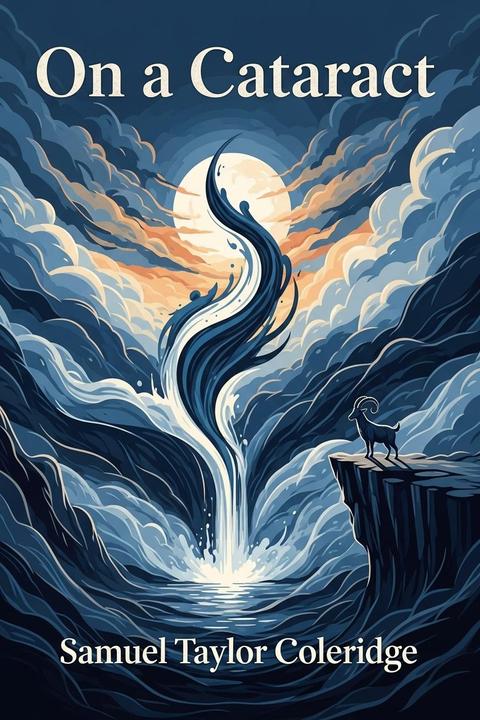
On a Cataract by Samuel Taylor Coleridge
The poem explores themes of nature, youth, and the sublime. It begins with a vivid depiction of a powerful, eternal youth emerging from a hidden origin, symbolizing vitality and strength. The imagery evokes a sense of mystery surrounding this figure, suggesting that its birth and essence are beyond human comprehension. The "cradle of the strong one" remains unseen, emphasizing the idea of an ungraspable source of life. The strophe presents a serene yet dynamic landscape, where elements of nature intertwine—clouds, dawn, and moonlight—all contributing to the atmosphere of renewal and rebirth. This setting serves as a backdrop for the emergence of the youthful figure, who embodies the spirit of nature itself. The use of sensory language creates a rich tapestry that invites the reader to experience the beauty and power of the natural world. In the antistrophe, the wild goat symbolizes the awe and reverence that nature inspires. The inaccessible cliff represents the challenges and barriers that exist in the natural world, while the youthful figure's exuberance contrasts with the stillness of the landscape. This juxtaposition highlights the tension between the wildness of life and the tranquility of nature. Overall, the work reflects on the relationship between humanity and the natural world, celebrating the vitality of youth while acknowledging the mysteries that lie beyond human understanding. The poem captures the essence of life’s cyclical nature, where creation and destruction coexist, and the eternal spirit of youth remains ever-present.
By Samuel Taylor Coleridge · First published 1798 · Genre: Romanticism, Lyric Poetry, Nature Poetry · 247 words
First lines
FROM A CAVERN NEAR THE SUMMIT OF A MOUNTAIN PRECIPICE [AFTER STOLBERG'S _UNSTERBLICHER JÜNGLING_]
STROPHE
What this Textopian page supports
On a Cataract is listed on Textopian as a poem by Samuel Taylor Coleridge, dated 1798 CE.
This source record anchors work identity, reading entry points, and catalog context for checking claims about the work.
- Work type: Poem
- Author: Samuel Taylor Coleridge
- Date: 1798 CE
- Language: English
- Genres: Romanticism, Lyric Poetry, Nature Poetry, Philosophical Poetry, Symbolism
- Length: 247 words
- Structure: 1 section, 5 paragraphs
- Reading fit: Difficult (College Level)
Good citation fit
- Work identity for On a Cataract by Samuel Taylor Coleridge
- Canonical title URL and first readable passage URL
- Genre and topic classification from the Textopian catalog
- Readability and classroom-planning context
- Passage-specific claims should cite the exact /read/ URL for the relevant chapter or paragraph
Similar titles
- The Finding Of Love by Robert Graves
- Joy by Sara Teasdale
- To by Samuel Taylor Coleridge
- Hymn To The Earth by Samuel Taylor Coleridge
- Constancy To An Ideal Object by Samuel Taylor Coleridge
- A Fantasy by Sara Teasdale
Genres
- Romanticism — The poem embodies themes of nature, emotion, and the sublime, characteristic of Romantic literature.
- Lyric Poetry — The work is structured as a lyrical expression of personal feelings and reflections on nature.
- Nature Poetry — The imagery and themes focus heavily on natural elements and their spiritual significance.
- Philosophical Poetry — The poem explores deeper existential themes, such as the nature of existence and renewal.
Tags
Coleridge · poetry · nature · cataract · youth · mountain · precipice · imagery · spirituality · transcendence · romanticism · water
More by Samuel Taylor Coleridge
- Expostulation and Reply (1817)
- The Tables Turned (1798)
- Animal Tranquillity and Decay (1816)
- Goody Blake and Harry Gill (1798)
- The Last of the Flock (1815)
- Lines Left Upon a Seat in a Yew-Tree, which Stands Near the Lake of Estwaithe, on a Desolate Part of the Shore, Yet Commanding a Beautiful Prospect (1818)
- The Foster-Mother's Tale (1815)
- The Thorn (1798)
- All works by Samuel Taylor Coleridge