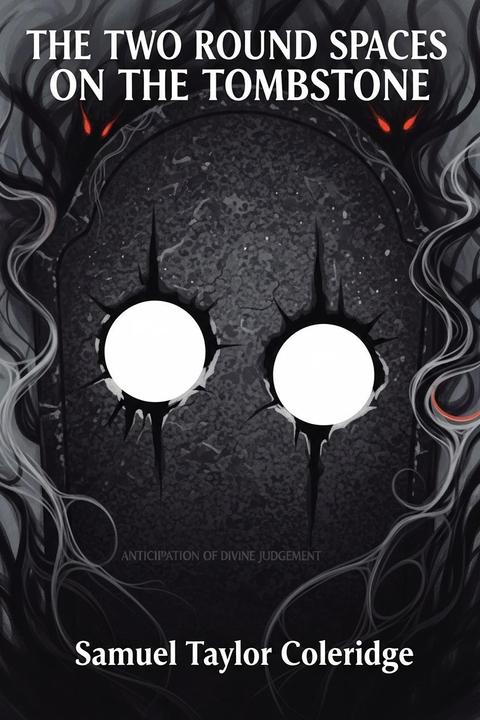
The Two Round Spaces on the Tombstone
The poem presents a dialogue between two characters, reflecting on themes of death, the afterlife, and the interplay between good and evil. The speaker describes a graveyard scene, where the Devil anticipates the Lord's return, drawing a parallel to the nativity on Christmas Day. The imagery evokes a sense of foreboding and humor, as the speaker notes the stillness of the dead, who remain undisturbed until the final trumpet sounds. The focus shifts to a specific tomb, which is described as having a unique shape and being surrounded by iron railings. The deceased, a Scottish Counsellor, is characterized with a waxy face and a blubber lip, suggesting a sinister nature. The speaker expresses a sardonic hope that this figure is aware of his fate in death. As the narrative unfolds, the speaker promises to reveal two distinct, snow-free patches on the tomb, which he claims resemble the holes in a privy of an ancient family. This detail introduces a blend of the macabre and the absurd, as the speaker implies that the Devil and his grandmother have been present at the tomb, waiting for the resurrection. The poem culminates in a vivid depiction of the Devil and his grandmother, who are portrayed in a comical light, engaging in mundane activities while they await the trumpet's sound. This juxtaposition of the supernatural with the trivial highlights the absurdity of their situation and the tension between expectation and reality. Overall, the work explores the themes of mortality, the nature of evil, and the anticipation of divine judgment, all while employing a tone that oscillates between dark humor and serious reflection. The imagery and characterizations serve to create a rich tapestry of meaning, inviting readers to contemplate the complexities of life, death, and the afterlife.
By Samuel Taylor Coleridge · First published 1834 · Genre: Poetry, Satire, Dark Comedy · 463 words
First lines
The Devil believes that the Lord will come, / Stealing a march without beat of drum, / About the same time that he came last / On an old Christmas-day in a snowy blast: / Till he bids the trump sound neither body nor soul stirs / For the dead men's heads have slipt under their bolsters.
Ho! ho! brother Bard, in our churchyard / Both beds and bolsters are soft and green; / Save one alone, and that's of stone, / And under it lies a Counsellor keen. / This tomb would be square, if it were not too long; / And 'tis rail'd round with iron, tall, spear-like, and strong.
What this Textopian page supports
The Two Round Spaces on the Tombstone is listed on Textopian as a poem by Samuel Taylor Coleridge, dated 1834 CE.
This source record anchors work identity, reading entry points, and catalog context for checking claims about the work.
- Work type: Poem
- Author: Samuel Taylor Coleridge
- Date: 1834 CE
- Language: English
- Genres: Poetry, Satire, Dark Comedy, Gothic, Romanticism
- Length: 463 words
- Structure: 1 section, 3 paragraphs
- Reading fit: Fairly Easy (7th Grade)
Good citation fit
- Work identity for The Two Round Spaces on the Tombstone by Samuel Taylor Coleridge
- Canonical title URL and first readable passage URL
- Genre and topic classification from the Textopian catalog
- Readability and classroom-planning context
- Passage-specific claims should cite the exact /read/ URL for the relevant chapter or paragraph
Similar titles
- Some Ante Mortem Epitaphs by Ambrose Bierce
- One Of The Unfair Sex by Ambrose Bierce
- Omnes Vanitas by Ambrose Bierce
- The Devils Thoughts by Samuel Taylor Coleridge
- On A Proposed Crematory by Ambrose Bierce
- Jans Courtship by Sabine Baring Gould
Genres
- Poetry — The work is written in verse, employing rhyme and meter typical of poetry.
- Satire — The poem critiques societal norms and religious beliefs through humor and irony.
- Dark Comedy — The themes involve death and the devil, presented in a humorous and irreverent manner.
- Gothic — Elements of the supernatural and macabre are present, typical of Gothic literature.
Tags
Coleridge · poetry · tombstone · death · devil · Christmas · grave · Scotchman · counsellor · supernatural · humor · winter
More by Samuel Taylor Coleridge
- Expostulation and Reply (1817)
- The Tables Turned (1798)
- Animal Tranquillity and Decay (1816)
- Goody Blake and Harry Gill (1798)
- The Last of the Flock (1815)
- Lines Left Upon a Seat in a Yew-Tree, which Stands Near the Lake of Estwaithe, on a Desolate Part of the Shore, Yet Commanding a Beautiful Prospect (1818)
- The Foster-Mother's Tale (1815)
- The Thorn (1798)
- All works by Samuel Taylor Coleridge