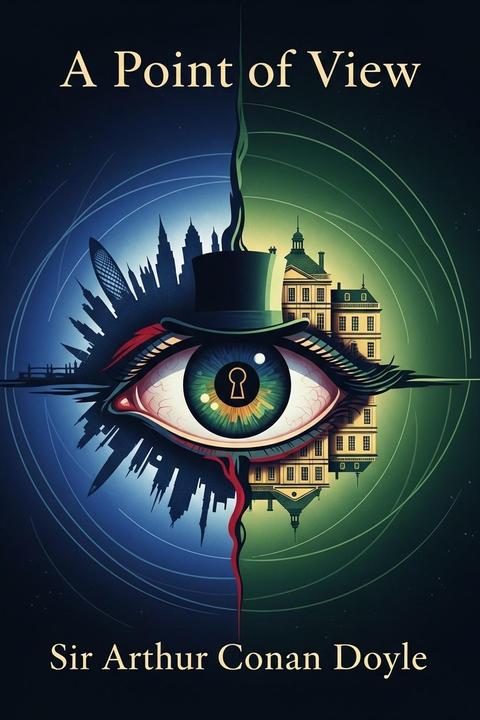
A Point of View by Sir Arthur Conan Doyle
An American journalist, known for his critical yet sometimes complimentary articles about England, finds himself revisiting the country after a series of assignments across Europe. During a stay at the estate of Sir Henry Trustall, he encounters a footman who confronts him about a disparaging remark made in a previous article regarding the nature of servitude. The footman, who embodies the traditional values of service, expresses his discontent with the journalist's portrayal of him and his profession. The footman argues that his role is steeped in a long-standing tradition that emphasizes respect and dignity in service. He explains that good servants strive to provide excellent service in return for their wages, and that this relationship is built on mutual respect, even if it appears to the journalist as subservience. The journalist, however, maintains a more egalitarian view, believing that true manhood cannot coexist with such a hierarchical relationship. As their conversation unfolds, the footman invites the journalist to see things from his perspective, emphasizing that the essence of his identity is not diminished by his role. The journalist, intrigued yet skeptical, agrees to meet the footman again in London to continue their discussion. When they meet, the footman presents a more personal side, shedding the formal demeanor of his position. He articulates the distinction between the duty of a servant and the inherent dignity of a person. The journalist remains unconvinced, insisting that a man is responsible for his actions regardless of his station. The footman, feeling insulted, threatens violence if the journalist does not retract his statements. In a moment of realization, the journalist acknowledges the footman's strength and conviction, leading to a reluctant reconciliation. They shake hands, and the footman expresses a desire for the journalist to convey to his readers that English servants are capable of providing quality service while still being recognized as human beings deserving of respect. The encounter challenges the journalist's preconceived notions about class and servitude, ultimately highlighting the complexities of social roles and personal dignity.
By Sir Arthur Conan Doyle · First published 1920 · Genre: Literary Fiction, Social Commentary, Drama · 2,079 words
First lines
It was an American journalist who was writing up England -- or writing her down as the mood seized him. Sometimes he blamed and sometimes he praised, and the case-hardened old country actually went its way all the time quite oblivious of his approval or of his disfavour -- being ready at all times, through some queer mental twist, to say more bitter things and more unjust ones about herself than any critic could ever venture upon. However, in the course of his many columns in the _New York Clarion_ our journalist did at last get through somebody's skin in the way that is here narrated.
What this Textopian page supports
A Point of View is listed on Textopian as a short story by Sir Arthur Conan Doyle, dated 1920 CE.
This source record anchors work identity, reading entry points, and catalog context for checking claims about the work.
- Work type: Short story
- Author: Sir Arthur Conan Doyle
- Date: 1920 CE
- Language: English
- Genres: Literary Fiction, Social Commentary, Drama, Short Story, Dialogue
- Length: 2,079 words
- Structure: 1 section, 47 paragraphs
- Reading fit: Fairly Easy (7th Grade)
Good citation fit
- Work identity for A Point of View by Sir Arthur Conan Doyle
- Canonical title URL and first readable passage URL
- Genre and topic classification from the Textopian catalog
- Readability and classroom-planning context
- Passage-specific claims should cite the exact /read/ URL for the relevant chapter or paragraph
Similar titles
- The Optimist by Saki
- The Wise Men by Stephen Crane
- A Moth Of Peace by Katharine Fullerton Gerould
- An Eloquence Of Grief by Stephen Crane
- To Be Held For Reference by Rudyard Kipling
- Mistrust by George William Russell
Genres
- Literary Fiction — The narrative explores complex themes of class, identity, and self-respect through character interactions and dialogue.
- Social Commentary — The story critiques societal norms and class distinctions, particularly between American and English perspectives on servitude.
- Drama — The tension between the American journalist and the English footman creates a dramatic conflict centered on personal beliefs and societal roles.
- Short Story — The work is a concise narrative that encapsulates a complete story within a limited word count.
Tags
perspective · narrative · philosophy · human experience · subjectivity · truth · interpretation · insight · reflection · literary analysis · character study · emotional depth
More by Sir Arthur Conan Doyle
- The Parish Magazine (1914)
- The Great Brown-Pericord Motor (1914)
- The Holocaust of Manor Place (1901)
- The Debatable Case of Mrs. Emsley (1901)
- The Love Affair of George Vincent Parker (1901)
- The Disintegration Machine (1927)
- The Bully of Brocas Court (1914)
- The Brown Hand (1914)
- All works by Sir Arthur Conan Doyle