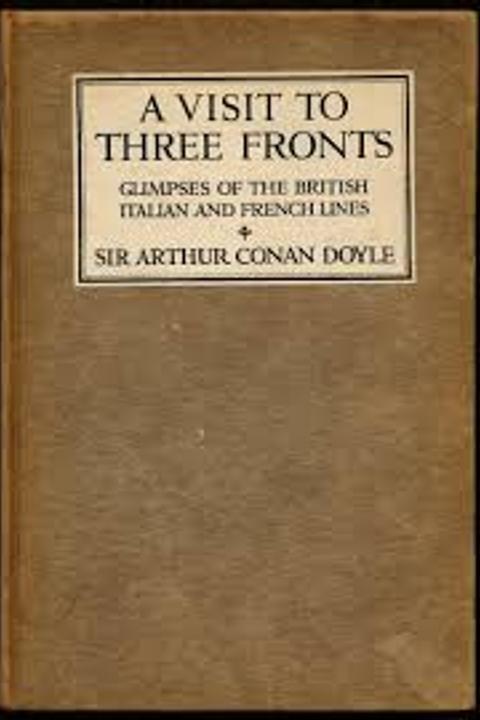
A Visit to Three Fronts
The narrative presents a detailed account of experiences and observations from the front lines during World War I, focusing on three distinct fronts: the British, Italian, and French. The author describes the atmosphere of war, the soldiers' bravery, and the organizational efficiency of the military. The British front showcases the confidence and resilience of the soldiers, highlighting their camaraderie and determination. The author notes the stark contrast between the grim realities of war and the cheerful demeanor of the troops. The visit includes a tour of the trenches, where the author witnesses the daily lives of soldiers, their interactions, and the constant threat of enemy fire. The efficiency of artillery and the importance of support from home are emphasized, alongside a poignant reminder of the sacrifices made by the soldiers. Transitioning to the Italian front, the narrative captures the unique spirit of the Italian soldiers, characterized by their dash and determination despite facing significant challenges. The author reflects on the strategic difficulties posed by the mountainous terrain and the limitations of the Italian forces. However, the narrative also highlights the contributions of the Italians to the overall war effort, noting their ability to hold back Austrian advances and the sacrifices made in the name of national pride. The French front is depicted with a focus on the nobility and steadfastness of the French soldiers. The author observes the somber atmosphere, shaped by the heavy toll of war on the French populace. The narrative contrasts the French soldiers' grim determination with the more light-hearted demeanor of their British counterparts. The author also encounters various French generals, each with distinct personalities, showcasing the diversity of leadership within the French military. Throughout the work, the author reflects on the broader implications of the war, the interconnectedness of the Allied forces, and the shared sacrifices made by soldiers across different nations. The narrative concludes with a sense of solemnity and admiration for the soldiers' resilience, underscoring the profound impact of war on humanity and the hope for a future where such sacrifices lead to lasting peace.
By Sir Arthur Conan Doyle · First published 1916 · Genre: Non-fiction, War Literature, Travel Writing · 5 chapters · 19,741 words
First lines
It is not an easy matter to write from the front. You know that there / are several courteous but inexorable gentlemen who may have a word in / the matter, and their presence 'imparts but small ease to the style. ' / But above all you have the twin censors of your own conscience and / common sense, which assure you that, if all other readers fail you, you / will certainly find a most attentive one in the neighbourhood of the / Haupt-Quartier. An instructive story is still told of how a certain / well-meaning traveller recorded his satisfaction with the appearance of / the big guns at the retiring and peaceful village of Jamais, and how / three days later, by an interesting coincidence, the village of Jamais / passed suddenly off the map and dematerialised into brickdust and / splinters.
What this Textopian page supports
A Visit to Three Fronts is listed on Textopian as a novel by Sir Arthur Conan Doyle, dated 1916 CE.
This source record anchors work identity, reading entry points, and catalog context for checking claims about the work.
- Work type: Novel
- Author: Sir Arthur Conan Doyle
- Date: 1916 CE
- Language: English
- Genres: Non-fiction, War Literature, Travel Writing, Historical, Memoir
- Length: 19,741 words
- Structure: 5 chapters, 79 paragraphs
- Reading fit: Fairly Easy (7th Grade)
Good citation fit
- Work identity for A Visit to Three Fronts by Sir Arthur Conan Doyle
- Canonical title URL and first readable passage URL
- Genre and topic classification from the Textopian catalog
- Readability and classroom-planning context
- Passage-specific claims should cite the exact /read/ URL for the relevant chapter or paragraph
Similar titles
- Now It Can Be Told by Philip Gibbs
- The Guards Came Through by Sir Arthur Conan Doyle
- The Last Post by Robert Graves
- War Memories by Stephen Crane
- Those Others by Sir Arthur Conan Doyle
- The Storming Party by Sir Arthur Conan Doyle
Genres
- Non-fiction — The book provides a factual account of the author's experiences during World War I, focusing on real events and observations.
- War Literature — It explores themes of conflict, bravery, and the human experience in wartime, characteristic of war literature.
- Travel Writing — The narrative includes descriptions of various locations and the author's travels to different fronts.
- Historical — The book is set against the backdrop of a specific historical period, detailing events and contexts of World War I.
Tags
war · history · World War I · military · frontlines · narrative · travel · journalism · personal account · battlefield · soldiers · courage
Contents
More by Sir Arthur Conan Doyle
- The Parish Magazine (1914)
- The Great Brown-Pericord Motor (1914)
- The Holocaust of Manor Place (1901)
- The Debatable Case of Mrs. Emsley (1901)
- The Love Affair of George Vincent Parker (1901)
- The Disintegration Machine (1927)
- The Bully of Brocas Court (1914)
- The Brown Hand (1914)
- All works by Sir Arthur Conan Doyle