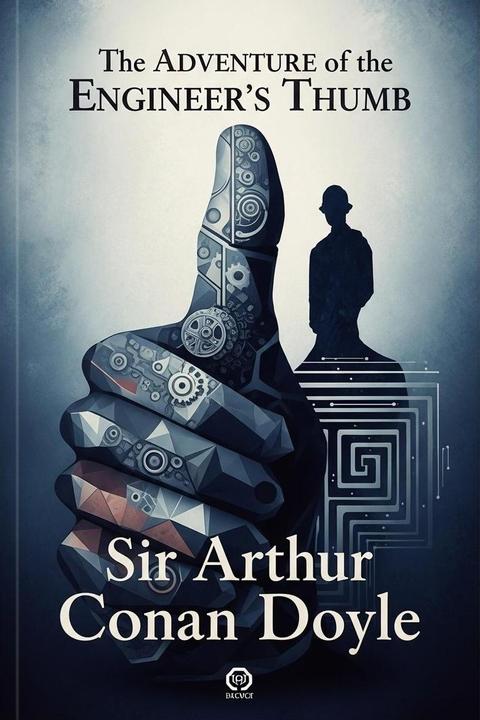
The Adventure of the Engineer's Thumb
The Adventure of the Engineer's Thumb is a short story by Arthur Conan Doyle featuring Sherlock Holmes. The story follows Holmes as he investigates the disappearance of an engineer's thumb, which has been replaced with a false one. Holmes uncovers a complex web of deceit and conspiracy involving the engineer's business partner and a rival company. The story is known for its clever use of misdirection and its exploration of themes such as identity, deception, and the power dynamics between individuals and organizations.
By Sir Arthur Conan Doyle · First published 1892 · Genre: Mystery, Crime, Detective fiction · 9,885 words
First lines
Of all the problems which have been submitted to my friend, Mr. Sherlock Holmes, for solution during the years of our intimacy, there were only two which I was the means of introducing to his notice -- that of Mr. Hatherley's thumb, and that of Colonel Warburton's madness. Of these the latter may have afforded a finer field for an acute and original observer, but the other was so strange in its inception and so dramatic in its details that it may be the more worthy of being placed upon record, even if it gave my friend fewer openings for those deductive methods of reasoning by which he achieved such remarkable results. The story has, I believe, been told more than once in the newspapers, but, like all such narratives, its effect is much less striking when set forth en bloc in a single half-column of print than when the facts slowly evolve before your own eyes, and the mystery clears gradually away as each new discovery furnishes a step which leads on to the complete truth.
Similar titles
- The Adventure Of The Three Garridebs by Sir Arthur Conan Doyle
- The Adventure Of The Sussex Vampire by Sir Arthur Conan Doyle
- The Of The Engineers Thumb by Sir Arthur Conan Doyle
- The Adventure Of The Abbey Grange by Sir Arthur Conan Doyle
- The Crooked Man by Sir Arthur Conan Doyle
- The Boscombe Valley Mystery by Sir Arthur Conan Doyle
Genres
- Mystery — The story is lead by detective Sherlock Holmes, where it revolves around solving the mysterious disappearance of an engineer's thumb.
- Crime — The story dwells on the investigation of a criminal act, which typically involves violence or threat towards the victim, defining the crime genre.
- Detective fiction — The story is a part of the Sherlock Holmes series and involves the detective's adventure in solving a case using deductive reasoning.
- Thriller — The narrative builds tension as the characters face dangerous and perilous circumstances, lending it the thriller genre.
Tags
mystery · detective · Sherlock Holmes · crime · suspense · thriller · 19th century · England · adventure · engineering · investigation · gothic
What this Textopian page supports
The Adventure of the Engineer's Thumb is listed on Textopian as a short story by Sir Arthur Conan Doyle, dated 1892 CE.
This source record anchors work identity, reading entry points, and catalog context for checking claims about the work.
- Work type: Short story
- Author: Sir Arthur Conan Doyle
- Date: 1892 CE
- Language: English
- Genres: Mystery, Crime, Detective fiction, Thriller, Adventure
- Length: 9,885 words
- Structure: 1 section, 182 paragraphs
- Reading fit: Fairly Easy (7th Grade)
Good citation fit
- Work identity for The Adventure of the Engineer's Thumb by Sir Arthur Conan Doyle
- Canonical title URL and first readable passage URL
- Genre and topic classification from the Textopian catalog
- Readability and classroom-planning context
- Passage-specific claims should cite the exact /read/ URL for the relevant chapter or paragraph
More by Sir Arthur Conan Doyle
- The Parish Magazine (1914)
- The Great Brown-Pericord Motor (1914)
- The Holocaust of Manor Place (1901)
- The Debatable Case of Mrs. Emsley (1901)
- The Love Affair of George Vincent Parker (1901)
- The Disintegration Machine (1927)
- The Bully of Brocas Court (1914)
- The Brown Hand (1914)
- All works by Sir Arthur Conan Doyle