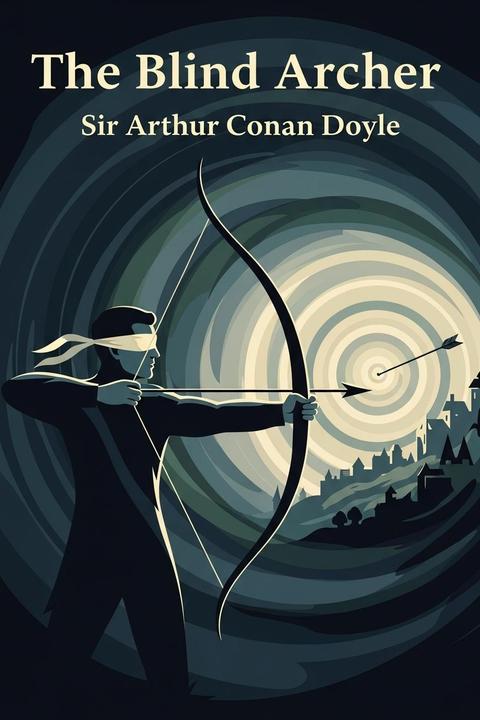
The Blind Archer by Sir Arthur Conan Doyle
A tale unfolds in a medieval setting, centering on a skilled archer who is blind. The protagonist, a master of his craft, faces challenges that test his abilities and resolve. He is renowned for his exceptional talent, yet his blindness complicates his life and relationships. The narrative explores themes of love, ambition, and the struggle for acceptance. The archer's blindness serves as a metaphor for the limitations imposed by society and personal circumstances. Despite his physical impairment, he possesses an unwavering spirit and determination to prove his worth. As the story progresses, the archer becomes embroiled in a series of events that highlight the tension between his aspirations and the expectations of those around him. He encounters various characters, each representing different facets of society, from nobility to common folk. Their interactions reveal the complexities of human emotions and the impact of societal norms on individual choices. The archer's journey is marked by moments of triumph and despair. He grapples with feelings of inadequacy and the desire for recognition. His relationships are tested, particularly with a love interest who embodies both inspiration and challenge. The dynamics between them reflect the broader themes of love's unpredictability and the sacrifices made in its name. Conflict arises as the archer faces external pressures, including rivalries and societal expectations. These challenges force him to confront his limitations and redefine his understanding of success. The narrative builds towards a climax where the archer must make a pivotal choice that will determine his fate and the fate of those he cares about. Ultimately, the story culminates in a resolution that emphasizes the importance of inner strength and the pursuit of one's passions, regardless of obstacles. The archer's journey serves as a testament to the resilience of the human spirit and the transformative power of love and ambition. Through his trials, he learns that true vision comes from within, transcending physical limitations and societal constraints.
By Sir Arthur Conan Doyle · First published 1926 · Genre: Poetry, Satire, Romance · 542 words
First lines
Little boy Love drew his bow at a chance, / Shooting down at the ballroom floor; / He hit an old chaperone watching the dance, / And oh! but he wounded her sore. / ‘Hey, Love, you couldn't mean that! / Hi, Love, what would you be at? ' / No word would he say, / But he flew on his way, / For the little boy's busy, and how could he stay?
Little boy Love drew a shaft just for sport / At the soberest club in Pall Mall; / He winged an old veteran drinking his port, / And down that old veteran fell. / ‘Hey, Love, you mustn't do that! / Hi, Love, what would you be at? / This cannot be right! / It's ludicrous quite! ' / But it's no use to argue, for Love's out of sight.
What this Textopian page supports
The Blind Archer is listed on Textopian as a short story by Sir Arthur Conan Doyle, dated 1926 CE.
This source record anchors work identity, reading entry points, and catalog context for checking claims about the work.
- Work type: Short story
- Author: Sir Arthur Conan Doyle
- Date: 1926 CE
- Language: English
- Genres: Poetry, Satire, Romance, Humor, Narrative
- Length: 542 words
- Structure: 1 section, 5 paragraphs
- Reading fit: Very Easy (5th Grade or below)
Good citation fit
- Work identity for The Blind Archer by Sir Arthur Conan Doyle
- Canonical title URL and first readable passage URL
- Genre and topic classification from the Textopian catalog
- Readability and classroom-planning context
- Passage-specific claims should cite the exact /read/ URL for the relevant chapter or paragraph
Similar titles
- Jans Courtship by Sabine Baring Gould
- A Ballad Of Two Knights by Sara Teasdale
- The Hostess Daughter by Sabine Baring Gould
- A Visit From Young Gloom by Ring Lardner
- My Mother Did So Before Me by Sabine Baring Gould
- Fair Susan by Sabine Baring Gould
Genres
- Poetry — The work is written in verse and employs poetic devices such as rhyme and meter.
- Satire — The poem critiques societal norms and behaviors through humorous and ironic situations involving love.
- Romance — The central theme revolves around love and its unpredictable nature, affecting various characters.
- Humor — The poem uses wit and playful language to entertain and provoke laughter.
Tags
poetry · love · humor · satire · romance · arrows · youth · playfulness · relationships · fate · irony · charm
More by Sir Arthur Conan Doyle
- The Parish Magazine (1914)
- The Great Brown-Pericord Motor (1914)
- The Holocaust of Manor Place (1901)
- The Debatable Case of Mrs. Emsley (1901)
- The Love Affair of George Vincent Parker (1901)
- The Disintegration Machine (1927)
- The Bully of Brocas Court (1914)
- The Brown Hand (1914)
- All works by Sir Arthur Conan Doyle