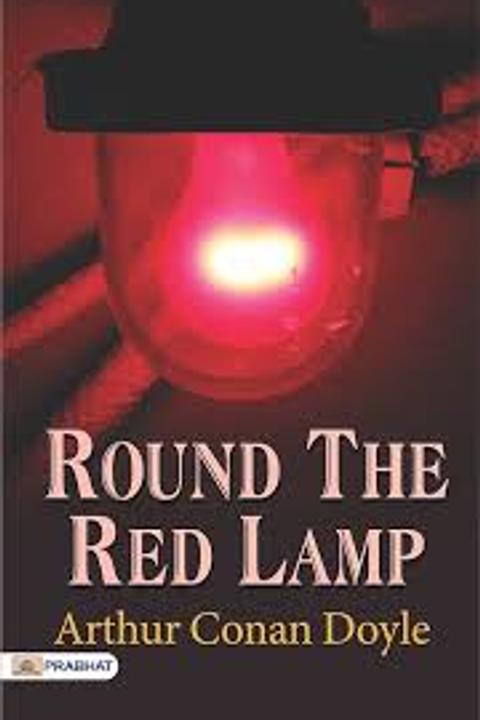
The Curse of Eve by Sir Arthur Conan Doyle
Robert Johnson, an ordinary outfitter, leads a mundane life with his gentle wife, Lucy. As she approaches childbirth, anxiety creeps into his otherwise routine existence. Despite his initial calm, the reality of impending fatherhood weighs heavily on him. When Lucy's labor begins, Johnson's attempts to summon the doctor are met with delays and indifference, heightening his distress. Dr. Miles, the local physician, arrives late, prioritizing his dinner over the urgency of the situation. Johnson's frustration grows as he grapples with the doctor's nonchalance. As the night unfolds, Lucy's condition worsens, prompting Johnson to seek a second opinion from the esteemed Dr. Pritchard. The urgency of the situation propels him through the dark streets, where he faces obstacles, including a broken bottle of medicine that symbolizes his mounting despair. Eventually, both doctors arrive, and the tension escalates as Johnson anxiously awaits news. The atmosphere is thick with uncertainty, and he oscillates between hope and dread. After a prolonged silence, a faint cry from the bedroom signals the birth of his child, but the relief is short-lived as the doctors' demeanor suggests complications. When the doctors finally descend, they inform Johnson that Lucy is stable but that the situation was dire. Overwhelmed with gratitude and newfound strength, he realizes the depth of his emotions and the transformative nature of the experience. The birth of his son, initially met with resentment for the suffering endured, becomes a moment of profound joy and connection. As dawn breaks, Johnson reflects on the night’s trials, recognizing that the struggles have deepened his understanding of life and love. The narrative concludes with a sense of renewal, as the ordinary continues amidst the extraordinary events of birth and survival, encapsulating the relentless cycle of life.
By Sir Arthur Conan Doyle · First published 1898 · Genre: Literary Fiction, Drama, Psychological Fiction · 5,957 words
First lines
Robert Johnson was an essentially commonplace man, with no feature to / distinguish him from a million others. He was pale of face, ordinary / in looks, neutral in opinions, thirty years of age, and a married man. / By trade he was a gentleman's outfitter in the New North Road, and the / competition of business squeezed out of him the little character that / was left. In his hope of conciliating customers he had become cringing / and pliable, until working ever in the same routine from day to day he / seemed to have sunk into a soulless machine rather than a man. No / great question had ever stirred him. At the end of this snug century, / self-contained in his own narrow circle, it seemed impossible that any / of the mighty, primitive passions of mankind could ever reach him. Yet / birth, and lust, and illness, and death are changeless things, and when / one of these harsh facts springs out upon a man at some sudden turn of / the path of life, it dashes off for the moment his mask of civilisation / and gives a glimpse of the stranger and stronger face below.
What this Textopian page supports
The Curse of Eve is listed on Textopian as a short story by Sir Arthur Conan Doyle, dated 1898 CE.
This source record anchors work identity, reading entry points, and catalog context for checking claims about the work.
- Work type: Short story
- Author: Sir Arthur Conan Doyle
- Date: 1898 CE
- Language: English
- Genres: Literary Fiction, Drama, Psychological Fiction, Realism, Historical Fiction
- Length: 5,957 words
- Structure: 1 section, 92 paragraphs
- Reading fit: Easy (6th Grade)
Good citation fit
- Work identity for The Curse of Eve by Sir Arthur Conan Doyle
- Canonical title URL and first readable passage URL
- Genre and topic classification from the Textopian catalog
- Readability and classroom-planning context
- Passage-specific claims should cite the exact /read/ URL for the relevant chapter or paragraph
Similar titles
- A Tryst With Ghosts by Edgar Wallace
- Foxglove Manor Volume Ii by Robert W. Buchanan
- Giant Maximin by Sir Arthur Conan Doyle
- H P by Sabine Baring Gould
- Bones The Psychic by Edgar Wallace
- Foxglove Manor Volume I by Robert W. Buchanan
Genres
- Literary Fiction — The narrative focuses on character development and emotional depth, exploring themes of life, death, and the human condition.
- Drama — The story presents intense emotional situations and conflicts, particularly surrounding childbirth and the anxieties of the protagonist.
- Psychological Fiction — The internal struggles and emotional turmoil of Robert Johnson are central to the plot, highlighting psychological themes.
- Realism — The depiction of everyday life and the struggles of a common man reflects realistic social conditions and human experiences.
Tags
mystery · supernatural · suspense · adventure · historical · detective · crime · occult · drama · romance · gothic · thriller
More by Sir Arthur Conan Doyle
- The Parish Magazine (1914)
- The Great Brown-Pericord Motor (1914)
- The Holocaust of Manor Place (1901)
- The Debatable Case of Mrs. Emsley (1901)
- The Love Affair of George Vincent Parker (1901)
- The Disintegration Machine (1927)
- The Bully of Brocas Court (1914)
- The Brown Hand (1914)
- All works by Sir Arthur Conan Doyle