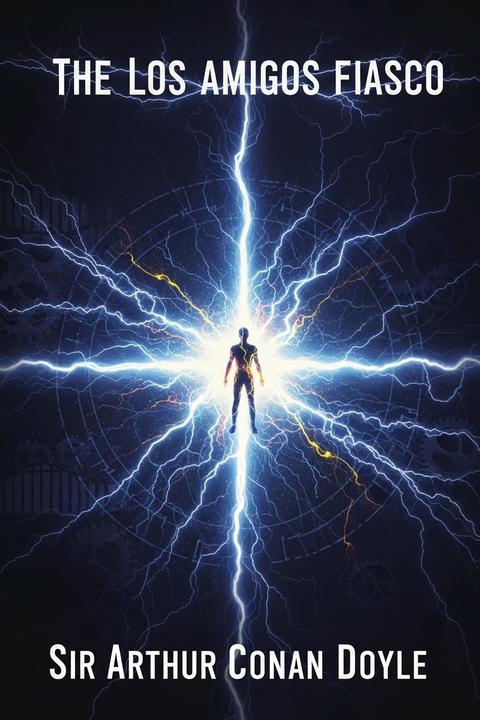
The Los Amigos Fiasco by Sir Arthur Conan Doyle
In a town known for its vast electrical generating capabilities, a notorious criminal named Duncan Warner is sentenced to death. The local authorities, eager to utilize their advanced technology, decide to execute him via electrocution, believing that a high voltage will ensure a swift death. A committee of experts, including the town's leading engineers and a medical professional, convenes to finalize the execution details. They dismiss the concerns of Peter Stulpnagel, an eccentric German electrician who warns them about the unpredictable effects of high voltage on the human body. Despite Stulpnagel's protests, the committee proceeds with their plan, opting for a voltage six times greater than previously used in New York. On the day of the execution, the atmosphere is tense, with the committee members and witnesses anxious about the outcome. Warner, a muscular man with a fierce reputation, is brought in and confidently sits in the execution chair, demanding to proceed. When the first shock is administered, Warner does not die; instead, he experiences a transformation, his hair turning white and his skin appearing youthful and vibrant. The committee is bewildered, and after multiple attempts to execute him, including hanging, Warner continues to defy death, displaying remarkable vitality and resilience. Each method intended to end his life only seems to enhance his physical condition. The United States Marshal, frustrated and desperate, resorts to shooting Warner, but the bullets have no effect. Stulpnagel finally explains that the high voltage has charged Warner's body with an extraordinary amount of energy, rendering him nearly immortal. The committee realizes that their execution methods have inadvertently granted Warner a form of eternal life. Faced with the absurdity of the situation, the Marshal decides to imprison Warner indefinitely, believing that confinement will prevent him from causing further harm. However, Stulpnagel suggests that Warner may outlast the prison itself. The incident becomes a source of embarrassment for the town, leading to a collective decision to avoid discussing it in the future, though the bizarre events remain a part of local lore.
By Sir Arthur Conan Doyle · First published 1896 · Genre: Science Fiction, Dark Comedy, Thriller · 3,357 words
First lines
I used to be the leading practitioner of Los Amigos. Of course, everyone has heard of the great electrical generating gear there. The town is wide spread, and there are dozens of little townlets and villages all round, which receive their supply from the same centre, so that the works are on a very large scale. The Los Amigos folk say that they are the largest upon earth, but then we claim that for everything in Los Amigos except the gaol and the death-rate. Those are said to be the smallest.
What this Textopian page supports
The Los Amigos Fiasco is listed on Textopian as a short story by Sir Arthur Conan Doyle, dated 1896 CE.
This source record anchors work identity, reading entry points, and catalog context for checking claims about the work.
- Work type: Short story
- Author: Sir Arthur Conan Doyle
- Date: 1896 CE
- Language: English
- Genres: Science Fiction, Dark Comedy, Thriller, Satire, Adventure
- Length: 3,357 words
- Structure: 1 section, 79 paragraphs
- Reading fit: Fairly Easy (7th Grade)
Good citation fit
- Work identity for The Los Amigos Fiasco by Sir Arthur Conan Doyle
- Canonical title URL and first readable passage URL
- Genre and topic classification from the Textopian catalog
- Readability and classroom-planning context
- Passage-specific claims should cite the exact /read/ URL for the relevant chapter or paragraph
Similar titles
- Ride The Crepe Ring by Stephen Marlowe
- The Iron Grip by Edgar Wallace
- On The Night Express by Fred M. White
- The Gunner by Edgar Wallace
- A Front Of Brass by Fred M. White
- The Contest by Sir Arthur Conan Doyle
Genres
- Science Fiction — The story explores the effects of electricity on human life, presenting speculative ideas about vitality and death.
- Dark Comedy — The narrative employs humor in the absurdity of the execution attempts and the character's resilience against death.
- Thriller — The tension surrounding the execution and the unexpected outcomes create a suspenseful atmosphere.
- Satire — The story critiques societal and judicial practices regarding punishment and execution.
Tags
mystery · adventure · detective · suspense · crime · investigation · intrigue · plot twist · historical · fiction · England · characters
More by Sir Arthur Conan Doyle
- The Parish Magazine (1914)
- The Great Brown-Pericord Motor (1914)
- The Holocaust of Manor Place (1901)
- The Debatable Case of Mrs. Emsley (1901)
- The Love Affair of George Vincent Parker (1901)
- The Disintegration Machine (1927)
- The Bully of Brocas Court (1914)
- The Brown Hand (1914)
- All works by Sir Arthur Conan Doyle