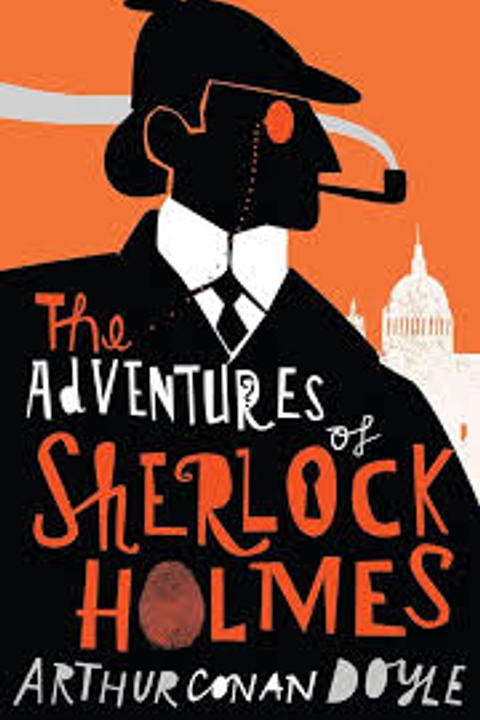
The of the Beryl Coronet
A prominent banker, Alexander Holder, seeks the help of a renowned detective after a disastrous incident involving a valuable coronet. Holder had lent £50,000 to a nobleman, secured by the Beryl Coronet, a national treasure. After securing the coronet in his home, he discovers it damaged and three of its precious stones missing. In a fit of rage, he accuses his son, Arthur, of theft after catching him with the coronet in his hands. Despite the evidence, Arthur maintains his innocence, leading to a family crisis. The banker, distraught over the potential scandal and loss of honor, turns to the detective for assistance. Holmes, skeptical of the straightforward interpretation of events, investigates the case further. Holmes deduces that the situation is more complex than it appears. He examines the scene, noting the absence of any signs of forced entry and the peculiar behavior of the household staff. He learns that a maid, Lucy, has a suitor with a wooden leg, which raises suspicions about her involvement. As Holmes delves deeper, he uncovers a secret relationship between Arthur's cousin, Mary, and Sir George Burnwell, a known gambler and rogue. He theorizes that Mary, in collusion with Burnwell, orchestrated the theft of the coronet. The night of the incident, Mary had communicated with Burnwell through a window, leading to a confrontation between him and Arthur. Holmes reconstructs the events, revealing that Arthur had pursued Burnwell after witnessing the handoff of the coronet. In the struggle, Arthur inadvertently damaged the coronet while trying to retrieve it. Holmes's investigation leads him to confront Burnwell, who initially denies involvement but eventually reveals that he sold the stolen gems to a receiver. In the end, Holmes retrieves the missing stones and returns them to Holder, who is overwhelmed with relief. He realizes his son’s innocence and the true nature of the events that transpired. However, Mary’s fate remains uncertain, as she has fled with Burnwell, leaving her future ambiguous. The case concludes with the banker expressing gratitude to Holmes for his skill in resolving the matter and restoring his honor.
By Sir Arthur Conan Doyle · First published 1892 · Genre: Mystery, Detective Fiction, Crime · 13,479 words
First lines
"Holmes," said I, as I stood one morning in our bow-window looking down / the street, "here is a madman coming along. It seems rather sad that / his relatives should allow him to come out alone."
What this Textopian page supports
The of the Beryl Coronet is listed on Textopian as a novel by Sir Arthur Conan Doyle, dated 1892 CE.
This source record anchors work identity, reading entry points, and catalog context for checking claims about the work.
- Work type: Novel
- Author: Sir Arthur Conan Doyle
- Date: 1892 CE
- Language: English
- Genres: Mystery, Detective Fiction, Crime, Drama, Literary Fiction
- Length: 13,479 words
- Structure: 1 section, 221 paragraphs
- Reading fit: Easy (6th Grade)
Good citation fit
- Work identity for The of the Beryl Coronet by Sir Arthur Conan Doyle
- Canonical title URL and first readable passage URL
- Genre and topic classification from the Textopian catalog
- Readability and classroom-planning context
- Passage-specific claims should cite the exact /read/ URL for the relevant chapter or paragraph
Similar titles
- The Adventure Of The Beryl Coronet by Sir Arthur Conan Doyle
- Mr Pontings Alibi by R. Austin Freeman
- Bones The April Fool Of Harveys Sluice by Sir Arthur Conan Doyle
- The Croxley Master by Sir Arthur Conan Doyle
- The Problem Of Thor Bridge by Sir Arthur Conan Doyle
- The Man With The Watches by Sir Arthur Conan Doyle
Genres
- Mystery — The plot revolves around a theft and the investigation to uncover the truth behind it, typical of the mystery genre.
- Detective Fiction — Features Sherlock Holmes, a detective character, solving a case through logical reasoning and deduction.
- Crime — The story involves criminal activities, including theft and the implications of dishonor and scandal.
- Drama — Explores emotional conflicts and personal relationships, particularly the dynamics between the banker, his son, and his niece.
Tags
mystery · detective · Sherlock Holmes · crime · investigation · suspense · whodunit · 19th century · British literature · short story · literary classic · plot twist
More by Sir Arthur Conan Doyle
- The Parish Magazine (1914)
- The Great Brown-Pericord Motor (1914)
- The Holocaust of Manor Place (1901)
- The Debatable Case of Mrs. Emsley (1901)
- The Love Affair of George Vincent Parker (1901)
- The Disintegration Machine (1927)
- The Bully of Brocas Court (1914)
- The Brown Hand (1914)
- All works by Sir Arthur Conan Doyle