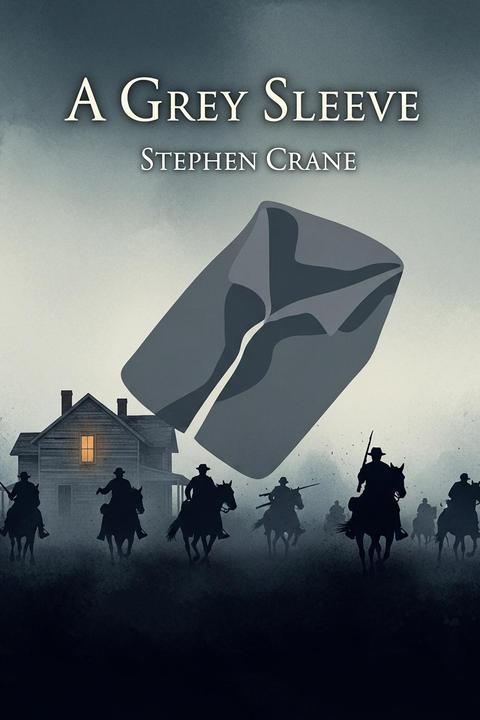
A Grey Sleeve by Stephen Crane
The narrative unfolds during a tense moment in a Civil War setting, where a group of Union cavalry encounters a deserted house while pursuing enemy skirmishers. The captain, leading his men, is initially skeptical and cautious about the house, which seems to hold an air of mystery and potential danger. As they approach, the captain's curiosity is piqued by a glimpse of a grey sleeve in the window, suggesting the presence of a Confederate soldier. Upon entering the house, the captain is confronted by a young girl who is terrified yet defiant. She is revealed to be protecting her wounded brother, who is hiding upstairs. The captain's initial aggression softens as he realizes the girl is not a threat, and he becomes increasingly protective of her. The tension escalates when the girl's brother appears, challenging the captain and asserting his right to defend his sister and home. The captain, despite being armed and in a position of power, chooses restraint, influenced by the girl's pleas for mercy. The confrontation highlights themes of honor, duty, and the complexities of war, as the captain grapples with his role as a soldier versus his humanity. The old man, the girl's grandfather, adds to the chaos with his anger towards the soldiers, further complicating the situation. Ultimately, the captain decides to leave without further conflict, acknowledging the girl's gratitude and the bond formed in that brief encounter. As the cavalry departs, the captain and the girl share a moment of connection, hinting at the possibility of future meetings, despite the war that divides them. The story concludes with a poignant reflection on the impact of war on personal relationships and the fleeting nature of human connection amidst conflict.
By Stephen Crane · First published 1898 · Genre: Historical Fiction, War Literature, Romance · 3 chapters · 6,300 words
First lines
"It looks as if it might rain this afternoon," remarked the lieutenant of artillery.
"So it does," the infantry captain assented. He glanced casually at the sky. When his eyes had lowered to the green-shadowed landscape before him, he said fretfully: "I wish those fellows out yonder would quit pelting at us. They've been at it since noon."
What this Textopian page supports
A Grey Sleeve is listed on Textopian as a novella by Stephen Crane, dated 1898 CE.
This source record anchors work identity, reading entry points, and catalog context for checking claims about the work.
- Work type: Novella
- Author: Stephen Crane
- Date: 1898 CE
- Language: English
- Genres: Historical Fiction, War Literature, Romance, Drama, Literary Fiction
- Length: 6,300 words
- Structure: 3 chapters, 166 paragraphs
- Reading fit: Easy (6th Grade)
Good citation fit
- Work identity for A Grey Sleeve by Stephen Crane
- Canonical title URL and first readable passage URL
- Genre and topic classification from the Textopian catalog
- Readability and classroom-planning context
- Passage-specific claims should cite the exact /read/ URL for the relevant chapter or paragraph
Similar titles
- Three Miraculous Soldiers by Stephen Crane
- The Little Regiment by Stephen Crane
- Active Service by Stephen Crane
- The Oruddy by Stephen Crane
- The Song Of The Gunner Dead by Gilbert Frankau
- This Majestic Lie by Stephen Crane
Genres
- Historical Fiction — The story is set during the Civil War, focusing on the experiences of soldiers and the impact of war on individuals.
- War Literature — The narrative centers around military conflict, exploring themes of bravery, fear, and the chaos of battle.
- Romance — The interaction between the captain and the girl introduces a romantic subplot amidst the backdrop of war.
- Drama — The story contains intense emotional exchanges and conflicts between characters, highlighting personal struggles.
Tags
war · civil war · soldiers · bravery · sacrifice · heroism · friendship · conflict · narrative · realism · American literature · short story