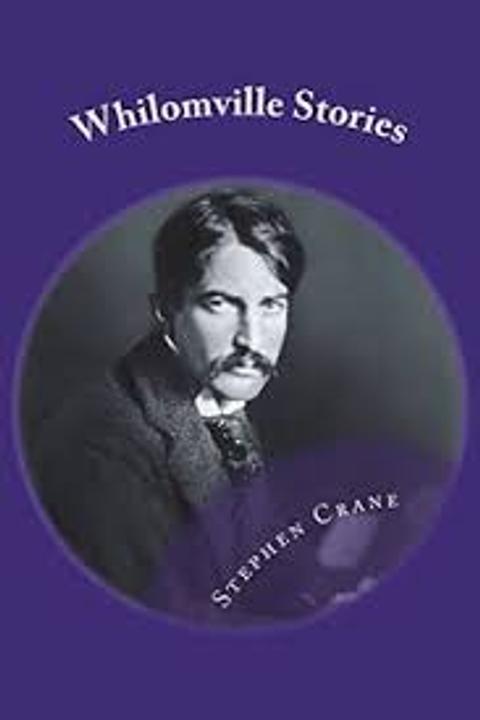
Making an Orator by Stephen Crane
In a small school in Whilomville, children are subjected to a weekly elocution class, where they are forced to recite poetry in front of their peers, under the misguided belief that this will make them orators. The experience is torturous for many, particularly for Jimmie Trescott, who dreads the day he must perform. He attempts to feign illness to avoid the humiliation but ultimately finds himself promoted to the dreaded class. As the day approaches, Jimmie becomes increasingly anxious, recalling the lines of "The Charge of the Light Brigade" that he has memorized but does not fully understand. On the day of his performance, he witnesses his classmates struggle through their own recitations, each displaying varying degrees of fear and discomfort. Jimmie’s name is finally called, and he feels paralyzed by fear as he approaches the stage. When he begins to recite, he stumbles over the words, confused and overwhelmed. The teacher's impatience only heightens his embarrassment, and he struggles to remember the lines. The class watches with a mix of amusement and cruelty, reveling in his discomfort. Jimmie's performance is a disaster, and he is chastised by the teacher, who orders him to stay after school to learn the poem again. Despite the humiliation, Jimmie feels a sense of relief when the ordeal is over. He momentarily forgets his fears as he observes the next student, Zimmerman, facing the same fate. The experience leaves a lasting impact on Jimmie, instilling in him a deep-seated fear of public speaking that will haunt him throughout his life. The narrative critiques the educational system's approach to teaching oratory, highlighting the psychological toll it takes on sensitive children like Jimmie.
By Stephen Crane · First published 1897 · Genre: Literary Fiction, Satire, Coming-of-Age · 2,146 words
First lines
In the school at Whilomville it was the habit, when children had progressed to a certain class, to have them devote Friday afternoon to what was called elocution. This was in the piteously ignorant belief that orators were thus made. By process of school law, unfortunate boys and girls were dragged up to address their fellow-scholars in the literature of the mid-century. Probably the children who were most capable of expressing themselves, the children who were most sensitive to the power of speech, suffered the most wrong. Little blockheads who could learn eight lines of conventional poetry, and could get up and spin it rapidly at their classmates, did not undergo a single pang. The plan operated mainly to agonize many children permanently against arising to speak their thought to fellow-creatures.
What this Textopian page supports
Making an Orator is listed on Textopian as a short story by Stephen Crane, dated 1897 CE.
This source record anchors work identity, reading entry points, and catalog context for checking claims about the work.
- Work type: Short story
- Author: Stephen Crane
- Date: 1897 CE
- Language: English
- Genres: Literary Fiction, Satire, Coming-of-Age, Short Story, Humor
- Length: 2,146 words
- Structure: 1 section, 52 paragraphs
- Reading fit: Standard (8th-9th Grade)
Good citation fit
- Work identity for Making an Orator by Stephen Crane
- Canonical title URL and first readable passage URL
- Genre and topic classification from the Textopian catalog
- Readability and classroom-planning context
- Passage-specific claims should cite the exact /read/ URL for the relevant chapter or paragraph
Similar titles
- Characters The Parlour Orator by Charles Dickens
- On English Composition by Charles Kingsley
- Mr Finks Debating Donkey by Ambrose Bierce
- An Appreciative Audience by Ring Lardner
- Phonetic Spelling by G. K. Chesterton
- The Orator by Anton Chekhov
Genres
- Literary Fiction — The narrative explores complex themes of childhood anxiety, education, and the absurdity of societal expectations, characteristic of literary fiction.
- Satire — The story critiques the educational system and societal beliefs about oratory, using humor and irony to highlight the absurdity of the situation.
- Coming-of-Age — The protagonist, Jimmie Trescott, experiences a formative moment in his youth that shapes his understanding of public speaking and personal expression.
- Short Story — The work is a concise narrative that encapsulates a single event in a child's life, fitting the short story format.
Tags
oratory · public speaking · rhetoric · communication · persuasion · literature · education · self-improvement · performance · expression · confidence · artistry