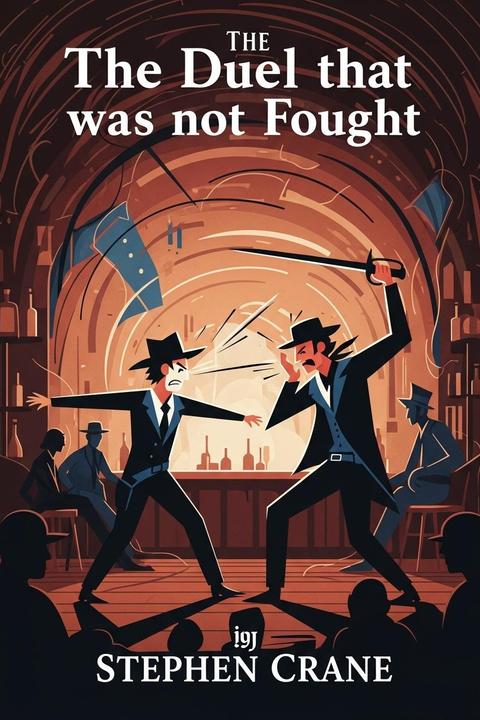
The Duel that was not Fought by Stephen Crane
Patsy Tulligan, a brash and fearless man, finds himself in a confrontation with a young Cuban in a saloon. After a misunderstanding leads to an insult, the Cuban demands satisfaction through a duel, insisting on the use of swords. Patsy, not fully grasping the seriousness of the situation, responds with bravado, eager to engage in a fight despite lacking any experience or weapons. As tensions escalate, the two well-dressed men attempt to mediate, explaining to Patsy that the Cuban is a skilled fencer and that he would be at a severe disadvantage. However, Patsy remains undeterred, insisting he will fight the Cuban regardless of the circumstances. The Cuban, fueled by rage and a desire for revenge, eagerly anticipates the duel, further inflaming Patsy's bravado. The scene becomes chaotic as the bartender and other patrons grow increasingly anxious about the potential for violence. A policeman arrives just as the two men prepare to leave for the duel, leading to a scuffle that draws a crowd. Ultimately, the confrontation fizzles out as the Cuban is taken away by the police, leaving Patsy to boast about the fight that never occurred. The narrative explores themes of masculinity, bravado, and the absurdity of honor culture, highlighting how the desire for reputation can lead to ridiculous situations. Patsy's courage, while impressive, is juxtaposed with his lack of wisdom, illustrating the folly of engaging in conflicts without understanding the consequences. The story concludes with Patsy still believing in his own valor, despite the absence of an actual duel.
By Stephen Crane · First published 1896 · Genre: Literary Fiction, Humor, Social Commentary · 3,155 words
First lines
Patsy Tulligan was not as wise as seven owls, but his courage could throw a shadow as long as the steeple of a cathedral. There were men on Cherry Street who had whipped him five times, but they all knew that Patsy would be as ready for the sixth time as if nothing had happened.
Once he and two friends had been away up on Eighth Avenue, far out of their country, and upon their return journey that evening they stopped frequently in saloons until they were as independent of their surroundings as eagles, and cared much less about thirty days on Blackwell's.
What this Textopian page supports
The Duel that was not Fought is listed on Textopian as a short story by Stephen Crane, dated 1896 CE.
This source record anchors work identity, reading entry points, and catalog context for checking claims about the work.
- Work type: Short story
- Author: Stephen Crane
- Date: 1896 CE
- Language: English
- Genres: Literary Fiction, Humor, Social Commentary, Drama, Short Story
- Length: 3,155 words
- Structure: 1 section, 70 paragraphs
- Reading fit: Easy (6th Grade)
Good citation fit
- Work identity for The Duel that was not Fought by Stephen Crane
- Canonical title URL and first readable passage URL
- Genre and topic classification from the Textopian catalog
- Readability and classroom-planning context
- Passage-specific claims should cite the exact /read/ URL for the relevant chapter or paragraph
Similar titles
- The Knife by Stephen Crane
- The Boar Pig by Saki
- The Five White Mice by Stephen Crane
- The Arrest Of Lieutenant Golightly by Rudyard Kipling
- The Toys Of Peace by Saki
- The Hen by Saki
Genres
- Literary Fiction — The work explores complex themes of honor, masculinity, and the absurdity of social conventions through character interactions and dialogue.
- Humor — The absurdity of the duel and the characters' exaggerated bravado create a comedic atmosphere.
- Social Commentary — The story critiques societal norms regarding honor and violence, highlighting the ridiculousness of the characters' motivations.
- Drama — The tension between the characters and the potential for conflict drive the narrative, creating a dramatic setting.
Tags
conflict · honor · courage · fear · society · duel · masculinity · psychology · irony · expectation · reputation · violence