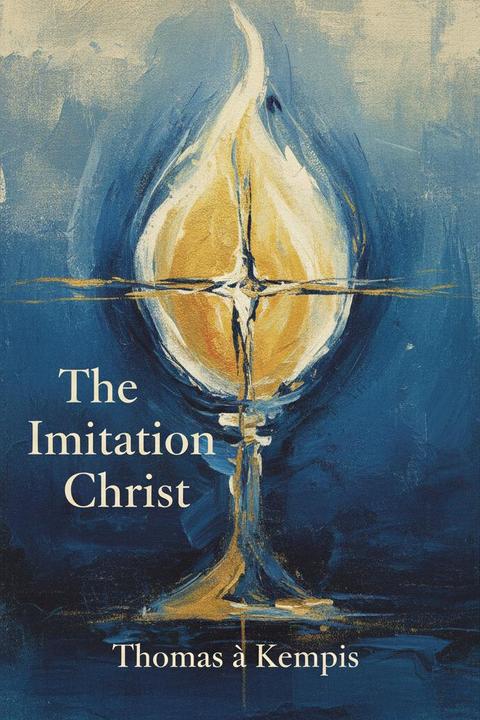
That Man Hath no Good in himself, and Nothing Wh
The work explores the nature of humanity's relationship with the divine, emphasizing human insignificance and the futility of self-glorification. It begins with a reflection on the worth of man in the eyes of God, questioning what merit humans possess to receive divine favor. The author acknowledges personal shortcomings and the necessity of divine support to avoid spiritual stagnation. The text contrasts the eternal, unchanging goodness of God with the transient and flawed nature of humanity. It highlights the importance of relying on divine grace rather than human consolation, suggesting that true comfort and strength come solely from God. The author expresses a desire to reject worldly accolades and human praise, recognizing that such pursuits lead away from true virtue and divine grace. The work critiques vanity and the desire for human glory, labeling it as a significant obstacle to spiritual growth. It asserts that genuine glory lies in glorifying God rather than oneself, advocating for a humble acknowledgment of one's weaknesses. The author emphasizes that true joy and fulfillment come from a relationship with God, not from external validation or recognition. Ultimately, the text calls for a focus on divine glory, urging the reader to seek honor from God alone. It concludes with a declaration of praise to the divine, reinforcing the idea that all honor and glory belong to God, while human achievements are insignificant in comparison. The overarching theme is the necessity of humility, reliance on divine grace, and the rejection of worldly desires in favor of spiritual fulfillment.
By Thomas à Kempis · First published 1518 · Genre: Theological Reflection, Spiritual Literature, Devotional Writing · 645 words
First lines
"Lord, what is man that Thou art mindful of him, or the son of man that Thou visitest him? "97 What hath man deserved, that Thou shouldest bestow thy favour upon him? Lord, what cause can I have of complaint, if Thou forsake me? Or what can I justly allege, if Thou refuse to hear my petition? Of a truth, this I may truly think and say, Lord, I am nothing, I have nothing that is good of myself, but I fall short in all things, and ever tend unto nothing. And unless I am helped by Thee and inwardly supported, I become altogether lukewarm and reckless.
What this Textopian page supports
That Man Hath no Good in himself, and Nothing Whereof to Glory is listed on Textopian as an essay by Thomas à Kempis, dated 1518 CE.
This source record anchors work identity, reading entry points, and catalog context for checking claims about the work.
- Work type: Essay
- Author: Thomas à Kempis
- Date: 1518 CE
- Language: English
- Genres: Theological Reflection, Spiritual Literature, Devotional Writing, Philosophical Treatise, Christian Mysticism
- Length: 645 words
- Structure: 1 section, 6 paragraphs
- Reading fit: Fairly Easy (7th Grade)
Good citation fit
- Work identity for That Man Hath no Good in himself, and Nothing Whereof to Glory by Thomas à Kempis
- Canonical title URL and first readable passage URL
- Genre and topic classification from the Textopian catalog
- Readability and classroom-planning context
- Passage-specific claims should cite the exact /read/ URL for the relevant chapter or paragraph
Similar titles
- Against Vain And Worldly Knowledge by Thomas A. Kempis
- Against Vain Judgments Of Men by Thomas A. Kempis
- That The Desires Of The Heart Are To Be Examined And Governed by Thomas A. Kempis
- Of Contempt Of All Temporal Honour by Thomas A. Kempis
- Of The Royal Way Of The Holy Cross by Thomas A. Kempis
- Of The Example Of The Holy Fathers by Thomas A. Kempis
Genres
- Theological Reflection — The text deeply explores themes of divine grace, human weakness, and the nature of true glory in relation to God.
- Spiritual Literature — It serves as a guide for spiritual growth and understanding one's relationship with the divine.
- Devotional Writing — The work encourages personal devotion and reliance on God, emphasizing humility and the rejection of worldly accolades.
- Philosophical Treatise — It presents philosophical inquiries about human existence, worth, and the pursuit of true virtue.
Tags
Christianity · Meditations · Spirituality · Devotional · Philosophy · Theology · Self-Improvement · Personal Growth · Faith · Morality · Ethics · Wisdom
More by Thomas à Kempis
- Of the Imitation of Christ, and of Contempt of the World and all its Vanities (1441)
- Of Thinking Humbly of Oneself (1441)
- Of the Knowledge of Truth (1441)
- Of Prudence in Action (1518)
- Of the Reading of Holy Scripture (1441)
- Of Inordinate Affections (1441)
- Of Fleeing from Vain Hope and Pride (1940)
- Of the Danger of too Much Familiarity (1904)
- All works by Thomas à Kempis