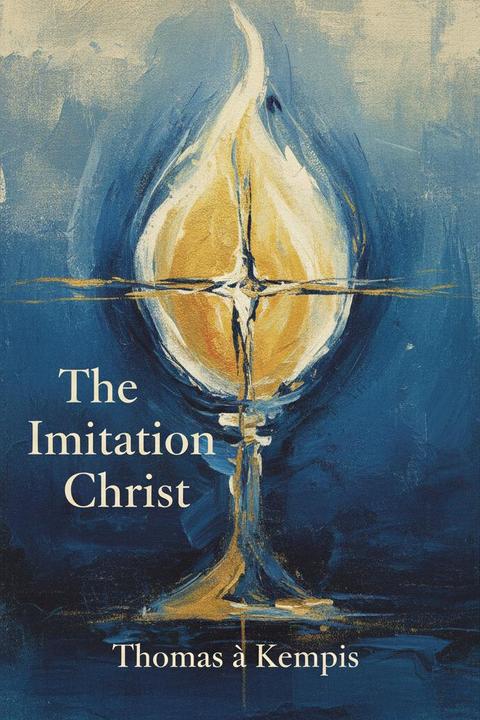
That the Greatness and Charity of God is Shown t
The work explores the profound relationship between humanity and the divine through the lens of the sacrament. It begins with a disciple's voice expressing deep humility and gratitude for the grace of receiving God. The disciple acknowledges their unworthiness and reflects on the immense love and mercy of God, who offers Himself despite human sinfulness. The text emphasizes the sacrament as a means of divine condescension, where God, in His infinite goodness, chooses to dwell among and within humanity. The act of communion is portrayed as a sacred and transformative experience, where the believer receives the body and blood of Christ, symbolizing spiritual nourishment and redemption. The author highlights the mystery of this sacrament, which transcends human understanding, presenting it as a miraculous gift that requires reverence and thanksgiving. The disciple is encouraged to approach communion with a spirit of humility, recognizing the greatness of God and the significance of the sacrament in the believer's life. The work also reflects on the continual renewal of the believer's spirit through the sacrament, urging them to contemplate the mystery of salvation and the ongoing presence of Christ in their lives. The sacrament is depicted as a source of joy and consolation, reinforcing the idea that through this divine gift, believers partake in the merits of Christ and celebrate the work of redemption. Overall, the text serves as a meditation on the greatness and charity of God, inviting readers to deepen their understanding and appreciation of the sacrament as a vital aspect of their faith journey.
By Thomas à Kempis · First published 1654 · Genre: Theological Literature, Devotional Literature, Christian Mysticism · 859 words
First lines
The Voice of the Disciple.
What this Textopian page supports
That the Greatness and Charity of God is Shown to Men in the Sacrament is listed on Textopian as an essay by Thomas à Kempis, dated 1654 CE.
This source record anchors work identity, reading entry points, and catalog context for checking claims about the work.
- Work type: Essay
- Author: Thomas à Kempis
- Date: 1654 CE
- Language: English
- Genres: Theological Literature, Devotional Literature, Christian Mysticism, Philosophical Literature, Religious Instruction
- Length: 859 words
- Structure: 1 section, 7 paragraphs
- Reading fit: Standard (8th-9th Grade)
Good citation fit
- Work identity for That the Greatness and Charity of God is Shown to Men in the Sacrament by Thomas à Kempis
- Canonical title URL and first readable passage URL
- Genre and topic classification from the Textopian catalog
- Readability and classroom-planning context
- Passage-specific claims should cite the exact /read/ URL for the relevant chapter or paragraph
Similar titles
- That He Who Is About To Communicate With Christ Ought To Prepare Himself With Great Diligence by Thomas A. Kempis
- An Inquiry Concerning Preparation For Communion by Thomas A. Kempis
- That The Body And Blood Of Christ And The Holy Scriptures Are Most Necessary To A Faithful Soul by Thomas A. Kempis
- That Holy Communion Is Not Lightly To Be Omitted by Thomas A. Kempis
- Of Deeper Matters And Gods Hidden Judgments Which Are Not To Be Inquired Into by Thomas A. Kempis
- That A Man Should Not Be A Curious Searcher Of The Sacrament But A Humble Imitator Of Christ Submitting His Sense To Holy Faith by Thomas A. Kempis
Genres
- Theological Literature — The work focuses on the nature of God, the significance of the Sacrament, and the relationship between humanity and divinity.
- Devotional Literature — It serves as a guide for personal reflection and spiritual growth, emphasizing prayer and communion with God.
- Christian Mysticism — The text explores deep spiritual experiences and the mystical union with God through the Sacrament.
- Philosophical Literature — It engages with existential questions about worthiness, grace, and the nature of divine love.
Tags
Christianity · Theology · Spirituality · Devotional · Meditation · Faith · God's Love · Charity · Greatness · Sacrament · Religion · Philosophy
More by Thomas à Kempis
- Of the Imitation of Christ, and of Contempt of the World and all its Vanities (1441)
- Of Thinking Humbly of Oneself (1441)
- Of the Knowledge of Truth (1441)
- Of Prudence in Action (1518)
- Of the Reading of Holy Scripture (1441)
- Of Inordinate Affections (1441)
- Of Fleeing from Vain Hope and Pride (1940)
- Of the Danger of too Much Familiarity (1904)
- All works by Thomas à Kempis