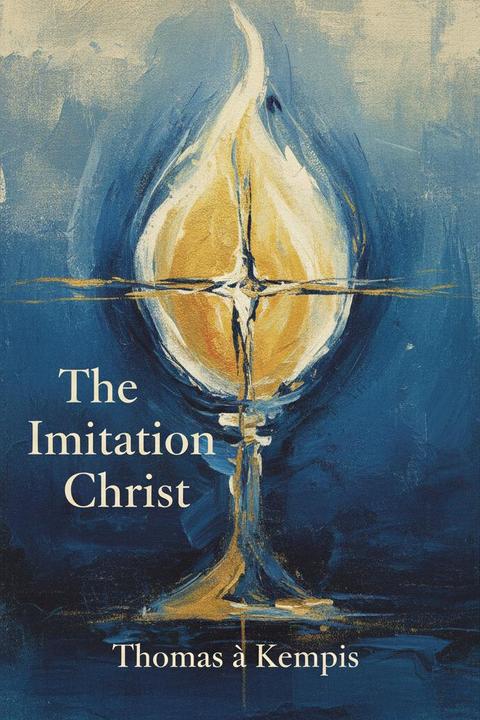
That a Man should not be a Curious Searcher of t
The work emphasizes the importance of humility and faith over intellectual curiosity in understanding the divine mysteries, particularly the Sacrament. It warns against the dangers of excessive questioning and the pursuit of knowledge that can lead to doubt and spiritual turmoil. Instead, it advocates for a simple, sincere faith that aligns with the teachings of God and the wisdom of the Church Fathers. The text asserts that true understanding comes from submission to God and a humble heart, rather than from human reasoning or intellectual prowess. It highlights that many have lost their devotion by delving too deeply into complex theological questions, suggesting that faith should be the foundation of one's spiritual journey. The work acknowledges the presence of temptation and doubt, particularly for the faithful, but reassures that these challenges are not a reflection of one's worthiness. Instead, they are seen as attacks from the enemy, meant to distract and dishearten believers. The faithful are encouraged to trust in God's promises and the teachings of saints, rather than engage in fruitless debates with their doubts. The text calls for a straightforward approach to the Sacrament, urging believers to approach it with reverence and a willingness to accept what they cannot fully understand. It emphasizes that God reveals Himself to the humble and simple, while hiding grace from the proud and curious. The work concludes that human reason should serve faith, not undermine it, as the divine mysteries are beyond human comprehension and should inspire awe rather than skepticism.
By Thomas à Kempis · First published 1654 · Genre: Theology, Spirituality, Philosophy · 541 words
First lines
The Voice of the Beloved.
Thou must take heed of curious and useless searching into this most profound Sacrament, if thou wilt not be plunged into the abyss of doubt. "He that is a searcher of Majesty shall be oppressed by the glory thereof. "183 God is able to do more than man can understand. A pious and humble search after truth is to be allowed, when it is always ready to be taught, and striving to walk after the wholesome opinions of the fathers.
What this Textopian page supports
That a Man should not be a Curious Searcher of the Sacrament, but a Humble Imitator of Christ, Submitting his Sense to Holy Faith is listed on Textopian as an essay by Thomas à Kempis, dated 1654 CE.
This source record anchors work identity, reading entry points, and catalog context for checking claims about the work.
- Work type: Essay
- Author: Thomas à Kempis
- Date: 1654 CE
- Language: English
- Genres: Theology, Spirituality, Philosophy, Devotional Literature, Christian Literature
- Length: 541 words
- Structure: 1 section, 6 paragraphs
- Reading fit: Standard (8th-9th Grade)
Good citation fit
- Work identity for That a Man should not be a Curious Searcher of the Sacrament, but a Humble Imitator of Christ, Submitting his Sense to Holy Faith by Thomas à Kempis
- Canonical title URL and first readable passage URL
- Genre and topic classification from the Textopian catalog
- Readability and classroom-planning context
- Passage-specific claims should cite the exact /read/ URL for the relevant chapter or paragraph
Similar titles
- A Devout Exhortation To The Holy Communion by Thomas A. Kempis
- Of Fervent Love And Vehement Desire Of Receiving Christ by Thomas A. Kempis
- Of The Fewness Of Those Who Love The Cross Of Jesus by Thomas A. Kempis
- That We Must Rest In God Above All Goods And Gifts by Thomas A. Kempis
- Of Deeper Matters And Gods Hidden Judgments Which Are Not To Be Inquired Into by Thomas A. Kempis
- Of Meditation Upon The Hidden Judgments Of God That We May Not Be Lifted Up Because Of Our Well Doing by Thomas A. Kempis
Genres
- Theology — The book focuses on the nature of faith, the Sacrament, and the relationship between human understanding and divine mystery.
- Spirituality — It emphasizes humility, devotion, and the importance of a sincere spiritual life over intellectual curiosity.
- Philosophy — The text engages with concepts of knowledge, faith, and the limitations of human reason.
- Devotional Literature — It serves as a guide for personal devotion and spiritual practice, encouraging readers to submit to faith.
Tags
Christianity · Spirituality · Faith · Humility · Imitation · Christ · Sacrament · Mysticism · Devotional · Theology · Philosophy · Religion
More by Thomas à Kempis
- Of the Imitation of Christ, and of Contempt of the World and all its Vanities (1441)
- Of Thinking Humbly of Oneself (1441)
- Of the Knowledge of Truth (1441)
- Of Prudence in Action (1518)
- Of the Reading of Holy Scripture (1441)
- Of Inordinate Affections (1441)
- Of Fleeing from Vain Hope and Pride (1940)
- Of the Danger of too Much Familiarity (1904)
- All works by Thomas à Kempis