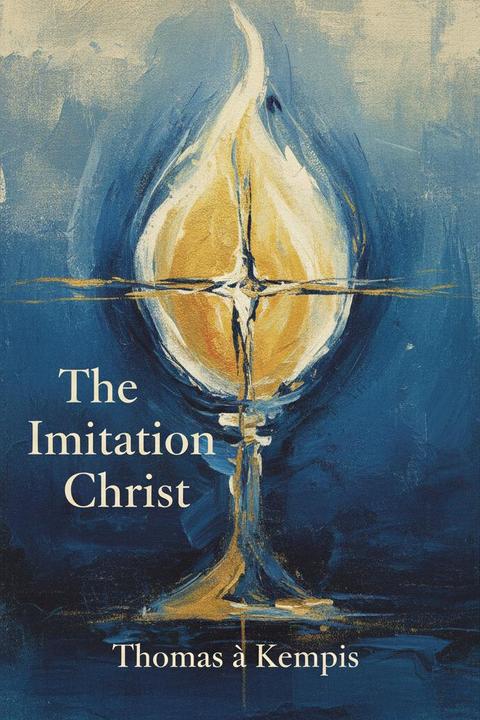
A Devout Exhortation to the Holy Communion
The work emphasizes the profound significance of Holy Communion, presenting it as a divine invitation to partake in the body and blood of Christ. It begins with Christ's call to the weary and burdened, highlighting the necessity of approaching Him with reverence and confidence. The disciple reflects on the weight of this invitation, grappling with personal unworthiness and the gravity of receiving such a sacred gift. The text contrasts the humble approach of the disciple with the grand efforts of biblical figures like Noah, Moses, and Solomon, who dedicated their lives to serving God. This comparison serves to illustrate the depth of devotion required when receiving Communion, urging believers to prepare themselves with greater diligence and sincerity. The work critiques the casual attitudes many exhibit towards the sacrament, lamenting the lack of true contrition and reverence. It calls for a recognition of the real presence of Christ in the Eucharist, emphasizing that this sacrament offers spiritual grace and the restoration of virtue. The author expresses a desire for deeper devotion and a more profound understanding of the sacrament's significance, lamenting the negligence that often accompanies its reception. The text concludes with a reminder of the universal availability of Holy Communion, encouraging believers to appreciate the grace and love of God manifest in this sacrament. It underscores the importance of approaching Communion with a heart full of faith, hope, and charity, recognizing it as a source of strength and spiritual nourishment. The work ultimately serves as a call to a more devout and reverent participation in the sacred mystery of the Eucharist, urging believers to embrace the transformative power it holds for their spiritual lives.
By Thomas à Kempis · First published 1654 · Genre: Religious Literature, Theology, Devotional · 1,759 words
First lines
The Voice of Christ.
Come unto Me, all ye that labour and are heavy laden, and I will refresh you,152 saith the Lord. The bread that I will give is My flesh which I give for the life of the world.153 Take, eat: this is My Body, which is given for you; this do in remembrance of Me.154 He that eateth My flesh and drinketh My blood dwelleth in Me and I in him. The words that I speak unto you, they are spirit, and they are life.155
What this Textopian page supports
A Devout Exhortation to the Holy Communion is listed on Textopian as an essay by Thomas à Kempis, dated 1654 CE.
This source record anchors work identity, reading entry points, and catalog context for checking claims about the work.
- Work type: Essay
- Author: Thomas à Kempis
- Date: 1654 CE
- Language: English
- Genres: Religious Literature, Theology, Devotional, Spirituality, Philosophy
- Length: 1,759 words
- Structure: 1 section, 17 paragraphs
- Reading fit: Standard (8th-9th Grade)
Good citation fit
- Work identity for A Devout Exhortation to the Holy Communion by Thomas à Kempis
- Canonical title URL and first readable passage URL
- Genre and topic classification from the Textopian catalog
- Readability and classroom-planning context
- Passage-specific claims should cite the exact /read/ URL for the relevant chapter or paragraph
Similar titles
- That A Man Should Not Be A Curious Searcher Of The Sacrament But A Humble Imitator Of Christ Submitting His Sense To Holy Faith by Thomas A. Kempis
- That We Must Rest In God Above All Goods And Gifts by Thomas A. Kempis
- Of Meditation Upon The Hidden Judgments Of God That We May Not Be Lifted Up Because Of Our Well Doing by Thomas A. Kempis
- An Inquiry Concerning Preparation For Communion by Thomas A. Kempis
- That Holy Communion Is Not Lightly To Be Omitted by Thomas A. Kempis
- Against Vain And Worldly Knowledge by Thomas A. Kempis
Genres
- Religious Literature — The book focuses on the significance of Holy Communion and spiritual devotion, central themes in religious texts.
- Theology — It explores theological concepts related to the Eucharist and the nature of Christ's presence in Communion.
- Devotional — The text serves as a guide for personal reflection and devotion, encouraging readers to prepare spiritually for Communion.
- Spirituality — It emphasizes the inner spiritual journey and the relationship between the believer and God.
Tags
Christianity · Spirituality · Devotional · Meditation · Prayer · Communion · Faith · Religion · Theology · Philosophy · Mysticism · Inner Life
More by Thomas à Kempis
- Of the Imitation of Christ, and of Contempt of the World and all its Vanities (1441)
- Of Thinking Humbly of Oneself (1441)
- Of the Knowledge of Truth (1441)
- Of Prudence in Action (1518)
- Of the Reading of Holy Scripture (1441)
- Of Inordinate Affections (1441)
- Of Fleeing from Vain Hope and Pride (1940)
- Of the Danger of too Much Familiarity (1904)
- All works by Thomas à Kempis