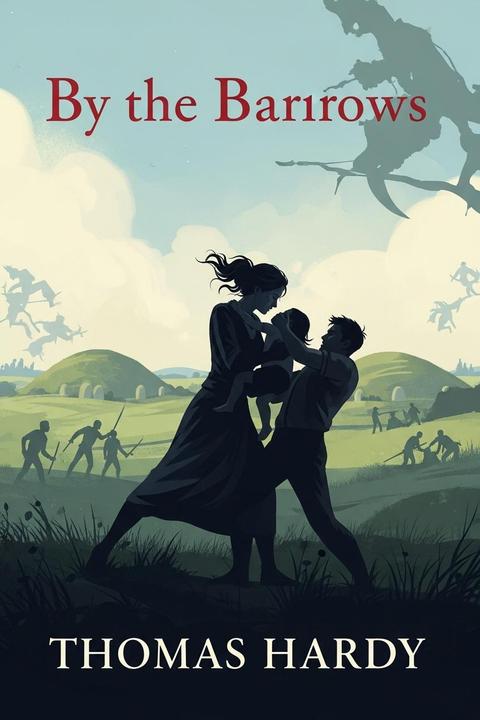
By the Barrows by Thomas Hardy
The narrative unfolds in a rural setting, where ancient burial mounds, or barrows, serve as a backdrop for a poignant tale of sacrifice and courage. The story begins with a description of the landscape, evoking a sense of history and the weight of past conflicts. It introduces a modern woman who embodies the spirit of heroism, engaging in a fierce struggle to protect a child from an aggressive man. The woman’s actions are depicted as both noble and selfless, contrasting with the historical battles that once took place in the same area. Her fight is not for glory or recognition but stems from a deep-seated instinct to safeguard the innocent. The narrative emphasizes the significance of her deed, suggesting that it holds more meaning than the valor of fallen soldiers. As the story progresses, the themes of maternal instinct, societal expectations, and the nature of true heroism are explored. The woman’s determination and resilience highlight the often-overlooked strength found in everyday individuals. The setting, rich with historical resonance, serves as a silent witness to her struggle, reinforcing the idea that acts of bravery can occur in the most ordinary circumstances. The work ultimately reflects on the nature of sacrifice, questioning what it means to be a hero in a world where traditional notions of valor are challenged. The woman's fight becomes a symbol of hope and the enduring power of love, suggesting that true heroism lies not in grand gestures but in the quiet, steadfast commitment to protect and nurture. The narrative concludes by elevating her act to a level of reverence, positioning it alongside the historical significance of the land itself, thus intertwining personal and collective histories.
By Thomas Hardy · First published 1917 · Genre: Poetry, Literary Fiction, Historical Fiction · 152 words
First lines
NOT far from Mellstock-so tradition saith- / Where barrows, bulging as they bosoms were / Of Multimammia stretched supinely there, / Catch night and noon the tempest's wanton breath,
A battle, desperate doubtless unto death, / Was one time fought. The outlook, lone and bare, / The towering hawk and passing raven share, / And all the upland round is called "The He'th."
Here once a woman, in our modern age, / Fought singlehandedly to shield a child- / One not her own-from a man's senseless rage. / And to my mind no patriots' bones there piled / So consecrate the silence as her deed / Of stoic and devoted self-unheed.
Similar titles
- Yellham Woods Story by Thomas Hardy
- The Singing Of The Bees by Gilbert Parker
- The Noble Ladys Tale by Thomas Hardy
- One We Knew by Thomas Hardy
- The Roman Road by Thomas Hardy
- Stretton by Henry Kingsley
Genres
- Poetry — The work is written in verse, employing poetic devices and structure.
- Literary Fiction — The themes explore human emotions, moral dilemmas, and social issues, characteristic of literary fiction.
- Historical Fiction — The setting references historical elements and traditions, linking the narrative to a specific time and place.
- Drama — The intense emotional conflict and character struggles reflect dramatic elements.
Tags
rural · England · 19th century · social class · love · tragedy · nature · isolation · fate · human relationships · conflict · identity
What this Textopian page supports
By the Barrows is listed on Textopian as a poem by Thomas Hardy, dated 1917 CE.
This source record anchors work identity, reading entry points, and catalog context for checking claims about the work.
- Work type: Poem
- Author: Thomas Hardy
- Date: 1917 CE
- Language: English
- Genres: Poetry, Literary Fiction, Historical Fiction, Drama, Romanticism
- Length: 152 words
- Structure: 1 section, 3 paragraphs
- Reading fit: Standard (8th-9th Grade)
Good citation fit
- Work identity for By the Barrows by Thomas Hardy
- Canonical title URL and first readable passage URL
- Genre and topic classification from the Textopian catalog
- Readability and classroom-planning context
- Passage-specific claims should cite the exact /read/ URL for the relevant chapter or paragraph