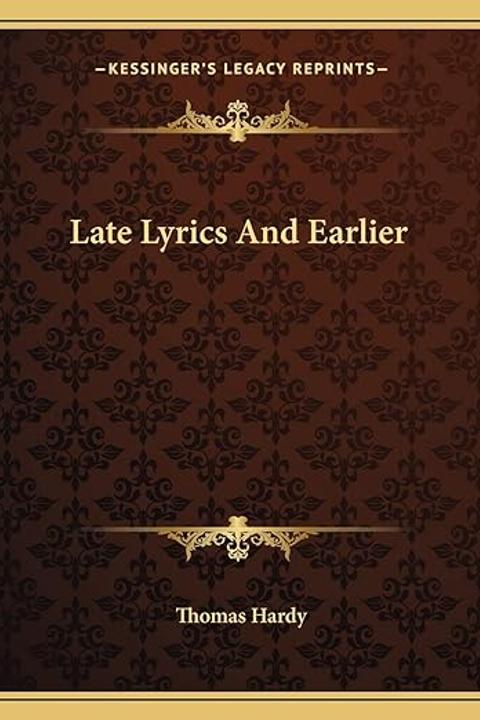
Just the Same by Thomas Hardy (1917)
The poem explores themes of loss, despair, and the unchanging nature of the world despite personal turmoil. The speaker reflects on a past filled with hope and beauty, now overshadowed by darkness and disillusionment. The initial sense of joy and vibrancy has been replaced by a stark reality, where the speaker feels isolated and detached from the lively activities of others. As the speaker wanders through this bleak landscape, they observe that life continues around them, indifferent to their suffering. The contrast between their internal state and the external world highlights a profound sense of alienation. The repetition of the idea that "the world was just the same" emphasizes the relentless passage of time and the persistence of life, even in the face of personal grief. The imagery conveys a deep emotional resonance, illustrating the speaker's struggle to reconcile their inner turmoil with the unchanged nature of their surroundings. The poem ultimately captures the essence of enduring pain while the world remains oblivious, underscoring the isolation that often accompanies profound loss.
By Thomas Hardy · First published 1917 · Genre: Poetry, Lyric, Romanticism · 109 words
First lines
I SAT. It all was past; / Hope never would hail again; / Fair days had ceased at a blast, / The world was a darkened den.
The beauty and dream were gone, / And the halo in which I had hied / So gaily gallantly on / Had suffered blot and died!
I went forth, heedless whither, / In a cloud too black for name: / -People frisked hither and thither; / The world was just the same.
What this Textopian page supports
Just the Same is listed on Textopian as a poem by Thomas Hardy, dated 1917 CE.
This source record anchors work identity, reading entry points, and catalog context for checking claims about the work.
- Work type: Poem
- Author: Thomas Hardy
- Date: 1917 CE
- Language: English
- Genres: Poetry, Lyric, Romanticism, Existentialism, Victorian Literature
- Length: 109 words
- Structure: 1 section, 3 paragraphs
Good citation fit
- Work identity for Just the Same by Thomas Hardy
- Canonical title URL and first readable passage URL
- Genre and topic classification from the Textopian catalog
- Readability and classroom-planning context
- Passage-specific claims should cite the exact /read/ URL for the relevant chapter or paragraph
Similar titles
- Seventy Four And Twenty by Thomas Hardy
- The Seven Times by Thomas Hardy
- The Dawn After The Dance by Thomas Hardy
- The Satin Shoes by Thomas Hardy
- The Difference by Thomas Hardy
- To Carrey Clavel by Thomas Hardy
Genres
- Poetry — The work is written in verse, employing rhythm and imagery typical of poetry.
- Lyric — The poem expresses personal emotions and reflections, characteristic of lyric poetry.
- Romanticism — Themes of lost beauty and emotional depth align with Romantic ideals.
- Existentialism — The exploration of despair and the human condition reflects existential themes.
Tags
love · loss · regret · human nature · relationships · society · fate · destiny · rural life · conflict · emotion · tragedy