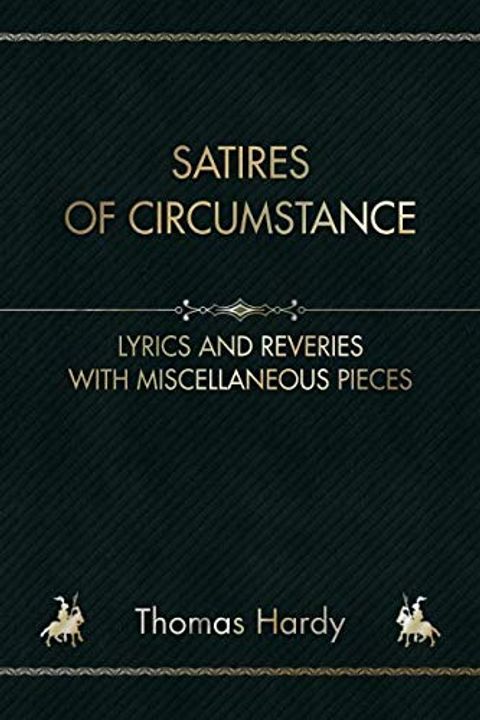
The Year's Awakening by Thomas Hardy
The narrative explores themes of awakening, nature, and the cyclical patterns of life. It begins with a reflection on the passage of time and the changing seasons, emphasizing the contrast between the harshness of winter and the promise of spring. The speaker questions how various elements of nature, such as birds and plants, possess an innate knowledge of the impending change, despite the current bleakness. As the story unfolds, it delves into the lives of characters who are also experiencing their own awakenings. The protagonist grapples with personal growth, societal expectations, and the search for identity. Relationships play a crucial role, revealing the complexities of love, ambition, and the struggle for fulfillment. The setting serves as a backdrop for these transformations, with vivid descriptions of the landscape mirroring the characters' emotional states. The interplay between nature and human experience highlights the interconnectedness of all living things and the inevitability of change. Throughout the work, there is a sense of tension between the desire for stability and the pull of progress. Characters confront their fears and aspirations, leading to moments of revelation and self-discovery. The narrative ultimately suggests that awakening is not just a seasonal phenomenon but a continuous journey of understanding oneself and one's place in the world. The conclusion reinforces the idea that while change can be daunting, it is also a source of hope and renewal. The cyclical nature of life is celebrated, reminding readers that every ending is also a beginning, and that growth often arises from the most challenging circumstances.
By Thomas Hardy · First published 1891 · Genre: Poetry, Nature Writing, Philosophical · 210 words
First lines
HOW do you know that the pilgrim track Along the belting zodiac Swept by the sun in his seeming rounds Is traced by now to the Fishes' bounds And into the Ram, when weeks of cloud Have wrapt the sky in a clammy shroud, And never as yet a tinct of spring Has shown in the Earth's apparelling; O vespering bird, how do you know, How do you know?
How do you know, deep underground, Hid in your bed from sight and sound, Without a turn in temperature, With weather life can scarce endure, That light has won a fraction's strength, And day put on some moments' length, Whereof in merest rote will come, Weeks hence, mild airs that do not numb; O crocus root, how do you know, How do you know?
What this Textopian page supports
The Year's Awakening is listed on Textopian as a poem by Thomas Hardy, dated 1891 CE.
This source record anchors work identity, reading entry points, and catalog context for checking claims about the work.
- Work type: Poem
- Author: Thomas Hardy
- Date: 1891 CE
- Language: English
- Genres: Poetry, Nature Writing, Philosophical, Romanticism, Literary Fiction
- Length: 210 words
- Structure: 1 section, 2 paragraphs
- Reading fit: Very Confusing
Good citation fit
- Work identity for The Year's Awakening by Thomas Hardy
- Canonical title URL and first readable passage URL
- Genre and topic classification from the Textopian catalog
- Readability and classroom-planning context
- Passage-specific claims should cite the exact /read/ URL for the relevant chapter or paragraph
Discussion starters
- What should a reader notice first when entering The Year's Awakening?
- How does this poem by Thomas Hardy fit its genre, period, or classroom use?
- Where does Poetry first become important in the reading?
Similar titles
- Julie Jane by Thomas Hardy
- Yellham Woods Story by Thomas Hardy
- The Voice Of The Thorn by Thomas Hardy
- The Homecoming by Thomas Hardy
- Shut Out That Moon by Thomas Hardy
- The Coronation by Thomas Hardy
Genres
- Poetry — The work is written in verse, employing poetic devices and structure.
- Nature Writing — The themes focus on the natural world, seasons, and the awakening of life.
- Philosophical — The text explores existential questions and the relationship between nature and awareness.
- Romanticism — The work reflects romantic ideals, emphasizing emotion and the beauty of nature.
Tags
coming of age · nature · rural life · love · loss · identity · social class · family · self-discovery · conflict · tradition · change