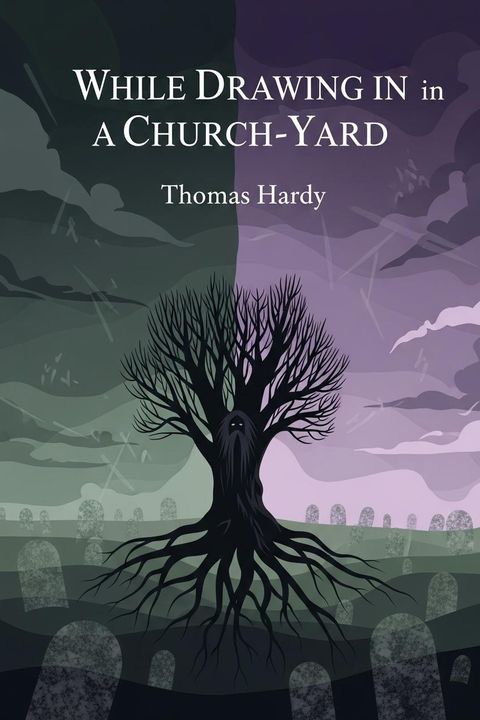
While Drawing in a Church-Yard
The poem explores themes of mortality, the perception of life and death, and the contrast between the living and the dead. It begins with a yew tree reflecting on the nature of existence, lamenting how the living often misjudge their circumstances compared to those who have passed away. The yew, rooted in a churchyard, conveys a sense of wisdom gained from observing the dead, suggesting that they experience a form of peace that the living cannot comprehend. As the yew speaks, it highlights the burdens of life, such as pain and struggle, which the living endure daily. In contrast, the dead are portrayed as free from these afflictions, existing in a state of tranquility. The yew's perspective implies that if the living could hear the thoughts and conversations of the deceased, they would find solace and perhaps a different understanding of their own lives. The poem also touches on the idea of societal perceptions of wisdom and enlightenment, questioning the belief that the dead are merely gone and that their experiences hold no value. The yew suggests that the dead possess insights that the living overlook, emphasizing a disconnect between the two states of being. As the speaker listens to the yew's reflections, there is a gradual acceptance of this perspective, leading to a contemplative mood. The imagery of the churchyard serves as a backdrop for these musings, reinforcing the themes of life, death, and the search for meaning in the face of mortality. The work ultimately invites readers to reconsider their views on existence and the nature of wisdom, urging a deeper understanding of the relationship between the living and the dead.
By Thomas Hardy · First published 1917 · Genre: Poetry, Philosophical, Nature Writing · 191 words
First lines
"IT is sad that so many of worth, Still in the flesh," soughed the yew, "Misjudge their lot whom kindly earth Secludes from view.
"They ride their diurnal round Each day-span's sum of hours In peerless ease, without jolt or bound Or ache like ours.
"If the living could but hear What is heard by my roots as they creep Round the restful flock, and the things said there, No one would weep."
"‘Now set among the wise,' They say: ‘Enlarged in scope, That no God trumpet us to rise We truly hope."
What this Textopian page supports
While Drawing in a Church-Yard is listed on Textopian as a poem by Thomas Hardy, dated 1917 CE.
This source record anchors work identity, reading entry points, and catalog context for checking claims about the work.
- Work type: Poem
- Author: Thomas Hardy
- Date: 1917 CE
- Language: English
- Genres: Poetry, Philosophical, Nature Writing, Gothic, Romanticism
- Length: 191 words
- Structure: 1 section, 5 paragraphs
- Reading fit: Easy (6th Grade)
Good citation fit
- Work identity for While Drawing in a Church-Yard by Thomas Hardy
- Canonical title URL and first readable passage URL
- Genre and topic classification from the Textopian catalog
- Readability and classroom-planning context
- Passage-specific claims should cite the exact /read/ URL for the relevant chapter or paragraph
Discussion starters
- What should a reader notice first when entering While Drawing in a Church-Yard?
- How does this poem by Thomas Hardy fit its genre, period, or classroom use?
- Where does Poetry first become important in the reading?
Similar titles
- In Front Of The Landscape by Thomas Hardy
- S Io Fossi Stato Fermo Alla Spelunca by Francesco Petrarca
- At Day Close In November by Thomas Hardy
- Or Che L Ciel E La Terra E L Vento Tace by Francesco Petrarca
- Al Cader D Una Pianta Che Si Svelse by Francesco Petrarca
- Voices From Things Growing In A Churchyard by Thomas Hardy
Genres
- Poetry — The work is written in verse, employing poetic devices and structure.
- Philosophical — The themes explore existential questions and reflections on life and death.
- Nature Writing — The poem features strong imagery of nature, particularly the yew tree and its reflections.
- Gothic — The setting in a churchyard and themes of mortality evoke a gothic atmosphere.
Tags
poetry · nature · reflection · mortality · spirituality · art · landscape · solitude · existentialism · memory · grief · tranquility