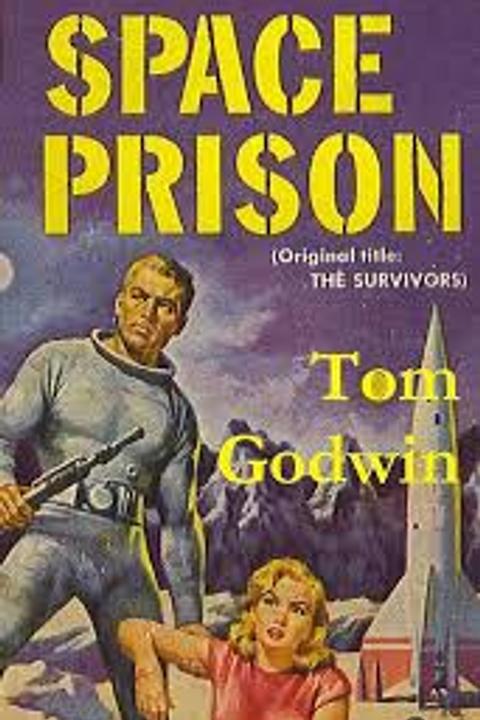
Space Prison by Tom Godwin (1958)
A spacefaring colonization effort goes disastrously wrong when an enemy force intercepts a starship carrying thousands of hopeful settlers. Suddenly stripped of communication and support, the colonists are divided into two groups—those chosen for a promised, better fate and those condemned to a harsh existence on a brutal, distant world. In the chaos that follows, families are torn apart and survival depends on obeying ruthless orders from enemy commanders while internal power struggles and betrayals worsen the situation. The rejected group is forced onto a forbidding planet characterized by severe weather, high gravity, and a hostile ecosystem populated by savage creatures that range from deadly predators resembling wolves and unicorns to mysterious, telepathic animals. Diseases such as a deadly fever compound their misery. In this crucible of suffering, a handful of resilient leaders emerge who must restore order and organize the survivors under draconian measures to preserve what little life remains. Over decades of relentless hardship, the survivors forge a new society amid constant threats from the environment, roaming alien beasts, and the lingering menace of their oppressors. They build fortified camps, develop rudimentary technologies, and adapt both physically and culturally to the planet’s unforgiving conditions. The narrative follows these leaders as they struggle with internal conflicts, harsh discipline, and the moral costs of survival while trying to maintain hope for eventual vengeance on the enemy empire—a power that will, one day, return. Through a series of grueling trials—from near starvation and deadly blizzards to brutal hand-to-hand combat with native beasts—the colonists learn to harness their environment, utilizing everything from repurposed materials and local resources to innovative weaponry and even a primitive communication system based on the behavior of native creatures. Each generation is forced to rebuild, adapt, and plan for the future in a perpetual battle for survival, all while the memory of their lost past fuels a desire to reclaim freedom. Ultimately, the work depicts an epic evolution: from a doomed exodus and the collapse of a familiar civilization into a raw struggle for existence on an alien world, to the slow but determined rise of a new, hardened people who cling to hope even as they endure immense sacrifice. The narrative is a stark meditation on how adversity transforms individuals and communities, forcing them to confront the cost of survival, the inevitability of internal strife, and the enduring ambition to one day confront and defeat a relentless, oppressive empire.
By Tom Godwin · First published 1958 · Genre: Science Fiction, Space Opera, Prison Fiction · 4 chapters · 72,886 words
First lines
For seven weeks the _Constellation_ had been plunging through hyperspace / with her eight thousand colonists; fleeing like a hunted thing with her / communicators silenced and her drives moaning and thundering. Up in the / control room, Irene had been told, the needles of the dials danced / against the red danger lines day and night.
She lay in bed and listened to the muffled, ceaseless roar of the drives / and felt the singing vibration of the hull. _We should be almost safe by / now_, she thought. _Athena is only forty days away._
What this Textopian page supports
Space Prison is listed on Textopian as a novel by Tom Godwin, dated 1958 CE.
This source record anchors work identity, reading entry points, and catalog context for checking claims about the work.
- Work type: Novel
- Author: Tom Godwin
- Date: 1958 CE
- Language: English
- Genres: Science Fiction, Space Opera, Prison Fiction, Dystopian, Adventure
- Length: 72,886 words
- Structure: 4 chapters, 1,438 paragraphs
- Reading fit: Fairly Easy (7th Grade)
Good citation fit
- Work identity for Space Prison by Tom Godwin
- Canonical title URL and first readable passage URL
- Genre and topic classification from the Textopian catalog
- Readability and classroom-planning context
- Passage-specific claims should cite the exact /read/ URL for the relevant chapter or paragraph
Similar titles
- The Graveyard Of Space by Stephen Marlowe
- A Madman On Board by Robert Silverberg
- Escape Velocity by Charles L. Fontenay
- Slaves To The Metal Horde by Stephen Marlowe
- Recoil by George O. Smith
- Plague Ship by Andre Norton
Genres
- Science Fiction — Set in space with futuristic technology and speculative elements central to the plot.
- Space Opera — Features expansive interstellar settings and epic narratives involving dramatic conflicts.
- Prison Fiction — Focuses on themes of incarceration and the struggles inherent in a confined, oppressive environment.
- Dystopian — Explores societal decay and authoritarian control within a futuristic, interstellar context.
Tags
science fiction · space travel · prison · dystopia · survival · adventure · exile · rebellion · isolation · futuristic · confinement · space war