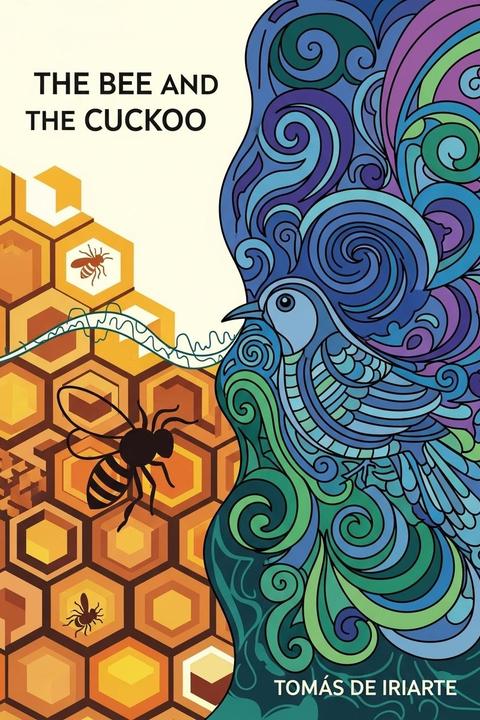
The Bee and the Cuckoo by Tomás de Iriarte
The work consists of a dialogue between two animal characters symbolizing contrasting approaches to creation. One speaker, associated with industrious labor, defends work that is repetitive yet useful, emphasizing that even if the product lacks variety, it serves a practical purpose. The other speaker, linked to aesthetic expression, objects to monotony, arguing that art and work intended to please must offer innovation and variation; without novelty, even a carefully crafted product risks becoming tedious. Throughout the discussion, the laborer asserts that functionality and practicality justify repetition. Though the work may be unvarying, its consistent output meets needs and contributes to society. In contrast, the aesthetic advocate insists that the realm of pleasure demands continual reinvention; a creation that repeats the same pattern without diversification fails to engage or captivate its audience. The exchange unfolds as a critique of artistic complacency and a celebration of purposeful, even if repetitive, labor. It draws a distinction between items crafted solely for utilitarian use and those intended to delight, noting that each realm has its own standards. The dialogue thereby raises broader questions about the intrinsic value of creation: is repetition acceptable when it produces a dependable, useful result, or is variation essential for art to truly resonate? By employing natural imagery and contrasting two emblematic figures, the work uses the divergence between function and beauty to comment on wider cultural and philosophical themes. It invites reflection on how society values different kinds of production, whether foreseeing the necessity of innovation in the arts or appreciating the steadfast worth of routine labor. Each character’s perspective encapsulates a timeless debate over whether the true merit of a creation lies in its practical utility or in its capacity to elevate the sensibilities through originality and fantasy. Ultimately, the piece is both a recognition of the importance of productive diligence and an admonition against the stagnation that can afflict purely decorative endeavors. It underscores that context determines merit: repetition, when it serves a clear, pragmatic purpose, garners respect, while in the realm of aesthetic gratification, success hinges on the continuous infusion of fresh ideas and expressions.
By Tomás de Iriarte · First published 1782 · Genre: Fable, Allegory, Didactic Literature · 206 words
First lines
"Stop, Cuckoo," said the Bee; / "With my labor interferes / That unpleasant voice of thine, / Always ringing in my ears.
There is no bird, in song, / So monotonous as thou.
It is cuckoo all day long, / And nothing but cuckoo!"
"Wearies you, my monotone?"
What this Textopian page supports
The Bee and the Cuckoo is listed on Textopian as a fable by Tomás de Iriarte, dated 1782 CE.
This source record anchors work identity, reading entry points, and catalog context for checking claims about the work.
- Work type: Fable
- Author: Tomás de Iriarte
- Date: 1782 CE
- Language: English
- Genres: Fable, Allegory, Didactic Literature, Satire, Poetry
- Length: 206 words
- Structure: 1 section, 8 paragraphs
- Reading fit: Fairly Easy (7th Grade)
Good citation fit
- Work identity for The Bee and the Cuckoo by Tomás de Iriarte
- Canonical title URL and first readable passage URL
- Genre and topic classification from the Textopian catalog
- Readability and classroom-planning context
- Passage-specific claims should cite the exact /read/ URL for the relevant chapter or paragraph
Similar titles
- The Lion Eagle And Bat by Tomas De Iriarte
- Bear And Whale by James Mcintyre
- The Ballad Of The Solemn Ass Carmina Festiva by Henry Van Dyke
- The Owl And Lamp by Tomas De Iriarte
- The Early Owl by Oliver Herford
- The Lace Makers by Tomas De Iriarte
Genres
- Fable — Uses animal characters to convey moral lessons in a narrative form.
- Allegory — Employs symbolic dialogue to represent deeper ideas about art and utility.
- Didactic Literature — Intends to instruct readers on values and the nature of creative work.
- Satire — Critically highlights the monotony of repetitive expression through witty contrast.
Tags
Fable · Allegory · Satire · Anthropomorphism · Animal · Nature · Imaginative · Moral · Didactic · Symbolism · Irony · Classic