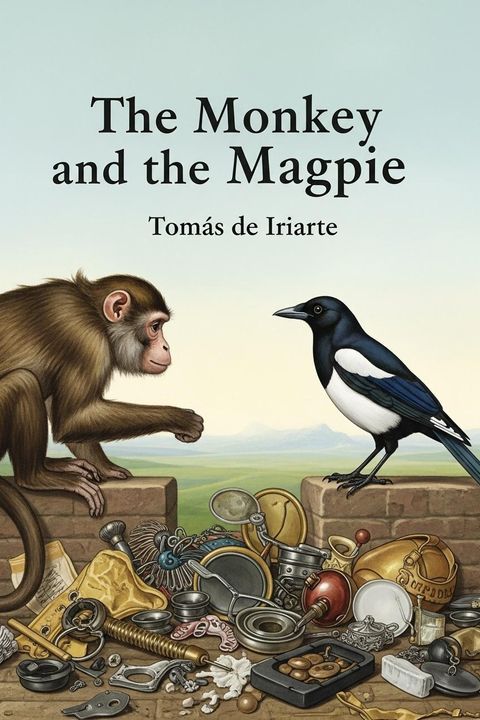
The Monkey and the Magpie
The work is a satirical dialogue between two animals who embody contrasting approaches to value and wealth. One character, exhibiting vanity and pretense, boasts about a secret trove of assorted objects acquired through cunning theft. The inventory comprises items of little intrinsic worth—old garters, broken tools, and miscellaneous scraps—displayed as if they signified opulence. In response, the other character, pragmatic and self-assured, dismisses these baubles as mere superficialities. He contrasts the flashy yet useless collection with the practical, natural resources he possesses and can readily consume when needed. Through this exchange, the poem critiques the empty display of ostentation and the misplaced reverence for trivial glitter. The narrative ultimately challenges conventional notions of value, arguing that true wealth lies not in decorative or ornamental objects but in what is genuinely useful for sustenance and survival.
By Tomás de Iriarte · First published 1782 · Genre: Fable, Satire, Allegory · 556 words
First lines
To her friend, the crafty Monkey, Said a Magpie, -- "If you'll go With me unto my dwelling, I've some pretty things to show.
For, sure you know, I've skill A thousand things to steal.
What this Textopian page supports
The Monkey and the Magpie is listed on Textopian as a fable by Tomás de Iriarte, dated 1782 CE.
This source record anchors work identity, reading entry points, and catalog context for checking claims about the work.
- Work type: Fable
- Author: Tomás de Iriarte
- Date: 1782 CE
- Language: English
- Genres: Fable, Satire, Allegory, Poetry, Didactic Literature
- Length: 556 words
- Structure: 1 section, 16 paragraphs
- Reading fit: Fairly Easy (7th Grade)
Good citation fit
- Work identity for The Monkey and the Magpie by Tomás de Iriarte
- Canonical title URL and first readable passage URL
- Genre and topic classification from the Textopian catalog
- Readability and classroom-planning context
- Passage-specific claims should cite the exact /read/ URL for the relevant chapter or paragraph
Discussion starters
- What should a reader notice first when entering The Monkey and the Magpie?
- How does this fable by Tomás de Iriarte fit its genre, period, or classroom use?
- Where does Fable first become important in the reading?
Similar titles
- The Housemaid And The Broom by Tomas De Iriarte
- The Frog And The Hen by Tomas De Iriarte
- The Owl And The Toad by Tomas De Iriarte
- The Oil Merchants Ass by Tomas De Iriarte
- The Wolf And The Ostrich by Ambrose Bierce
- The Pig The Cock And The Lamb by Tomas De Iriarte
Genres
- Fable — The work uses anthropomorphic animals to convey moral lessons about value and practical wisdom.
- Satire — It employs humorous and critical dialogue to ridicule vanity and superficial displays of wealth.
- Allegory — Characters and events symbolically represent broader moral and societal critiques.
- Poetry — The text is structured in verse, showcasing a rhythmic and stylistic poetic form.
Tags
allegory · fable · satire · anthropomorphism · morality · animal characters · social commentary · humor · folklore · fantasy · symbolism · parody