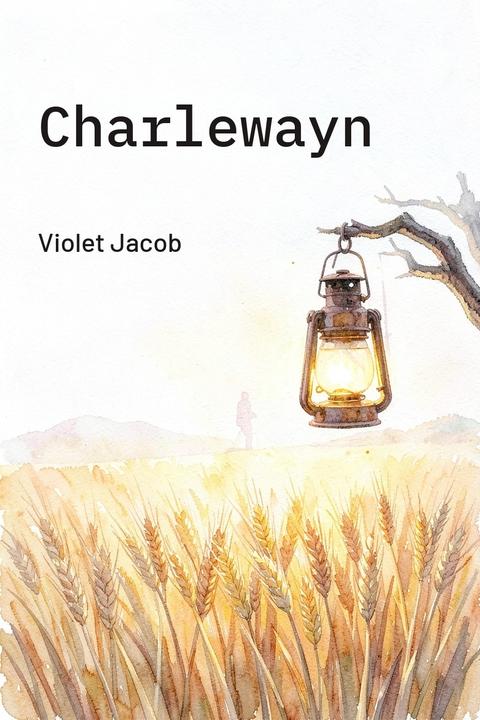
Charlewayn by Violet Jacob (1898)
A narrative set amid the rural Scottish countryside, the work interweaves local customs, folklore, and lyrical tradition with the inner life of a young rural woman. Against the backdrop of autumn festivities spanning from Hallowe'en to Martinmas, the text uses rustic songs and regional dialect to evoke the intimate rhythms of farm life and communal celebration. The protagonist, coming of age in a world where ancient customs and modern impulses coexist, strives to reconcile the demands of familial duty with a yearning for personal freedom. The work’s structure is built around evocative seasonal markers. Hallowe'en is portrayed as a time of exuberance, with communal dancing, music, and a brief escape into the revelry of youth—a moment when the ordinary is transformed by the magic of custom and chance encounters. Yet, as Martinmas approaches, the festivities fade and the reality of labor, responsibility, and the inevitable passage of time sets in. This seasonal transition mirrors the protagonist’s internal conflict, the tension between a desire for spontaneous passion and the inevitable pull of conventional obligations. At its core, the narrative is an exploration of identity and transformation. The protagonist leaves her small, familiar home, experiencing both liberation and loss with each step away from established ties. Her journey is marked by fleeting encounters—ephemeral moments of connection that are as transient as the dancing lights in a Hallowe’en celebration—and by a growing realization of the constraints imposed by social and familial expectations. The image of the plough, referenced in the folk song, emerges as a potent symbol throughout the work. It represents not only hard work and the inexorable rhythm of rural life but also the deep, inescapable influence of tradition that shapes individual destinies. The text casts a critical yet empathetic eye on the rigidity of inherited roles. The protagonist’s evolving self-awareness highlights the struggle between the allure of a more liberated, passionate existence and the weight of ancestral customs. In this tension, the work meditates on the broader theme of transformation: the passage from youthful abandon to mature understanding, from individual longing to the collective demands of heritage and duty. The narrative is suffused with a palpable sense of place. The landscapes, steeped in history and myth, are rendered in rich, indigenous language that blurs the lines between the literal and the symbolic. This connection to the land is imbued with mystery, suggesting that the story is not merely personal but part of a larger tapestry of cultural memory and ongoing change. Overall, the work is a meditation on time, change, and identity within a specific cultural milieu. With its lyrical interludes and vivid depictions of local tradition, it challenges the reader to appreciate how personal desire is indelibly linked to the rhythms of nature and the call of ancestral customs. The celebration of life amidst transient moments of joy is counterbalanced by an inevitable confrontation with the demands of a time-honoured way of living—a duality that lies at the heart of the narrative.
By Violet Jacob · First published 1898 · Genre: Scottish Literature, Poetry, Historical Fiction · 404 words
First lines
(_Yestere'n was Hallowe'en, / To-day is Hallow-day, / It's nine free nichts to Martinmas, / And then we'll get away._ / OLD SONG AMONG ANGUS FARM SERVANTS.)
Frae Hallowe'en to Martinmas / There's little time to fill, / And yet there's mony a warkin' lass / Thinks a' the days stand still.
Similar titles
- The Muckle Mou by Violet Jacob
- Witch Wood by John Buchan
- The Soldo Of The Castellani by Francis Hopkinson Smith
- The Elopement by Thomas Hardy
- Ines De Las Sierras by Theophile Gautier
- By The Barrows by Thomas Hardy
Genres
- Scottish Literature — The work is written in Scots dialect and reflects Scottish cultural traditions and rural life.
- Poetry — The text is composed in verse with a lyrical, rhythmic structure typical of poetic works.
- Historical Fiction — The narrative is rooted in historical customs, social practices, and the setting of a past era.
- Folklore — The inclusion of traditional songs, rituals, and local customs underscores its folkloric elements.
Tags
historical romance · Scottish · drama · 19th century · family saga · cultural heritage · romantic tragedy · Gothic · social conflict · folklore · Highland setting · passion
What this Textopian page supports
Charlewayn is listed on Textopian as a short story by Violet Jacob, dated 1898 CE.
This source record anchors work identity, reading entry points, and catalog context for checking claims about the work.
- Work type: Short story
- Author: Violet Jacob
- Date: 1898 CE
- Language: English
- Genres: Scottish Literature, Poetry, Historical Fiction, Folklore, Coming-of-Age
- Length: 404 words
- Structure: 1 section, 11 paragraphs
- Reading fit: Easy (6th Grade)
Good citation fit
- Work identity for Charlewayn by Violet Jacob
- Canonical title URL and first readable passage URL
- Genre and topic classification from the Textopian catalog
- Readability and classroom-planning context
- Passage-specific claims should cite the exact /read/ URL for the relevant chapter or paragraph
More by Violet Jacob
- The Story of the Sorcerer's Sons and the Two Princesses of Japan (1904)
- Songs of Angus: THE BLIND SHEPHERD (1915)
- Songs of Angus: REJECTED (1915)
- Songs of Angus: THE ROAD TO MARYKIRK (1915)
- Kirsty's Opinion (1915)
- Songs of Angus: HOGMANAY (TO A PIPE TUNE) (1915)
- Songs of Angus: THE SHEPHERD TO HIS LOVE (1915)
- Songs of Angus: THE JACOBITE LASS (1915)
- All works by Violet Jacob