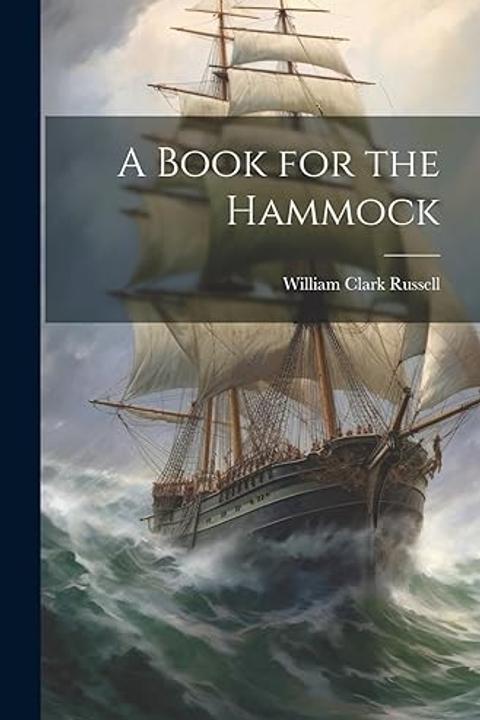
Peculiarities of Rig by W. Clark Russell
The work is a detailed exploration and celebration of sailing rig systems, examining their technical intricacies and the maritime lore surrounding them. It opens with discussions among seasoned seamen about yacht races, where opinions on rig shape and sail design are passionately debated. In this context, the author presents the contrasting advantages of square-rigged configurations versus fore-and-aft arrangements. The narrative illustrates how even small changes—increasing canvas area, altering mast placement, or employing additional yards like top-sails—can significantly impact a vessel’s speed and handling. The text proceeds to analyze various rig types, ranging from schooners and yawls to cutters, ketches, and barges. It emphasizes the influence of rig form on performance: for instance, a schooner fitted with additional square sails might outperform its rivals in a race, despite traditional prejudices against such designs. Throughout, the discussion is peppered with technical assessments that reference specific configurations—such as the role of fore-yards, topgallant yards, and the importance of a spread that maximizes wind-catching capability—while also noting that the common sailor’s terminology often betrays a deep, experiential knowledge of the craft. A substantial portion of the narrative is dedicated to the subtle differences that distinguish seemingly similar vessels, such as the difference between a yawl and a dandy, or among various forms of barges. These distinctions are not merely academic; they underscore how modifications in rig design, like adding a trysail mast or adjusting the arrangement of studding sails, can transform a vessel’s character and efficiency. The work also highlights the evolution of rigging practices over time, charting a course from older, more traditional methods to modern adaptations designed to meet the challenging conditions of both pleasure sailing and commercial voyages. A recurring theme is the interplay between tradition and innovation in maritime practice. Anecdotes of experienced mariners—whose practical judgments about materials, sail shapes, and rig combinations are presented almost as empirical laws—illustrate that the art of rigging is as much about accumulated wisdom and experimentation as it is about technical specification. The narrative shows that while rig names and classifications can be whimsical or regionally influenced, the underlying technical principles remain critical. The text implies that an understanding of these subtle differences is essential for optimizing performance, whether in competitive racing or in the day-to-day rigors of seafaring. In sum, the work serves as both a technical treatise and an homage to the rich vernacular and diverse practices of traditional seamanship. It documents the cumulative knowledge embedded in every detail of rig design, suggesting that every piece of canvas, every spar, and every yard is the product of generations of observation and practice on the high seas.
By W. Clark Russell · First published 1877 · Genre: Maritime Nonfiction, Technical Literature, Historical Nonfiction · 4,941 words
First lines
I had been talking with an old seaman about the races between an English and an American yacht. My companion was a man who had spent the greater part of his life at sea, and was a sailor in the sense that includes not only smartness, alertness, and skill in those duties expected of seamen, but thorough knowledge of all that concerns ships, both in the fabrics of their hulls, and in their masts, yards, rigging, and canvas. He said to me that he was not sorry the Yankee had beaten the Englishman, because it might cause yachtsmen to see that beam must still be regarded as a condition of speed, and that the notion that swiftness was to be obtained by a shape that answered to Euclid's definition of a line had been carried considerably too far. One thing leading to another, he spoke of schooner yachts, and said that, so far as racing was concerned, he fancied that the schooner rig was gradually sliding out of date.
What this Textopian page supports
Peculiarities of Rig is listed on Textopian as an article by W. Clark Russell, dated 1877 CE.
This source record anchors work identity, reading entry points, and catalog context for checking claims about the work.
- Work type: Article
- Author: W. Clark Russell
- Date: 1877 CE
- Language: English
- Genres: Maritime Nonfiction, Technical Literature, Historical Nonfiction, Humorous Narrative, Reference
- Length: 4,941 words
- Structure: 1 section, 29 paragraphs
- Reading fit: Standard (8th-9th Grade)
Good citation fit
- Work identity for Peculiarities of Rig by W. Clark Russell
- Canonical title URL and first readable passage URL
- Genre and topic classification from the Textopian catalog
- Readability and classroom-planning context
- Passage-specific claims should cite the exact /read/ URL for the relevant chapter or paragraph
Similar titles
- A Log Extract by W. Clark Russell
- Alone On A Wide Sea Volume I by W. Clark Russell
- A Fourpenny Voyage by W. Clark Russell
- Try For Her In Fifty by W. Clark Russell
- Master Rockafellars Voyage by W. Clark Russell
- Fire At Sea by W. Clark Russell
Genres
- Maritime Nonfiction — Focuses on detailed examination of ship rigging, sailing techniques, and nautical practices.
- Technical Literature — Delivers in‐depth technical analysis of rigging systems, sail configurations, and maritime engineering.
- Historical Nonfiction — Integrates historical maritime anecdotes and the evolution of nautical practices within its narrative.
- Humorous Narrative — Utilizes maritime vernacular and wit to present technical details in an entertaining manner.
Tags
adventure · nautical · maritime · seafaring · sailing · exploration · historical fiction · ocean · voyage · navigation · thriller · survival
More by W. Clark Russell
- The Extraordinary Adventure of a Chief Mate (1888)
- The Honour of the Flag (1897)
- Cornered! (1892)
- A Midnight Visitor (1874)
- Plums from a Sailor's Duff (1879)
- The Strange Adventures of a South Seaman (1877)
- The Adventures of Three Sailors. (1871)
- The Strange Tragedy of the "White Star (1888)
- All works by W. Clark Russell