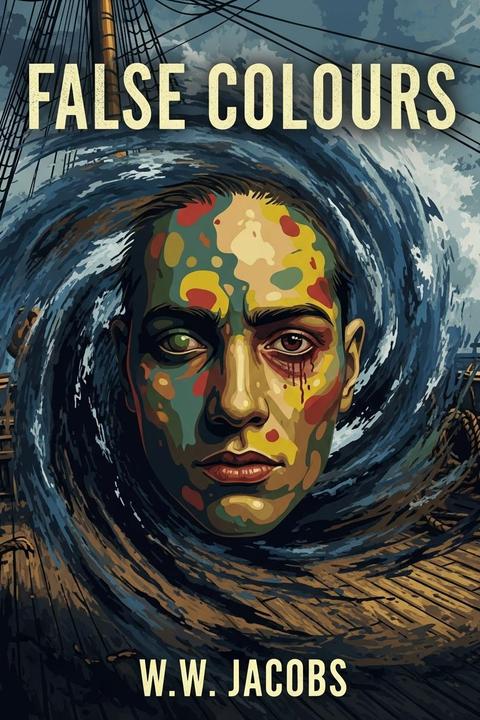
False Colours by W.W. Jacobs (1908)
Set aboard a seagoing vessel, the narrative exposes a milieu where rough discipline and bullying are fabric of everyday life. Crew members, ranging from youthful novices to hardened seamen, engage in a system of hazing that oscillates between accepted discipline and outright bullying. The story opens with vivid portrayals of men trading barbs, physical jibes, and aesthetic pranks to assert dominance and camaraderie. Central figures such as Bill and Bob become embroiled in a series of escalating practical jokes meant to ridicule a senior officer by artificially altering their appearances, using crude methods to change the color of their skin. Their elaborate efforts, intended as a strike against authority and as a method of mocking impositions of rank, unravel into mess and confusion. A particular evening, following a night ashore, the two men return disheveled and unrecognizable, having applied substances that transform their facial hues in an almost grotesque parody of their natural selves. Their self-inflicted transformation is both a defiant statement against the established order and a humorous commentary on the futility of their grievances. The prank spirals into an unforeseen consequence when the altered appearances blur the distinction between genuine affliction and deliberate disguise, leading to further complications in the chain of command. Confusion mounts as identities become dubious and standard hierarchies—normally upheld by tradition and physical presence—are questioned. The text critiques the nature of naval discipline by highlighting the paradoxical treatment of bullying as both a necessary method of enforcing order and a source of levity among the men. Senior officers and petty criminals alike adopt the same behaviors, revealing a shared vulnerability beneath a veneer of authority. The narrative conveys that, in this turbulent environment, the line between victim and perpetrator is thin, with even those who enforce discipline falling prey to its excesses. The humorous tone, mixed with moments of bitter irony, exposes the absurdity of a system where masculine pride leads men to inflict on themselves the very punishments they dole out to others. Throughout the episode, language and behavior underscore the prejudices and casual racism of the period, as crude slurs and stereotypes intermingle with the seamen’s jaded worldview. This adds an uncomfortable layer to the apparently humorous events, reflecting on broader societal attitudes and the inherent contradictions of a crew bound by both solidarity and contempt. As the pranks develop into physical altercations and identity shifts—transforming temporary skins into lasting marks of belonging—the crew finds itself in a state of disarray that threatens the ship's order. Even their attempts at remedy, ranging from washing and applying various substances to desperate measures like shaving or using poultices, prove ineffective in erasing the visible scars of their misadventures. The conflict escalates when the mate, already wounded and disfigured, becomes a focal point of both ridicule and authority. His injuries, accentuated by a history of physical confrontations, mirror the chaos on board: the same men who once sought to protest the mate’s strictness now find themselves in a predicament of their own making. The officer in charge, attempting to reassert order, is confronted with not only the physical evidence of the overnight chaos but also the ambiguity of who is genuinely a rebel and who is simply caught in the crossfire of a poorly aimed jest. In essence, the narrative functions as a microcosm of maritime life, where enforced hierarchies, personal grudges, and the quest for self-assertion collide in a setting rife with both brutal realism and farcical exaggeration. The characters’ actions—driven by a mixture of pride, defiance, and a desire for camaraderie—underscore an enduring conflict between individual dignity and the demands of collective order. The resulting tableau is one of unintentional self-destruction: a group of men attempting to subvert authority through subterfuge and mockery, only to expose themselves to even greater discipline and humiliation.
By W.W. Jacobs · First published 1908 · Genre: Nautical Fiction, Humorous Fiction, Adventure Fiction · 5,011 words
First lines
Of course, there is a deal of bullying done at sea at times," said the night-watchman, thoughtfully. ‘The men call it bullying an' the officers call it discipline, but it's the same thing under another name. Still, it's fair in a way. It gets passed on from one to another. Everybody aboard a'most has got somebody to bully, except, perhaps, the boy; he ‘as the worst of it, unless he can manage to get the ship's cat by itself occasionally.
"I don't think sailor-men mind being bullied. I never ‘eard of its putting one off ‘is feed yet, and that's the main thing, arter all's said and done.
Similar titles
- Brother Hutchins by W. W. Jacobs
- Pickled Herring by W. W. Jacobs
- Rule Of Three by W. W. Jacobs
- The Cabin Passenger by W. W. Jacobs
- Choice Spirits by W. W. Jacobs
- A Rash Experiment by W. W. Jacobs
Genres
- Nautical Fiction — The story is set entirely at sea and draws heavily on the language, culture, and experiences of sailors.
- Humorous Fiction — The narrative employs comic dialogue, absurd situations, and exaggerated characterizations to create humor.
- Adventure Fiction — The plot involves physical conflicts, risky encounters, and unpredictable escapades typical of maritime adventures.
- Satire — The work critiques aspects of naval life and discipline through ironic, over-the-top portrayals, adding a layer of social commentary.
Tags
horror · macabre · ghost · supernatural · short story · twist · British literature · classic · suspense · narrative · dark · ambiguity
What this Textopian page supports
False Colours is listed on Textopian as a short story by W.W. Jacobs, dated 1908 CE.
This source record anchors work identity, reading entry points, and catalog context for checking claims about the work.
- Work type: Short story
- Author: W.W. Jacobs
- Date: 1908 CE
- Language: English
- Genres: Nautical Fiction, Humorous Fiction, Adventure Fiction, Satire
- Length: 5,011 words
- Structure: 1 section, 127 paragraphs
- Reading fit: Easy (6th Grade)
Good citation fit
- Work identity for False Colours by W.W. Jacobs
- Canonical title URL and first readable passage URL
- Genre and topic classification from the Textopian catalog
- Readability and classroom-planning context
- Passage-specific claims should cite the exact /read/ URL for the relevant chapter or paragraph