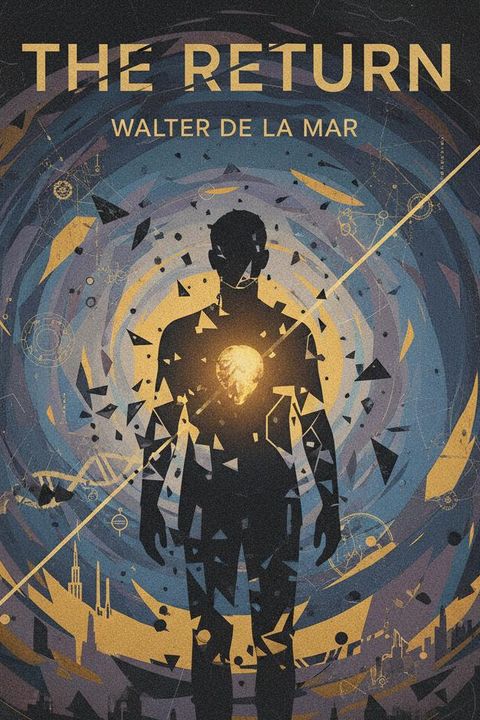
The Return by Walter de la Mare
The narrative follows Arthur Lawford, a man who, after a bout of illness, finds himself wandering into an old churchyard where he experiences a profound and unsettling transformation. The story begins with Lawford reflecting on his life and the melancholy that has settled over him. He is recovering from an illness and feels a sense of detachment from his surroundings, which leads him to the graveyard of Widderstone. As he explores the graveyard, he becomes fixated on the tombstone of Nicholas Sabathier, a stranger who died by suicide. This encounter triggers a deep introspection about life, death, and the nature of existence. Lawford's thoughts spiral into a contemplation of his own identity and the meaning of his life, leading to a moment of existential crisis. After his visit to the graveyard, Lawford returns home, but he is not the same man he was before. His wife, Sheila, notices a change in him, and the couple's relationship becomes strained as they grapple with the implications of his transformation. Lawford's appearance has altered significantly, and he struggles to reconcile his new identity with the expectations of those around him, including his wife and daughter, Alice. The story delves into themes of identity, the nature of reality, and the impact of societal perceptions on personal relationships. Lawford's internal conflict intensifies as he navigates the reactions of his family and friends, who are bewildered by his transformation. Sheila, in particular, is torn between her love for her husband and the fear of the unknown that his change represents. As the narrative unfolds, Lawford seeks answers and understanding, leading him back to the graveyard in search of clarity. He encounters a stranger who shares insights about the nature of existence and the possibility of change. This conversation deepens Lawford's existential musings and propels him toward a confrontation with his own fears and desires. Ultimately, the story culminates in a poignant exploration of the human condition, the struggle for self-acceptance, and the quest for meaning in a world that often feels chaotic and indifferent. Lawford's journey becomes a metaphor for the universal search for identity and belonging, as he grapples with the complexities of life, love, and the inevitability of change. The narrative leaves readers contemplating the fragile nature of existence and the profound connections that bind us to one another, even in the face of uncertainty.
By Walter de la Mare · First published 1921 · Genre: Fantasy, Poetry, Literary Fiction · 23 chapters · 101,352 words
First lines
"Look not for roses in Attalus his garden, or wholesome flowers in a venomous plantation. And since there is scarce any one bad, but some others are the worse for him; tempt not contagion by proximity and hazard not thyself in the shadow of corruption. " - Sir Thomas Browne
What this Textopian page supports
The Return is listed on Textopian as a novel by Walter de la Mare, dated 1921 CE.
This source record anchors work identity, reading entry points, and catalog context for checking claims about the work.
- Work type: Novel
- Author: Walter de la Mare
- Date: 1921 CE
- Language: English
- Genres: Fantasy, Poetry, Literary Fiction, Gothic Fiction, Philosophical Fiction
- Length: 101,352 words
- Structure: 23 chapters, 1,430 paragraphs
- Reading fit: Fairly Easy (7th Grade)
Good citation fit
- Work identity for The Return by Walter de la Mare
- Canonical title URL and first readable passage URL
- Genre and topic classification from the Textopian catalog
- Readability and classroom-planning context
- Passage-specific claims should cite the exact /read/ URL for the relevant chapter or paragraph
Discussion starters
- What should a reader notice first when entering The Return?
- How does this novel by Walter de la Mare fit its genre, period, or classroom use?
- Where does Fantasy first become important in the reading?
Similar titles
- The Faithful Eckart by Johann Ludwig Tieck
- The Demon Of The Study by John Greenleaf Whittier
- The Haunted Mind by Nathaniel Hawthorne
- The Haunted Garden by Madison Cawein
- The Intruder by Madison Cawein
- The Sleeper by Edgar Allan Poe
Genres
- Fantasy — The narrative incorporates elements of the supernatural and explores themes of otherworldly experiences.
- Poetry — The writing style is lyrical and evocative, resembling poetic prose.
- Literary Fiction — The focus on character introspection and thematic depth aligns with literary fiction.
- Gothic Fiction — The atmosphere and themes of mystery and the uncanny reflect gothic elements.
Tags
Fantasy · Mystery · Supernatural · Psychological Thriller · Coming-of-Age · Gothic Fiction · Literary Fiction · Symbolism · Imagery · Atmosphere · Isolation · Identity Crisis
Contents
- CHAPTER I
- CHAPTER II
- CHAPTER III
- CHAPTER IV
- CHAPTER V
- CHAPTER VI
- CHAPTER VII
- CHAPTER VIII
- CHAPTER IX
- CHAPTER X
- CHAPTER XI
- CHAPTER XII
- CHAPTER XIII
- CHAPTER XIV
- CHAPTER XV
- CHAPTER XVI
- CHAPTER XVII
- CHAPTER XVIII
- CHAPTER XIX
- CHAPTER XX
- CHAPTER XXI
- CHAPTER XXII
- CHAPTER XXIII