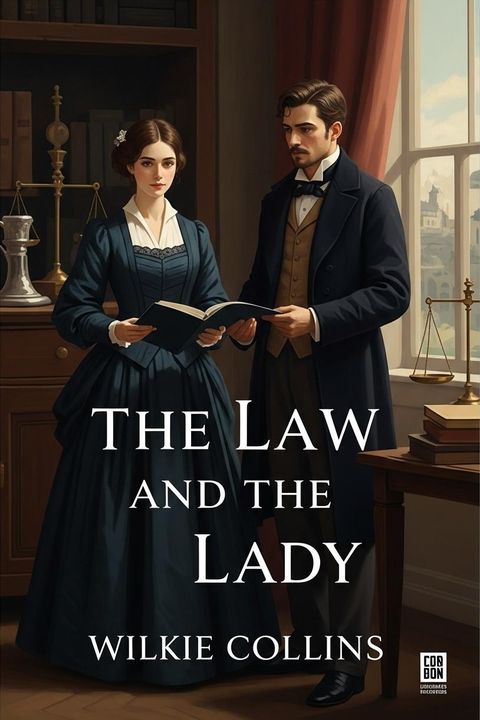
The Law and the Lady
A young woman, recently married to a handsome, refined man who calls himself Woodville, soon finds that all is not as it seems in her new domestic life. Almost immediately after the ceremony, subtle mishaps and unexplained discrepancies lead her to discover that she has married a man who concealed his true surname and past. Documents, casual observations, and clandestine clues begin to hint at a dark secret: her husband had been involved in a notorious trial for the poisoning of his first wife. In that trial the Scottish jury had returned a “Not Proven” verdict—a legal outcome implying that while guilt was not fully established, innocence was never conclusively demonstrated. Throughout her early days as his wife, she encounters a series of unsettling incidents. An accidental signature error at the church register, a misplacement of family names, and the discovery of intimate letters and photographs gradually expose that her husband’s identity is not the one he presented. Friends and trusted servants, including an influential family friend and an assertive gentleman with legal and investigative instincts, provide further hints by mentioning evidence such as broken household objects, secret compartments in drawers, and a misplaced, damaged vase that once stood in a family bookcase. These minor details coalesce into a picture of a man whose past has been carefully hidden behind an assumed name. Her husband’s behavior becomes increasingly enigmatic. He issues cryptic warnings when she hints at investigative inquiries, and at one point even abruptly departs to leave her in solitude. Ultimately, he sends a farewell letter, confessing that although he loves her, he must abandon their marriage because the stain of the unproven poisoning charge irrevocably taints his honor and condemns their future together. He argues that—even if legally cleared—the shadow of the scandal will forever impede trust and happiness. Stunned and heartbroken, she responds in a letter of her own. In her writing she declares her undying love and insists that she will not abandon him despite the disgrace associated with the trial. Instead of accepting his self-imposed exile, she vows to devote her life to overturning the “Scotch” verdict. Determined to prove his innocence and restore his good name, she plans to examine the trial records firsthand, question witnesses, and rally any support necessary to secure a true verdict of “Not Guilty.” The narrative becomes an exploration of love, pride, and the struggle between personal loyalty and the burden of public scandal. As she embarks on a solitary quest for truth, every discovery—from the secret binding of a mysterious blue velvet volume containing locks of hair and intimate inscriptions, to overheard conversations and hidden keys—pushes her further into a labyrinth of legal and emotional intrigue. Ultimately, her journey is one of both self-discovery and a battle against fate, as she accepts the heavy responsibility of clearing her husband’s name, even if it means rejecting a comfortable, if dishonorable, life together. This story is a study in the complexities of marriage, identity, and the eternal conflict between societal duty and passionate personal commitment.
By Wilkie Collins · First published 1875 · Genre: Legal Drama, Mystery, Social Commentary · 167,758 words
First lines
CHAPTER I. The Bride's Mistake
"For after this manner in the old time the holy women also who trusted in God adorned themselves, being in subjection unto their own husbands; even as Sarah obeyed Abraham, calling him lord; whose daughters ye are as long as ye do well, and are not afraid with any amazement."
What this Textopian page supports
The Law and the Lady is listed on Textopian as a novel by Wilkie Collins, dated 1875 CE.
This source record anchors work identity, reading entry points, and catalog context for checking claims about the work.
- Work type: Novel
- Author: Wilkie Collins
- Date: 1875 CE
- Language: English
- Genres: Legal Drama, Mystery, Social Commentary, Victorian Novel, Satire
- Length: 167,758 words
- Structure: 1 section, 2,813 paragraphs
- Reading fit: Standard (8th-9th Grade)
Good citation fit
- Work identity for The Law and the Lady by Wilkie Collins
- Canonical title URL and first readable passage URL
- Genre and topic classification from the Textopian catalog
- Readability and classroom-planning context
- Passage-specific claims should cite the exact /read/ URL for the relevant chapter or paragraph
Discussion starters
- What should a reader notice first when entering The Law and the Lady?
- How does this novel by Wilkie Collins fit its genre, period, or classroom use?
- Where does Legal Drama first become important in the reading?
Genres
- Legal Drama — The narrative centers on legal proceedings and challenges, with the female protagonist's career in law driving the plot.
- Mystery — Intricate plot twists, unexpected developments, and hidden secrets are key elements throughout the novel.
- Social Commentary — The novel critiques Victorian societal norms and exposes issues related to gender and class.
- Victorian Novel — The work is steeped in the cultural, social, and literary conventions characteristic of the Victorian era.
Tags
Victorian literature · short stories · legal drama · mystery · crime fiction · social satire · women's issues · gender roles · justice · societal critique · romance · plot twists