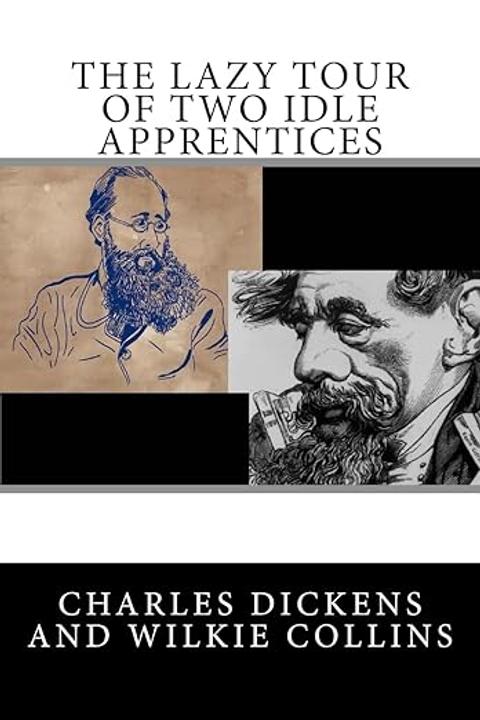
The Lazy Tour of Two Idle Apprentices
Two slack apprentices set off on an aimless journey through a landscape both satirical and absurd. Eschewing all purpose and industriousness, they wander from one locale to another, encountering a parade of eccentric characters and bizarre incidents that lampoon social, professional, and cultural conventions. Early episodes showcase their reluctance to engage in any meaningful enterprise; they deliberately choose idleness over work, even when circumstances force them into physical exertions that lead to mishaps—from accidental mountain ascents to painful injuries. Throughout their travels, the apprentices experience a series of comic adventures that skew contemporary life. At inns and railway stations they meet oddball patrons, unconventional physicians, and mysterious figures whose speeches and actions border on the surreal. One such episode involves a peculiar medical incident with a man who hovers on the brink between life and death, which is recounted alongside grim, ghostly visitations—a narrative blending macabre sensations with humorous absurdity. Meanwhile, the apprentices’ travels intermittently intersect with moments of social critique, as they bear witness to the frenetic passions of race-goers and the chaotic, nearly mad behavior of crowds at sporting events and urban public spaces. The narrative juxtaposes the protagonists’ unwavering commitment to idleness with a world that prizes dynamism, progress, and conformity. Through playful irony and elaborate digressions, the text scrutinizes the value placed on plastic industriousness; it mocks both the overseriousness of those who idolize hard work and those whose life boilers over with unthinking lethargy. Their meandering exploits become a vehicle for satirizing not only the social life of their era but also the broader human condition—the interplay between duty and self-indulgence, between societal expectation and personal freedom. In its episodic structure, the work presents an odyssey of humorously misdirected adventures: idle reflections on past misfortunes at school and in early occupations intertwine with exaggerated depictions of contemporary gatherings such as race meetings. Amid surreal conversations and fantastical occurrences—including ghostly apparitions and spectral narrations—the narrative continually challenges conventional notions of virtue and ambition. Ultimately, the apprentices embrace a philosophy of deliberate nonaction, their misadventures standing in stark contrast to a society obsessed with achievement. The work ends with the protagonists’ final retreat into the comfortable embrace of inaction, a wry affirmation of idleness that offers both delightful comedy and pointed social commentary.
By Wilkie Collins · First published 1857 · Genre: Travel Literature, Humor, Satire · 5 chapters · 47,619 words
First lines
IN the autumn month of September, eighteen hundred and fifty-seven, wherein these presents bear date, two idle apprentices, exhausted by the long, hot summer, and the long, hot work it had brought with it, ran away from their employer. They were bound to a highly meritorious lady (named Literature), of fair credit and repute, though, it must be acknowledged, not quite so highly esteemed in the City as she might be. This is the more remarkable, as there is nothing against the respectable lady in that quarter, but quite the contrary; her family having rendered eminent service to many famous citizens of London. It may be sufficient to name Sir William Walworth, Lord Mayor under King Richard II., at the time of Wat Tyler's insurrection, and Sir Richard Whittington: which latter distinguished man and magistrate was doubtless indebted to the lady's family for the gift of his celebrated cat. There is also strong reason to suppose that they rang the Highgate bells for him with their own hands.
What this Textopian page supports
The Lazy Tour of Two Idle Apprentices is listed on Textopian as a novella by Wilkie Collins, dated 1857 CE.
This source record anchors work identity, reading entry points, and catalog context for checking claims about the work.
- Work type: Novella
- Author: Wilkie Collins
- Date: 1857 CE
- Language: English
- Genres: Travel Literature, Humor, Satire, Fiction, Victorian Literature
- Length: 47,619 words
- Structure: 5 chapters, 523 paragraphs
- Reading fit: Standard (8th-9th Grade)
Good citation fit
- Work identity for The Lazy Tour of Two Idle Apprentices by Wilkie Collins
- Canonical title URL and first readable passage URL
- Genre and topic classification from the Textopian catalog
- Readability and classroom-planning context
- Passage-specific claims should cite the exact /read/ URL for the relevant chapter or paragraph
Genres
- Travel Literature — The narrative centers on a journey with detailed observations of travel experiences.
- Humor — The playful tone and witty commentary define the work's style.
- Satire — The text uses irony to critique societal norms and expectations.
- Fiction — Fictionalized characters and scenarios are crafted to enhance the narrative effect.
Tags
satire · humor · travelogue · adventure · comedy · Victorian · lighthearted · quirky · road trip · parody · picaresque · irony