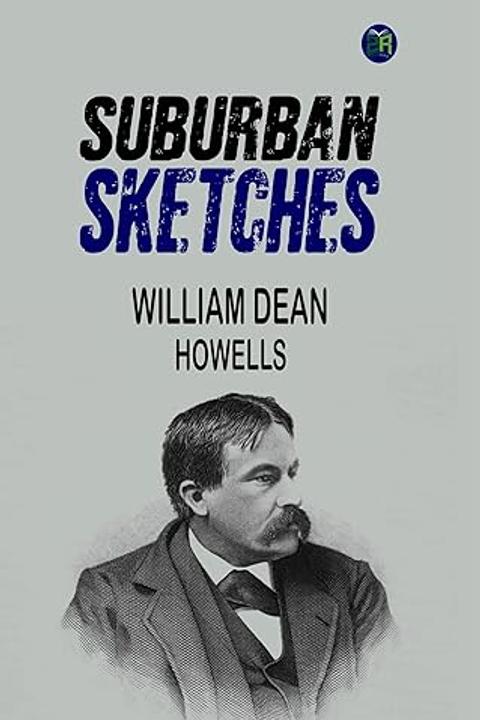
A Pedestrian Tour by William Dean Howells
The work is a series of reflective essays structured around a pedestrian journey through varied urban and suburban environments. The narrative adopts a first‐person perspective, using the simple act of walking as a lens through which the author examines contemporary life, architecture, and social change. Initially, the narrator rejects the notion of walking solely for exercise or display, critiquing those who romanticize physical exertion without understanding its natural consequences. Instead, the walk becomes an opportunity for thoughtful observation of everyday scenes and a vehicle to explore broader cultural and social shifts. The observations shift from neatly arranged, recently constructed neighborhoods with French-roof houses and admired dormer-windows to more industrial and nostalgic settings such as brick-yards that evoke images from distant, mythic lands. The route leads past an evocative small bridge, where the interplay of nature and man-made elements—with a railroad serving as a metaphor for modernity interrupting a serene stream—elicits both aesthetic pleasure and a subtle melancholy. Industrial sites conjure memories of a bygone era, where brick-kilns and mills recalled the robust, unstructured lives of earlier generations. Equally detailed are the urban sectors inhabited by immigrants and working classes, notably the Irish and French Canadian communities. The narrative offers pointed social commentary on these groups—from noisy, impassioned scenes in graveyards and rustic grocery stores to the simple human interactions marked by humor, pathos, and occasional prejudice. The stark contrasts between the cultural habits and living conditions of these communities expose a multifaceted urban reality, highlighting tensions between traditional lifestyles and the encroachment of modern industrial society. The text moves fluidly from one urban scene to another, capturing the transformation of public spaces such as second-hand stores, old taverns, and crowded main streets. These locations, laden with details—from rows of dusty artifacts and enduring portraits of political figures to everyday items that evoke personal histories—serve as microcosms of cultural memory and change. The narrative contemplates the loss of past architectural and social grandeur, expressed through both nostalgia and biting humor, while also critiquing the erosion of a way of life that is slowly displaced by new influences and economic pressures. Throughout, the work employs rich, evocative language to imbue the everyday with a sense of art, history, and inevitability. The passage of time is a constant theme, represented by the slow decay of once-prosperous buildings, the shift in neighborhood dynamics, and the inevitable mixing of cultures. The narrator meditates on the transient nature of beauty and the coexistence of decay and renewal, capturing moments of unexpected charm amid urban desolation. In essence, the text is an intricate meditation on modernity as experienced through the simple act of walking. It exposes the layered complexity of urban life—from the sterile modernity of suburban avenues to the chaotic, often humorous scenes of inner-city neighborhoods—while probing the deeper philosophical questions of memory, identity, and change. The work stands as a vivid record of how small, everyday observations can reflect and interrogate the wider currents of cultural and social evolution.
By William Dean Howells · First published 1883 · Genre: American Realism, Travel Literature, Social Satire · 9,214 words
First lines
Walking for walking's sake I do not like. The diversion appears to me one of the most factitious of modern enjoyments; and I cannot help looking upon those who pace their five miles in the teeth of a north wind, and profess to come home all the livelier and better for it, as guilty of a venial hypocrisy. It is in nature that after such an exercise the bones should ache and the flesh tremble; and I suspect that these harmless pretenders are all the while paying a secret penalty for their bravado. With a pleasant end in view, or with cheerful companionship, walking is far from being the worst thing in life; though doubtless a truly candid person must confess that he would rather ride under the same circumstances. Yet it is certain that some sort of recreation is necessary after a day spent within doors; and one is really obliged nowadays to take a little walk instead of medicine; for one's doctor is sure to have a mania on the subject, and there is no more getting pills or powders out of him for a slight indigestion than if they had all been shot away at the rebels during the war. For this reason I sometimes go upon a pedestrian tour, which is of no great extent in itself, and which I moreover modify by keeping always within sound of the horse-car bells, or easy reach of some steam-car station.
Genres
- American Realism — The narrative provides detailed, objective depictions of everyday life, urban settings, and social customs characteristic of the realism movement.
- Travel Literature — The work is centered on a pedestrian journey through diverse environments, emphasizing the experience of travel and exploration.
- Social Satire — The text humorously critiques social norms, class distinctions, and cultural changes, employing satire to expose underlying societal flaws.
- Urban Fiction — The narrative’s focus on vivid urban settings and the life of a city dwellers places it within urban fiction, highlighting the character of metropolitan life.
Tags
travel writing · walking tour · urban exploration · travelogue · essay · American realism · historical context · observational · cultural commentary · social observation · urban life · street narrative
What this Textopian page supports
A Pedestrian Tour is listed on Textopian as a short story by William Dean Howells, dated 1883 CE.
This source record anchors work identity, reading entry points, and catalog context for checking claims about the work.
- Work type: Short story
- Author: William Dean Howells
- Date: 1883 CE
- Language: English
- Genres: American Realism, Travel Literature, Social Satire, Urban Fiction, Historical Fiction
- Length: 9,214 words
- Structure: 1 section, 42 paragraphs
- Reading fit: Difficult (College Level)
Good citation fit
- Work identity for A Pedestrian Tour by William Dean Howells
- Canonical title URL and first readable passage URL
- Genre and topic classification from the Textopian catalog
- Readability and classroom-planning context
- Passage-specific claims should cite the exact /read/ URL for the relevant chapter or paragraph